

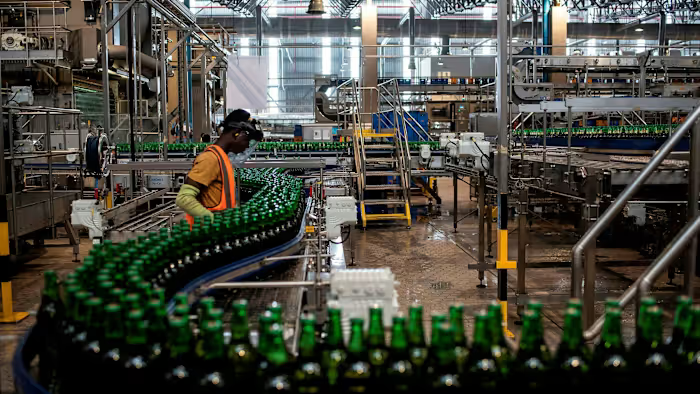
Nigeria has reportedly recorded a surge in capital inflows, attracting an estimated $10.37 billion in investment, but concerns are mounting over why much of this money is not translating into the establishment of productive factories and industrial expansion.
Economic observers say that while the inflow signals renewed investor interest in Africa’s largest economy, the real challenge lies in converting financial inflows into tangible industrial growth that creates jobs and strengthens domestic production.
Analysts note that a significant portion of the capital appears to be directed toward short-term financial instruments, portfolio investments, and sectors such as banking, fintech, and services, rather than long-term manufacturing projects.
This trend has raised questions about structural barriers that continue to discourage investors from committing to capital-intensive industries like manufacturing, agro-processing, and heavy industry.
Key concerns frequently cited include unstable power supply, high production costs, foreign exchange volatility, infrastructure gaps, and regulatory uncertainty — all of which increase the risk profile of setting up factories in the country.
Experts argue that without consistent industrial investment, Nigeria risks remaining overly dependent on imports despite its large market size and abundant raw materials.
They warn that while capital inflows are encouraging on paper, they may not significantly reduce unemployment or diversify the economy unless directed toward productive sectors.
Some economists also point to policy inconsistency and bureaucratic bottlenecks as additional factors discouraging long-term investment in industrial projects.
The situation has reignited debate about Nigeria’s economic structure and its reliance on non-productive investment inflows, with calls for reforms aimed at improving the ease of doing business and strengthening industrial policy.
Stakeholders are urging government to prioritize infrastructure development, particularly in electricity generation and distribution, transport logistics, and industrial zones, to attract factory-based investments.
There are also growing calls for incentives targeted specifically at manufacturers, including tax reliefs, access to affordable credit, and improved import substitution policies.
Despite the challenges, some optimism remains that with the right reforms, Nigeria can redirect capital flows into productive sectors and build a stronger industrial base capable of supporting sustainable economic growth.
For now, however, the gap between capital inflows and factory development continues to raise concerns about the true impact of investment on Nigeria’s real economy.