

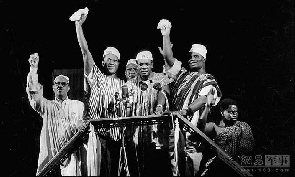
Long before modern cultural pride movements, Kwame Nkrumah was setting trends—and making history—by promoting ‘Wear Ghana’ in the 1950s. The campaign encouraged Ghanaians to proudly embrace indigenous fabrics like Northern smocks and Kente, turning fashion into a bold statement of national identity, independence, and unity.
Nkrumah’s vision went beyond style; it was a political and cultural manifesto. By wearing Ghanaian textiles, citizens were actively participating in a movement that celebrated local craftsmanship, heritage, and self-reliance, at a time when colonial influence still loomed large.
Historians say the campaign helped cement Kente and the Northern smock as symbols of pride and patriotism, inspiring generations to celebrate Ghanaian culture through attire. Social media and cultural commentators today are revisiting Nkrumah’s fashion revolution, praising it as a masterstroke of soft power that made style an act of nationalism.