Tag: Kwame Nkrumah

  • He Didn’t Say a Word—But Every Photo Was Perfect: The Silent Genius Behind Nkrumah’s Iconic Images

    He Didn’t Say a Word—But Every Photo Was Perfect: The Silent Genius Behind Nkrumah’s Iconic Images

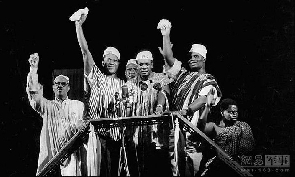
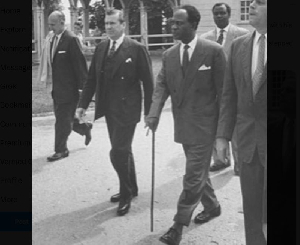
    In an era long before media coaching, teleprompters, and carefully staged press briefings, one man mastered the art of visual storytelling without uttering a single instruction. Ghana’s founding leader, Kwame Nkrumah, didn’t just appear in photographs—he commanded them.

    Observers and insiders alike have long marveled at how effortlessly Nkrumah seemed to control the lens. There were no audible cues, no visible signals, no dramatic gestures to photographers scrambling for the perfect shot. Yet, time and again, the images came out striking—powerful, composed, and deeply symbolic.

    So how did he do it?

    Those who watched him closely began to notice a pattern. Nkrumah possessed an almost theatrical awareness of presence. A slight tilt of the head, a deliberate pause before a handshake, a carefully timed glance into the distance—these subtle movements were not accidental. They were intentional, calculated, and brilliantly executed.

    Photographers, often without realizing it, were being guided.

    Rather than directing with words, Nkrumah used timing as his language. He understood the rhythm of the camera: when shutters clicked, when attention peaked, and when a moment could transform into history. By positioning himself just right—under the best light, at the perfect angle, in the most meaningful context—he ensured that every image told a story aligned with his vision.

    It wasn’t manipulation. It was mastery.

    In public gatherings, he would instinctively find the strongest visual center—whether standing beside key figures, addressing crowds, or inspecting projects. He knew exactly where history was being written and made sure he stood at its focal point.

    Even in candid moments, there was nothing truly accidental. His posture remained poised, his expressions measured yet natural. The result? Photographs that looked spontaneous but carried the weight of deliberate symbolism.

    This silent choreography gave Nkrumah a powerful advantage. While others reacted to the camera, he anticipated it. While others posed, he performed—quietly, subtly, effectively.

    Decades later, those images remain etched in the national consciousness: a leader not just captured in history, but actively shaping how history would remember him.

    And perhaps that is the most remarkable part of all.

    Without raising his voice, without issuing commands, Kwame Nkrumah turned every photograph into a statement—proving that sometimes, the most powerful direction is the one never spoken.
  • Historic Moment: When Kwame Nkrumah Captured the World’s Attention on TIME’s Cover in 1953

    Historic Moment: When Kwame Nkrumah Captured the World’s Attention on TIME’s Cover in 1953

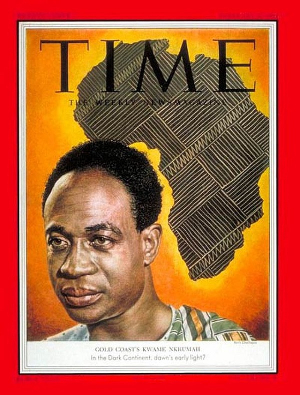
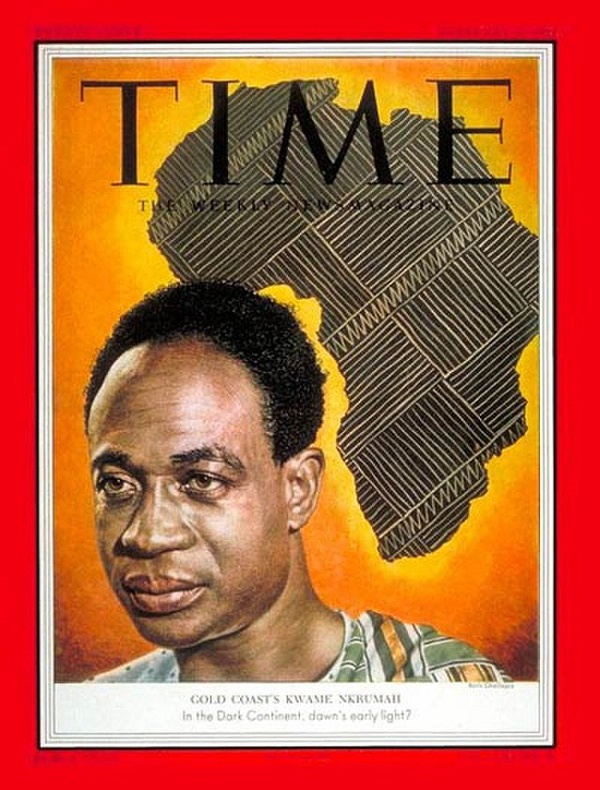
    In 1953, a defining moment in global political history unfolded when Kwame Nkrumah appeared on the cover of TIME magazine—a rare and powerful recognition for an African leader during the colonial era.

    At the time, the Gold Coast (modern-day Ghana) was still under British rule, and nationalist movements across Africa were gaining momentum. Nkrumah, already a prominent and controversial figure, had emerged as the leading voice for self-governance and independence. His political strategy, marked by mass mobilization and bold rhetoric, had begun to unsettle colonial authorities while inspiring millions across the continent.

    TIME’s decision to feature Nkrumah on its cover signaled that his influence extended far beyond West Africa. The publication portrayed him as a dynamic and determined leader whose ideas were reshaping the political landscape. While some Western observers viewed him with caution, even suspicion, others recognized him as a symbol of a new wave of leadership that would soon transform Africa.

    The 1953 cover did more than spotlight an individual—it captured a turning point. It reflected a growing acknowledgment that colonial rule was being challenged in unprecedented ways, and that leaders like Nkrumah were at the forefront of this shift.

    Just four years later, in 1957, Ghana would achieve independence, becoming the first sub-Saharan African nation to break free from colonial rule. In retrospect, Nkrumah’s appearance on TIME’s cover stands as an early indicator of that historic change.

    Today, the cover remains a powerful reminder of the moment when an African leader forced the world to pay attention, marking the rise of a movement that would redefine an entire continent.

  • Ghana’s first president, Kwame Nkrumah, continues to command global admiration decades after his passing, with several iconic monuments erected abroad celebrating his legacy and influence on African liberation. Here are three notable tributes:

    Ghana’s first president, Kwame Nkrumah, continues to command global admiration decades after his passing, with several iconic monuments erected abroad celebrating his legacy and influence on African liberation. Here are three notable tributes:

    1. Statue of Kwame Nkrumah – Accra, Ghana (replica abroad in China)

    While the original monumental statue resides in Accra, a life-sized replica stands in Beijing unity.

    2. Kwame Nkrumah Mausoleum Replica – United States

    In Atlanta, a scaled-down homage to the famed Kwame Nkrumah Mausoleum allows the diaspora community to honor the father of Ghanaian independence. The monument reflects the architectural essence of the original and serves as a cultural hub for Pan-African events.

    3. Nkrumah Statue – London, United Kingdom

    Located in London anti-colonial struggle.

    These monuments, scattered across continents, demonstrate the far-reaching impact of Kwame Nkrumah’s leadership and his enduring status as a symbol of African pride and liberation.

  • WATCH: Youth Turn Kwame Nkrumah Mausoleum into a ‘Kakalika’ Dance Floor!

    WATCH: Youth Turn Kwame Nkrumah Mausoleum into a ‘Kakalika’ Dance Floor!

    Shocking Footage: Ghana’s National Monument Becomes the Stage for Viral Dance Craze!

    In a jaw-dropping display of youthful energy and irreverence, the Kwame Nkrumah Mausoleum, one of Ghana’s most historic and sacred sites, was transformed into an impromptu dance floor as local youth took over the space to perform the viral ‘Kakalika’ dance.

    Watch the viral video as groups of young Ghanaians turned the solemn grounds, which are home to the tomb of Ghana’s founding father, Dr. Kwame Nkrumah, into a party scene, complete with pulsating beats and choreographed dance moves. The scene, which some are calling “disrespectful” and others find “refreshing”, has sparked a massive debate on social media.

    “A Dance That Took Over the Streets”

    The Kakalika dance, which has become one of the hottest trends across Ghana and beyond, was in full swing as the youth performed their moves near the iconic monument, to the surprise of both visitors and security personnel. The dance craze, characterized by its unique moves and infectious rhythm, has become synonymous with urban youth culture, particularly in the capital, Accra.

    While the dance itself is undeniably catchy and fun, the location of this latest performance has raised eyebrows. Many social media users are questioning the appropriateness of dancing at a national site dedicated to Ghana’s revolutionary history.

    “Is It Disrespectful or a Celebration of Freedom?”

    The backlash has been swift. Some argue that the Kwame Nkrumah Mausoleum should be treated with more reverence, given its importance in Ghana’s history as the resting place of the man who led the country to independence. Critics have voiced their concerns that using such an iconic site as a backdrop for a viral dance trend could be seen as a form of disrespect.

    However, others have a different take. They argue that youth expression, especially through dance, is a form of celebrating freedom—something that Dr. Nkrumah fought for. Some even view the act as a way of revitalizing the legacy of the independence movement, in the same spirit of national pride and revolution that Nkrumah embodied.

    One commenter shared: “Dance is culture. Nkrumah was about the freedom to express, the freedom to be who we are. If anything, this is a celebration of that freedom!”

    National Identity or Cultural Disrespect?

    As the footage spreads, opinions are divided. On one hand, the Kakalika dance has become a symbol of youth culture, with social media influencers and artists pushing it to global popularity. Its vibrant energy and infectious beats have made it a viral sensation, especially on platforms like TikTok and Instagram.

    On the other hand, there are those who feel that heritage sites like the Kwame Nkrumah Mausoleum deserve to remain spaces for reflection and respect, not the backdrop for trendy dances. “We must maintain respect for our ancestors and their legacies. The mausoleum is a place of reverence, not a party spot,” one critic stated.

    A Turning Point for Ghanaian Youth Culture?

    This spectacle raises questions about how the younger generation interacts with historical landmarks and national identity. Is this a sign of cultural disconnection, or does it represent a new form of youth-led reimagining of Ghana’s legacy and independence?

    As the debate rages on, the video continues to go viral, with some Ghanaians even calling for more spaces where the youth can express themselves freely without controversy.

    “We should be proud that young people are engaging with the legacy of our nation in their own way. Kwame Nkrumah wanted us to be free thinkers, and this is freedom in action,” said one supporter of the event.

    What’s Next?

    Whether this dance party at the Kwame Nkrumah Mausoleum is a one-time fluke or the start of a larger trend remains to be seen. But one thing is clear: Ghana’s youth culture is unapologetically lively, bold, and unwilling to be boxed in by tradition.

    As more footage circulates and the controversy swirls, all eyes will be on how both the government and the youth respond to this unique blend of history and modern culture.

    #KakalikaDance #KwameNkrumahMausoleum #GhanaYouthCulture #ViralDance #DanceForFreedom #GhanaAt69

  • Kwame Nkrumah’s Bold Fashion Revolution: Northern Smock and Kente Take Center Stage in 1950s ‘Wear Ghana’ Campaign

    Kwame Nkrumah’s Bold Fashion Revolution: Northern Smock and Kente Take Center Stage in 1950s ‘Wear Ghana’ Campaign

    Long before modern cultural pride movements, Kwame Nkrumah was setting trends—and making history—by promoting ‘Wear Ghana’ in the 1950s. The campaign encouraged Ghanaians to proudly embrace indigenous fabrics like Northern smocks and Kente, turning fashion into a bold statement of national identity, independence, and unity.

    Nkrumah’s vision went beyond style; it was a political and cultural manifesto. By wearing Ghanaian textiles, citizens were actively participating in a movement that celebrated local craftsmanship, heritage, and self-reliance, at a time when colonial influence still loomed large.

    Historians say the campaign helped cement Kente and the Northern smock as symbols of pride and patriotism, inspiring generations to celebrate Ghanaian culture through attire. Social media and cultural commentators today are revisiting Nkrumah’s fashion revolution, praising it as a masterstroke of soft power that made style an act of nationalism.

  • 1964 U.S. diplomatic telegram(s) involving Kwame Nkrumah and the oft‑circulated claim that one described him as “less of a monkey”

    1964 U.S. diplomatic telegram(s) involving Kwame Nkrumah and the oft‑circulated claim that one described him as “less of a monkey”

    What the 1964 U.S. Telegram Actually Shows

    Declassified U.S. diplomatic records from March 2, 1964 include Telegram 244 sent from the U.S. Embassy in Accra to the State Department. This cable reported on a meeting between President Kwame Nkrumah and the U.S. ambassador, during which they discussed rising tensions between Ghana and the United States. In that conversation:

    • The ambassador recounted how he had cautioned embassy staff not to repeat damaging rumors circulating in Ghana.
    • Nkrumah told the ambassador he was particularly upset about false rumors claiming his “perfectly healthy baby” was “half animal, half human.” This was mentioned as a rumor circulating in Ghana, not something written by the U.S. official about Nkrumah.

    This exchange suggests the telegram reflected local rumors about Nkrumah rather than the U.S. government characterizing him in racist terms. The official document does not itself describe him as “less of a monkey” or use that phrase in reference to the president.

    Where the Rumor Likely Comes From

    The claim that a 1964 telegram described Nkrumah as “less of a monkey” is likely a misinterpretation or distortion of this documented passage about rumors. The remembered phrasing (“less of a monkey”) does not appear in the declassified document itself, and no reputable archival citation supports that exact wording. The telegram instead reports on damaging rumors circulating in Ghana that Nkrumah mentioned in the diplomatic discussion.

    Historical Context

    At the time, U.S.–Ghana relations were tense:

    • Ghana had recently become a one‑party state under Nkrumah, and relations with Western powers were strained.
    • U.S. documents from early 1964 reflect concern in Washington about Ghana’s political course and its impact on bilateral relations, with telegrams and action memoranda discussing how to “keep pressure” on Nkrumah’s government.

    In summary: the widely repeated phrase about Nkrumah being described as a “monkey” does not show up in the primary source itself. What does show up in the actual 1964 U.S. Embassy telegram is a reference to hearsay and rumors in Ghana — which the ambassador relayed — rather than an official U.S. depiction of him in those terms.