Author: Daniel Sasu

  • EXPLOSIVE OPEN LETTER TO CHIEF JUSTICE BAFFOE-BONNIE!

    EXPLOSIVE OPEN LETTER TO CHIEF JUSTICE BAFFOE-BONNIE!

    People’s Forum Raises Alarm Over Judicial Independence and Alleged ‘Weaponisation of Bail’

    A civil society group, The People’s Forum, has issued a strongly worded open letter to Chief Justice Baffoe-Bonnie, expressing deep concerns about the state of judicial independence and what it describes as the growing “weaponisation of bail” within Ghana’s justice system.

    In the letter, the group called on the Chief Justice to take urgent steps to safeguard the integrity, impartiality, and credibility of the judiciary, warning that public confidence in the courts could be undermined if concerns surrounding bail decisions are not addressed.

    According to The People’s Forum, the judiciary remains a cornerstone of Ghana’s democracy and must be protected from any real or perceived attempts to influence its decisions. The group stressed that justice must not only be done but must also be seen to be done, particularly in high-profile cases that attract significant public attention.

    The Forum further questioned what it termed the “weaponisation of bail”—a situation where bail conditions are allegedly imposed in ways that may appear punitive, excessive, or capable of restricting the rights and freedoms of accused persons before they have been convicted by a court of law.

    The group argued that while courts have the authority to impose conditions that ensure accused persons appear for trial, such conditions should remain fair, proportionate, and consistent with constitutional principles. It cautioned that overly stringent bail requirements could create the perception that the bail process is being used as a form of punishment rather than a mechanism to guarantee attendance in court.

    In its appeal, The People’s Forum urged the Chief Justice to reinforce judicial independence, promote transparency in judicial proceedings, and ensure that decisions relating to bail continue to uphold the constitutional rights of all citizens.

    The letter also called for broader public dialogue on the role of the judiciary in protecting fundamental rights while balancing the need for effective law enforcement and the administration of justice.

    Observers say the intervention by The People’s Forum is likely to reignite national debate over judicial accountability, bail practices, and the delicate balance between safeguarding individual liberties and maintaining public confidence in the justice system.

    As discussions intensify, attention now turns to whether the judiciary will respond to the concerns raised and what impact the letter may have on the ongoing conversation about justice, fairness, and the rule of law in Ghana.
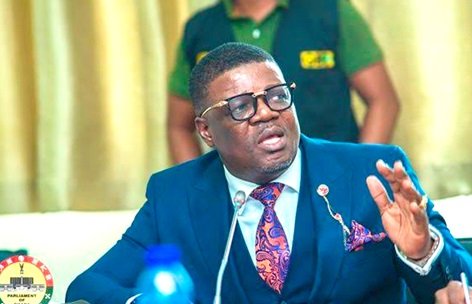
  • “ACT NOW!” – Majority Chief Whip DEMANDS Urgent Anti-Xenophobia Resolution from Pan-African Parliament

    “ACT NOW!” – Majority Chief Whip DEMANDS Urgent Anti-Xenophobia Resolution from Pan-African Parliament

    Ghanaian Lawmaker Sounds Alarm as Rising Xenophobic Attacks Threaten African Unity

    A powerful call has been made to the Pan-African Parliament to take immediate action against the growing threat of xenophobia across the continent, with Ghana’s Majority Chief Whip urging lawmakers to adopt a comprehensive anti-xenophobia resolution without delay.

    Describing xenophobia as a dangerous threat to African integration, economic cooperation, and continental peace, the Majority Chief Whip warned that attacks targeting fellow Africans in various countries continue to undermine the vision of a united and prosperous Africa.

    Speaking during deliberations at the Pan-African Parliament, the outspoken legislator stressed that African leaders can no longer afford to remain silent while citizens face discrimination, hostility, and violence simply because they come from another African nation.

    “The time for discussion alone is over. We need decisive action and a clear continental framework to combat xenophobia in all its forms,” he declared, drawing attention to the urgent need for stronger legal and policy measures.

    According to him, the adoption of an anti-xenophobia resolution would send a powerful message that Africa stands united against intolerance and discrimination. He argued that freedom of movement, regional trade, and people-to-people connections cannot thrive in an environment where fear and prejudice continue to divide communities.

    The call comes amid growing concerns over recurring incidents of xenophobic attacks and anti-foreigner sentiments reported in parts of the continent, raising questions about Africa’s readiness to fully implement its integration agenda under the African Continental Free Trade Area (AfCFTA).

    Observers say the proposed resolution could become a landmark step in strengthening protections for African migrants, workers, students, and entrepreneurs who live and work outside their home countries.

    The Majority Chief Whip further urged member states to intensify public education campaigns promoting tolerance, cultural diversity, and Pan-African solidarity, emphasizing that Africa’s future depends on unity rather than division.

    His passionate appeal has sparked fresh debate among parliamentarians and policy experts, with many agreeing that stronger continental action is needed to confront the root causes of xenophobia and prevent future incidents.

    As pressure mounts on the Pan-African Parliament, attention now turns to whether lawmakers will heed the call and adopt a resolution that could redefine Africa’s collective stance against discrimination and exclusion.

    Will the Pan-African Parliament rise to the occasion and take a historic stand against xenophobia? The continent is watching.

  • “Justice Delayed for Centuries!” – Mahama Demands Reparations for Enslaved Women’s Untold Suffering

    “Justice Delayed for Centuries!” – Mahama Demands Reparations for Enslaved Women’s Untold Suffering

    President John Dramani Mahama has issued a powerful call for the world to confront one of history’s most painful and overlooked injustices, declaring that reparations for slavery can never be complete without addressing the immense suffering endured by enslaved women.

    Speaking passionately on the issue of historical justice, President Mahama emphasized that enslaved women bore a double burden during the transatlantic slave trade—enduring not only forced labor but also horrific gender-based violence, exploitation, and the destruction of their dignity and family lives.

    According to the President, any meaningful discussion on reparations must go beyond economic losses and recognize the unique trauma inflicted on millions of African women who were subjected to unimaginable abuse during centuries of slavery.

    “Reparations cannot be complete without addressing the suffering of enslaved women,” Mahama stressed, highlighting what he described as a long-neglected chapter of history that continues to impact generations today.

    The former Ghanaian leader argued that women were among the greatest victims of the slave trade, often facing sexual violence, forced separation from their children, and brutal treatment that left deep social and psychological scars on African communities.

    Mahama’s remarks come amid growing global demands for reparatory justice from former colonial powers and nations that benefited from the slave trade. Across Africa and the Caribbean, leaders, activists, and scholars have intensified calls for acknowledgment, accountability, and compensation for the lasting consequences of slavery.

    The President insisted that the experiences of enslaved women must be placed at the center of these conversations rather than treated as a footnote in history. He warned that failing to recognize their suffering would leave reparations efforts incomplete and undermine the broader quest for justice.

    His comments have reignited debate on how the world should address the enduring legacy of slavery and whether governments and institutions responsible for historical atrocities are doing enough to confront the past.

    As international pressure for reparations continues to grow, Mahama’s message is clear: true justice requires acknowledging every victim—and that includes the countless enslaved women whose voices were silenced for generations.

    For Mahama, the fight for reparatory justice is not only about history—it is about restoring dignity, recognizing forgotten suffering, and ensuring that the full truth of slavery is finally told.

  • Kpandai MP Sparks Hope with GH¢100,000 Education Lifeline for 100 Students

    Kpandai MP Sparks Hope with GH¢100,000 Education Lifeline for 100 Students

    Kpandai, Ghana – In a remarkable show of commitment to education and youth empowerment, the Member of Parliament for Kpandai has disbursed a whopping GH¢100,000 to support 100 deserving students across the constituency under his Education Support Fund initiative.

    The landmark intervention, which has been widely praised by parents, students, and community leaders, aims to ease the financial burden facing students pursuing higher education and vocational training.

    Addressing beneficiaries during the disbursement ceremony, the MP emphasized that education remains the most powerful tool for transforming lives and accelerating the development of Kpandai. He noted that many brilliant students are forced to abandon their academic dreams due to financial constraints, a challenge the fund seeks to address.

    “This support is an investment in the future of our constituency. We believe every child deserves the opportunity to pursue education regardless of their economic background,” he stated.

    The beneficiaries, drawn from various communities within the constituency, received financial assistance to help cover tuition fees, accommodation, learning materials, and other educational expenses.

    Excited students expressed heartfelt gratitude for the intervention, describing it as a timely lifeline that would enable them to continue their studies without interruption. Several beneficiaries revealed that the support had relieved them and their families of significant financial pressure.

    Community leaders and education stakeholders have lauded the initiative, calling on other leaders and institutions to emulate the MP’s commitment to educational development.

    The Education Support Fund has become one of the constituency’s most impactful social intervention programs, providing opportunities for hundreds of young people to pursue their academic ambitions and build brighter futures.

    As the cost of education continues to rise, the GH¢100,000 disbursement stands as a powerful testament to the MP’s dedication to human capital development and his vision of creating a more educated and prosperous Kpandai.

    For the 100 beneficiaries, this is more than just financial assistance—it is a renewed chance to dream, achieve, and contribute meaningfully to the development of their communities and Ghana as a whole.

  • FORMER WA MCE STORMS NPP TREASURER RACE, VOWS TO REVITALIZE PARTY FINANCES

    FORMER WA MCE STORMS NPP TREASURER RACE, VOWS TO REVITALIZE PARTY FINANCES

    Former Wa Municipal Chief Executive Officially Declares Bid for National Treasurer Position

    The race for the coveted National Treasurer position of the New Patriotic Party (NPP) is beginning to gather momentum as former Wa Municipal Chief Executive, Alhaji Issahaku Tahiru Moomin, has officially declared his intention to contest for the influential role ahead of the party’s next national delegates conference.

    In a move that is expected to reshape the dynamics of the upcoming internal elections, the former municipal chief executive announced his candidature, pledging to bring financial discipline, transparency, innovation, and resource mobilization expertise to strengthen the party’s financial base.

    Addressing party supporters and stakeholders, Alhaji Moomin said the NPP stands at a critical crossroads and requires experienced and dedicated leaders capable of positioning the party for future electoral victories. He stressed that effective financial management remains a key pillar for building a formidable political organization capable of sustaining grassroots operations and winning national elections.

    According to him, his years of experience in public administration, governance, and party activities have adequately prepared him for the challenging role of National Treasurer.

    “The NPP needs a robust financial structure that can support the party’s activities at every level. I am bringing a vision of accountability, inclusiveness, and strategic resource mobilization to ensure our party remains strong and competitive,” he stated.

    The former Wa MCE further emphasized the need for unity within the party, urging members to put collective interests above personal ambitions as preparations begin for the next electoral cycle.

    Political observers believe his entry into the race could inject fresh energy into the contest, considering his extensive experience in local governance and strong connections within party structures across the country.

    Supporters have already begun rallying behind his candidature, describing him as a results-oriented administrator with a proven track record of leadership and prudent management.

    His declaration adds another layer of excitement to what is expected to be a fiercely contested battle for key national executive positions within the governing party.

    As the countdown to the NPP’s national elections intensifies, all eyes will be on the various aspirants seeking to shape the future direction of the party. For Alhaji Issahaku Tahiru Moomin, the journey has officially begun, and he is determined to convince delegates that he possesses the vision, competence, and financial stewardship needed to lead the party’s treasury into a new era.

    Will the former Wa MCE emerge as the financial architect the NPP needs? The contest promises to be one of the most closely watched races in the party’s upcoming internal elections.

  • BEYOND THE BALLOT BOX: THE HIDDEN BATTLES THAT DECIDE A NATION’S FUTURE

    BEYOND THE BALLOT BOX: THE HIDDEN BATTLES THAT DECIDE A NATION’S FUTURE

    Elections End, But the Real Fight for Power Begins

    The ballots have been counted. Victory speeches have been delivered. Supporters have celebrated in the streets. Yet, political observers warn that the most critical chapter of democracy may only be beginning.

    While election day often captures the world’s attention, experts argue that the true test of leadership starts long after voters leave the polling stations. Behind the headlines, newly elected leaders face intense pressure to transform campaign promises into tangible results, navigate political rivalries, and address the growing expectations of citizens demanding change.

    Across the nation, many voters are asking a pressing question: What happens after the ballot box?

    Political analysts say democracy cannot be measured solely by the number of votes cast. Instead, it depends on how effectively governments deliver jobs, strengthen institutions, combat corruption, and ensure accountability.

    “The election is only the first step,” one governance expert noted. “Citizens want action, not just promises.”

    As administrations settle into office, challenges quickly emerge. Economic pressures, public dissatisfaction, policy disputes, and demands for transparency often test the strength of newly formed governments. In many cases, the excitement of electoral victory can rapidly give way to the realities of governing.

    Civil society groups are also calling for greater citizen engagement beyond election periods. They argue that democracy thrives when people remain active participants in national development rather than becoming spectators until the next election cycle.

    Meanwhile, critics warn that political polarization, misinformation, and institutional weaknesses can threaten progress if left unchecked. The challenge, they say, is ensuring that democratic participation continues long after campaign rallies end.

    For millions of citizens, the future will not be determined solely by who won the election, but by what leaders do once the celebrations fade.

    As the dust settles and governments begin their work, one message is becoming increasingly clear: democracy is about far more than casting a vote. The real story lies beyond the ballot box.

  • PUT GHANA FIRST, NOT POLITICS! — Kennedy Agyapong Fires Passionate Appeal to Leaders

    PUT GHANA FIRST, NOT POLITICS! — Kennedy Agyapong Fires Passionate Appeal to Leaders

    Former Presidential Hopeful Urges Politicians to Prioritize National Development Over Partisan Interests

    Prominent businessman and politician Kennedy Agyapong has issued a strong and passionate call to Ghana’s political class, urging them to place the nation’s interests above party politics and personal ambitions.

    Speaking at a public event, the outspoken former Member of Parliament stressed that Ghana’s progress can only be achieved when leaders focus on serving the people rather than engaging in endless political battles and partisan divisions.

    According to Agyapong, the country’s development agenda should not be sacrificed on the altar of political rivalry. He warned that excessive political polarization is slowing national growth and creating unnecessary obstacles to solving the challenges facing ordinary Ghanaians.

    “We must put Ghana first,” he emphasized. “Our decisions should be guided by what benefits the nation and its citizens, not what benefits our political parties.”

    The former presidential aspirant noted that citizens expect leaders to work together in addressing critical issues such as unemployment, economic hardship, infrastructure development, education, and healthcare. He argued that these challenges require collective effort and bipartisan cooperation rather than political point-scoring.

    Agyapong further appealed to politicians across the political divide to demonstrate patriotism, maturity, and commitment to the country’s future. He said leaders have a responsibility to rise above partisan interests and unite behind policies that promote national prosperity.

    His comments come at a time when political tensions continue to dominate public discourse, with many Ghanaians calling for greater collaboration among political leaders to tackle pressing national concerns.

    The outspoken politician’s message has already sparked conversations among citizens and political observers, many of whom believe that national unity and cooperation are essential for Ghana’s long-term development.

    As the nation navigates economic and social challenges, Agyapong’s appeal serves as a powerful reminder that the country’s future depends on leaders who are willing to put Ghana above politics.

  • “I’M NOT HAPPY” — Keche Joshua BLASTS Black Stars’ Performances, Demands Major Improvement

    “I’M NOT HAPPY” — Keche Joshua BLASTS Black Stars’ Performances, Demands Major Improvement

    Ghanaian musician Joshua Kojo Ampah, popularly known as Keche Joshua, has openly expressed his disappointment with the recent performances of the Ghana national football team, saying the team has fallen short of the expectations of many Ghanaians.

    Speaking candidly about the state of the national team, the musician admitted that he is far from satisfied with how the Black Stars have been performing on the pitch.

    “I’m not happy with the Black Stars’ performance,” he stated, echoing the frustrations of many football fans who have questioned the team’s consistency and ability to deliver results in crucial matches.

    According to Keche Joshua, Ghanaians are passionate about football and expect the national team to compete at the highest level, making every disappointing display difficult for supporters to accept.

    His comments come amid ongoing discussions about the team’s form, tactical approach, and ability to reclaim its status as one of Africa’s football powerhouses.

    The musician urged the players and technical team to work harder and improve their performances, stressing that representing Ghana comes with enormous responsibility and expectations from millions of fans across the country and beyond.

    Keche Joshua’s remarks have since sparked debate among football enthusiasts, with some agreeing that the Black Stars have not been convincing enough, while others argue that the team deserves patience and support as it continues to rebuild.

    As Ghanaian football remains under intense scrutiny, supporters will be hoping for stronger performances and positive results that can restore confidence in the national team and reignite the pride associated with the famous Black Stars jersey.

  • “CONDDEMNING XENOPHOBIA ISN’T POLITICS” — Nana Aba Fires Back at South African Goalkeeper in Heated Online Exchange

    “CONDDEMNING XENOPHOBIA ISN’T POLITICS” — Nana Aba Fires Back at South African Goalkeeper in Heated Online Exchange

    Media personality’s response sparks fresh debate across Africa

    Ghanaian media personality Nana Aba Anamoah has ignited a fresh wave of debate after strongly responding to comments made by a South African goalkeeper regarding xenophobia and public criticism of anti-immigrant sentiments.

    In a pointed reaction that quickly gained traction online, Nana Aba insisted that speaking out against xenophobia should never be viewed through a political lens.

    “IT’S ABOUT HUMANITY”

    Responding to the controversy, the broadcaster argued that condemning attacks, discrimination, and hostility toward people based on their nationality is a moral responsibility rather than a political agenda.

    “Condemning xenophobia isn’t politics,” she stated, a remark that resonated with many social media users across the continent.

    ONLINE CLASH DRAWS ATTENTION

    The exchange emerged amid renewed discussions about xenophobia in South Africa and its impact on relations between African countries.

    Nana Aba’s comments quickly circulated online, attracting support from those who believe African unity should transcend national divisions, while also drawing criticism from some who viewed the issue differently.

    AFRICANS CALL FOR SOLIDARITY

    Many commentators have used the incident to renew calls for stronger continental solidarity, arguing that xenophobic attitudes undermine efforts toward regional cooperation and integration.

    Others stressed that public figures have a responsibility to speak out against discrimination regardless of political considerations.

    A DEBATE BEYOND FOOTBALL

    What began as a disagreement involving a sports personality has evolved into a broader conversation about migration, national identity, and the treatment of foreign nationals across Africa.

    Analysts note that the reaction highlights the emotional nature of the xenophobia debate and the growing willingness of influential voices to challenge intolerance publicly.

    CONTINENTAL CONVERSATION CONTINUES

    As reactions continue to pour in, the exchange has become another flashpoint in ongoing discussions about unity, human rights, and mutual respect among African nations.

    For many observers, the central message remains clear: opposition to xenophobia is not a political position—it is a stand against discrimination.

  • THOMAS PARTEY VISA DRAMA EXPOSES CRACKS IN PLANNING, ROBERT KLAH SOUNDS ALARM

    THOMAS PARTEY VISA DRAMA EXPOSES CRACKS IN PLANNING, ROBERT KLAH SOUNDS ALARM

    Accra, Ghana – The controversy surrounding Ghanaian football star Thomas Partey and his reported visa challenges has ignited fresh debate about preparation and administrative efficiency, with communications expert Robert Klah warning that the episode highlights the urgent need for proactive planning.

    Klah argued that the situation serves as a wake-up call for institutions, sports administrators, and stakeholders responsible for coordinating international travel and major engagements involving high-profile personalities.

    According to him, incidents of this nature can have far-reaching consequences, affecting not only individuals but also the image and credibility of the organizations involved. He stressed that proper planning, early documentation, and effective coordination are essential to avoiding last-minute complications.

    The visa saga has attracted widespread public attention, with many Ghanaians questioning how such challenges could arise for a globally recognized player of Partey’s stature. The development has also reignited discussions about the importance of administrative preparedness in professional sports.

    Klah noted that while unexpected obstacles can occur, robust contingency measures and timely action can significantly reduce the risk of disruptions. He urged relevant authorities to learn from the incident and strengthen systems to prevent similar occurrences in the future.

    The controversy continues to generate reactions across the sporting community, with observers calling for greater professionalism and strategic foresight in handling matters that could impact national representation and international engagements.

    As the debate intensifies, the Thomas Partey visa episode is increasingly being viewed as more than an isolated incident—it is emerging as a powerful reminder that effective planning remains critical to success on and off the field.