Author: Daniel Sasu

  • DR. BAWUMIA AND THE SEARCH FOR GHANA’S PRESIDENCY: CAN THE ECONOMIST TURN AMBITION INTO POWER?

    DR. BAWUMIA AND THE SEARCH FOR GHANA’S PRESIDENCY: CAN THE ECONOMIST TURN AMBITION INTO POWER?

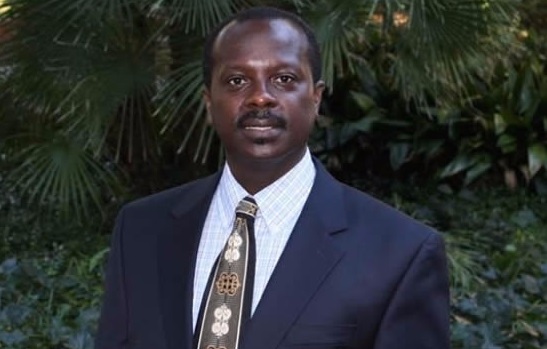
    Accra, Ghana — For years, he stood one heartbeat away from the highest office in the land. Today, the question dominating Ghana’s political landscape is simple yet profound: Can Dr. Mahamudu Bawumia finally complete his journey to the presidency?

    From celebrated economist to Vice President and presidential candidate, Bawumia’s political rise has been one of the most remarkable stories in Ghana’s Fourth Republic. Yet despite years at the center of power, the ultimate prize—the presidency—has remained elusive.

    Now, as the New Patriotic Party (NPP) looks toward the future, Bawumia’s quest for the nation’s highest office continues to captivate supporters, critics, and political observers alike.

    THE MAN WHO PROMISED A DIGITAL REVOLUTION

    Throughout his political career, Bawumia built his reputation around economic expertise, digitization, and institutional reforms. He championed digital transformation initiatives and repeatedly presented himself as the candidate of innovation, job creation, and economic modernization. He also outlined ambitious plans for governance reforms, employment opportunities, and a technology-driven economy.

    Supporters saw him as a visionary prepared to move Ghana into a new era. Critics, however, questioned whether his promises could be separated from the record of the administration in which he served.

    THE WEIGHT OF GOVERNMENT

    For many voters, Bawumia’s greatest strength became his greatest challenge.

    As Vice President, he possessed unmatched experience in government. Yet he also carried the burden of public dissatisfaction during periods of economic hardship and rising living costs. The 2024 election unfolded against the backdrop of significant economic challenges that fueled demands for change across the country.

    Political analysts argued that voters were forced to decide whether Bawumia represented continuity or a fresh beginning.

    THE DEFEAT THAT CHANGED EVERYTHING

    The defining moment came when former President John Mahama secured victory in Ghana’s 2024 presidential election. Bawumia conceded defeat, acknowledging the verdict of the electorate and earning praise for helping preserve Ghana’s democratic stability.

    For many politicians, such a defeat would signal the end.

    For Bawumia, it may have marked the beginning of a new chapter.

    THE ROAD TO 2028

    Far from retreating from public life, Bawumia has continued positioning himself as a major force within the NPP. He has publicly declared himself prepared to lead both the party and the nation in future elections, signaling that his presidential ambitions remain alive and well.

    The challenge ahead is enormous.

    He must rebuild momentum, reconnect with voters, and convince Ghanaians that he offers a compelling alternative for the future. He must also navigate internal party dynamics while facing rivals eager to claim the mantle of leadership.

    A POLITICAL TEST OF DESTINY

    The search for Ghana’s presidency is rarely a straight path. It is a journey defined by resilience, reinvention, and public trust.

    For Dr. Mahamudu Bawumia, the next chapter could determine whether he becomes a footnote in Ghana’s political history or one of the few leaders who turned electoral disappointment into eventual triumph.

    As the nation looks ahead, one question continues to echo through Ghana’s political corridors:

    Is Dr. Bawumia’s presidential dream delayed—or merely waiting for its moment?
  • Jerry John Rawlings @ 79: The Legacy — Remembering the Revolutionary Who Redefined Ghana’s Political Landscape

    Jerry John Rawlings @ 79: The Legacy — Remembering the Revolutionary Who Redefined Ghana’s Political Landscape

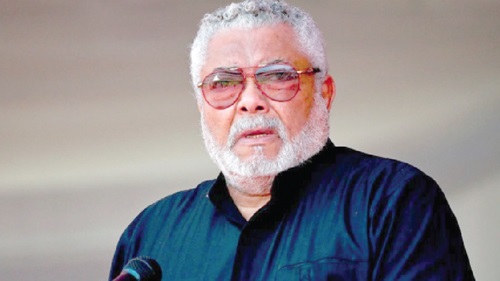
    Though he is no longer with us, the name Jerry John Rawlings continues to echo through the corridors of Ghana’s history, politics, and democratic journey. As the former President would have marked his 79th birthday, Ghanaians are once again reflecting on the extraordinary legacy of the soldier-turned-statesman whose influence remains deeply embedded in the nation’s story.

    Few leaders have left as profound an imprint on Ghana as Rawlings. Admired by supporters as a fearless revolutionary and criticized by opponents for the excesses of military rule, his life remains one of the most compelling chapters in the country’s post-independence history.

    Born on June 22, 1947, Rawlings first burst onto the national scene as a young Flight Lieutenant determined to challenge what he saw as corruption and mismanagement within the political establishment. His dramatic involvement in the June 4, 1979 uprising transformed him from an obscure military officer into a household name and a symbol of radical change.

    The events that followed would forever alter Ghana’s political trajectory. Rawlings led the Armed Forces Revolutionary Council (AFRC), overseeing a turbulent period marked by sweeping reforms and controversial actions that continue to generate debate decades later.

    Yet it was his return to power through the December 31, 1981 intervention and subsequent leadership of the Provisional National Defence Council (PNDC) that cemented his place in history. Under his administration, Ghana embarked on difficult economic reforms aimed at stabilizing a struggling economy, attracting international support, and laying the groundwork for future growth.

    Perhaps Rawlings’ most enduring contribution was his role in Ghana’s democratic transition. In 1992, he oversaw the country’s return to constitutional rule and successfully transformed himself from military ruler into democratically elected president under the banner of the National Democratic Congress (NDC).

    Serving two constitutional terms, Rawlings presided over a period that strengthened democratic institutions and culminated in Ghana’s historic peaceful transfer of power in 2001—an achievement widely regarded as a milestone in the country’s democratic development.

    Beyond politics, Rawlings cultivated an image as a champion of accountability, discipline, and social justice. His passionate speeches often challenged corruption, inequality, and abuse of power, themes that remained central to his public life even after leaving office.

    More than five years after his passing, the debate over Rawlings’ legacy remains as vibrant as ever. To some, he was a patriot who rescued Ghana from economic decline and entrenched democratic governance. To others, unanswered questions about human rights abuses during periods of military rule continue to cast a shadow over parts of his record.

    What is undeniable, however, is the scale of his impact. Rawlings shaped political discourse, influenced generations of leaders, and left behind a legacy that continues to inspire admiration, criticism, reflection, and debate.

    As Ghana remembers what would have been his 79th birthday, the nation is once again confronted with a familiar question: How will history ultimately judge Jerry John Rawlings?

    For many, the answer lies not in simple praise or condemnation, but in recognizing a complex leader whose actions fundamentally transformed Ghana and whose legacy will continue to be examined for generations to come.

  • Igbo Community in Ghana Rejects Chukwudi Ihenetu’s Claim to Leadership: “Changing the Title Changes Nothing”

    Igbo Community in Ghana Rejects Chukwudi Ihenetu’s Claim to Leadership: “Changing the Title Changes Nothing”

    Fresh Controversy Erupts as Community Distances Itself from Self-Styled Igbo Leader

    A fresh leadership dispute has erupted within Ghana’s Igbo community after members publicly rejected claims by Chukwudi Jude Ihenetu to represent them, insisting that his recent rebranding from “King of Igbos in Ghana” to “Leader of Igbos in Ghana” does not grant him legitimacy.

    In a strongly worded position, members of the community declared that Ihenetu does not speak on behalf of all Igbos living in Ghana and cannot claim a mandate to represent the diverse interests of the ethnic group.

    According to them, merely changing a title does not alter the underlying concerns surrounding his claim to authority.

    “Whether he calls himself King, Leader, or any other title, it does not change the fact that he is not the recognized representative of the Igbo community in Ghana,” community members reportedly maintained.

    The development comes amid renewed debate over representation, leadership structures, and who has the authority to speak for the thousands of Igbos residing across the country.

    Critics argue that the position of “King of Igbos” has long been controversial, with some community members questioning both its legitimacy and its relevance within the traditional and cultural structures of the Igbo people.

    The latest rejection signals a widening divide over leadership and representation, as community stakeholders insist that no individual should unilaterally assume authority over an entire ethnic group without broad consultation and acceptance.

    Observers say the controversy could further intensify discussions about diaspora leadership, cultural representation, and the role of self-appointed traditional titles within foreign jurisdictions.

    As the debate gains momentum, one message from the dissenting group remains unmistakably clear: changing the label does not change the reality, and Chukwudi Jude Ihenetu is not their leader.

    The dispute is expected to spark further conversations within the community as calls grow for a more inclusive and widely accepted framework for representation.

  • “FIX THE ROADS NOW!” — CPP SOUNDS ALARM OVER NATIONWIDE ROAD CRISIS

    “FIX THE ROADS NOW!” — CPP SOUNDS ALARM OVER NATIONWIDE ROAD CRISIS

    Party Demands Urgent Government Action as Poor Roads Continue to Frustrate Commuters and Threaten Lives

    The Convention People’s Party (CPP) has issued a strong call for the immediate rehabilitation of roads across the country, warning that deteriorating road networks are causing immense hardship for citizens and posing serious risks to lives and livelihoods.

    In a passionate appeal, the party expressed deep concern over the worsening condition of major highways, urban roads, and rural routes, arguing that years of neglect have left many communities struggling with unsafe and unreliable transportation infrastructure.

    According to the CPP, the poor state of roads is not only disrupting daily travel but also affecting economic activity, increasing vehicle maintenance costs, delaying the movement of goods, and undermining national development efforts.

    The party stressed that countless motorists, commercial drivers, traders, and residents are forced to navigate pothole-ridden roads every day, exposing them to accidents and unnecessary hardships.

    “The situation has become unbearable,” the CPP declared, urging authorities to treat road rehabilitation as a national emergency rather than a routine administrative matter.

    The party further called on government agencies responsible for roads and infrastructure to accelerate repair works and ensure that abandoned projects are completed without delay. It argued that quality roads are essential for economic growth, job creation, trade, and the delivery of social services.

    The CPP also appealed for greater accountability in the management of road projects, insisting that taxpayers deserve value for money and durable infrastructure capable of serving communities for years to come.

    As public frustration over deteriorating roads continues to grow in many parts of the country, the party’s demand adds to mounting pressure on authorities to take swift and decisive action.

    With commuters enduring daily traffic challenges, transport operators counting rising costs, and residents raising safety concerns, the call for immediate road repairs is likely to intensify in the coming weeks.

    For many citizens, the message is simple and urgent: the nation’s roads can no longer wait.

  • SHOCK ANNOUNCEMENT: NDC Renames National Headquarters After Jerry John Rawlings

    SHOCK ANNOUNCEMENT: NDC Renames National Headquarters After Jerry John Rawlings

    In a dramatic move aimed at cementing the legacy of one of Ghana’s most influential political figures, the National Democratic Congress (NDC) has officially named its national headquarters in Adabraka after its founder and former President, Jerry John Rawlings.

    The decision, unveiled amid applause and emotional tributes from party faithful, marks a historic moment for the governing party as it seeks to honor the man widely regarded as the architect of the NDC’s political philosophy and enduring influence in Ghanaian politics.

    The newly designated “Jerry John Rawlings House” is expected to serve as a lasting symbol of the former President’s contributions to democracy, governance, and the growth of the party he established decades ago.

    Senior NDC officials described the move as a fitting recognition of Rawlings’ pivotal role in shaping the party’s identity and steering Ghana through critical periods of its political history. Party leaders emphasized that his ideals, sacrifices, and commitment to social justice continue to inspire generations of members.

    The announcement sparked excitement among supporters, many of whom hailed the decision as long overdue. Crowds gathered to celebrate the tribute, recalling Rawlings’ enduring impact on Ghana’s political landscape and his unwavering dedication to the NDC cause.

    Political observers say the renaming could further strengthen the emotional connection between the party and its grassroots base, particularly as the NDC seeks to reinforce its historical roots and legacy.

    Jerry John Rawlings, who founded the NDC and served as Ghana’s President for nearly two decades, remains one of the most influential and debated figures in the nation’s history. His name now stands permanently attached to the party’s headquarters in Adabraka, ensuring that his legacy will continue to loom large over the NDC’s future.

    As the party looks ahead, the message is clear: the spirit of Rawlings remains firmly at the heart of the NDC.

  • SHOCKWAVE IN BRITISH POLITICS: KEIR STARMER RESIGNS AS PRIME MINISTER AND LABOUR LEADER IN DRAMATIC EXIT

    SHOCKWAVE IN BRITISH POLITICS: KEIR STARMER RESIGNS AS PRIME MINISTER AND LABOUR LEADER IN DRAMATIC EXIT

    London, United Kingdom — In a stunning political bombshell that has sent shockwaves across Britain and beyond, Keir Starmer has announced his resignation as Prime Minister and leader of the Labour Party, triggering an immediate leadership crisis and plunging Westminster into uncertainty.

    The unexpected announcement came amid intense speculation about the future direction of the government, leaving ministers, party officials, and political observers scrambling to understand the implications of the dramatic departure.

    Standing before reporters outside Downing Street, Starmer confirmed that he would step down from both of the nation’s most powerful political positions, bringing an abrupt end to his tenure at the top of British politics.

    “I have concluded that the time is right for new leadership,” Starmer said, as stunned supporters and political allies watched on.

    The resignation marks one of the most significant moments in recent British political history. Within minutes of the announcement, Labour MPs began positioning themselves for what is expected to be a fierce and highly contested leadership battle.

    Political analysts described the development as a “political earthquake,” warning that the move could reshape the country’s political landscape for years to come.

    Questions are now mounting over who will replace Starmer as Labour leader and whether the governing party can maintain unity during the transition. Senior cabinet members are reportedly holding urgent meetings as pressure grows for a swift succession process.

    Opposition parties wasted little time reacting to the news, with rivals arguing that the resignation reflects deeper challenges within the government. Meanwhile, financial markets and international allies are closely monitoring developments in London as uncertainty grips Britain’s political establishment.

    The dramatic exit comes at a critical moment for the country, with major economic, social, and international issues demanding attention. Analysts say the next few days could prove decisive in determining the future of the Labour Party and the direction of the government.

    As Westminster braces for an intense battle for power, one thing is clear: Keir Starmer’s resignation has opened a new and unpredictable chapter in British politics, leaving the nation asking one question—who will lead Britain next?

  • IDEOLOGIES IN CRISIS? Professor Kwaku Azar Set to Expose How Political Parties Have Drifted From Their Founding Visions

    IDEOLOGIES IN CRISIS? Professor Kwaku Azar Set to Expose How Political Parties Have Drifted From Their Founding Visions

    Renowned governance expert and legal scholar, Professor Kwaku Azar, is poised to ignite a national conversation with a highly anticipated lecture examining the growing disconnect between political parties and the ideologies that once defined them.

    The respected academic is expected to deliver a thought-provoking presentation on the theme of how modern political parties are increasingly abandoning their core visions, principles, and ideological foundations in pursuit of power and political survival.

    The lecture, which is already generating significant interest among political observers, academics, students, and civil society groups, will delve into what many describe as a worrying trend in contemporary politics: the erosion of party identity and the blurring of ideological distinctions among competing political organizations.

    According to organizers, Professor Azar will explore the historical foundations upon which political parties were built and contrast them with present-day realities, where party positions often appear driven more by expediency than by firmly held beliefs.

    Political analysts believe the lecture comes at a crucial time when voters across many democracies are increasingly questioning whether political parties still stand for the values they profess. The discussion is expected to address issues such as policy inconsistency, political opportunism, shifting alliances, and the growing perception that electoral success has become more important than ideological commitment.

    Professor Azar, widely recognized for his outspoken views on governance, accountability, constitutionalism, and democratic development, is expected to challenge political leaders and citizens alike to reflect on the future of democratic politics and the role ideology should play in shaping public policy.

    Observers say the lecture could spark fresh debate about political accountability and whether parties can regain public trust by reconnecting with the visions and principles that inspired their creation.

    As anticipation builds, many are eager to hear Professor Azar’s assessment of the current political landscape and his recommendations for restoring ideological integrity within political institutions.

    The event is expected to attract a diverse audience, including policymakers, scholars, political activists, students, and members of the general public interested in the future direction of democratic governance.

  • Afari Hospital Left Hanging? Ahiagbah Demands Immediate Government Action to Complete Critical Health Facility

    Afari Hospital Left Hanging? Ahiagbah Demands Immediate Government Action to Complete Critical Health Facility

    Government under pressure as calls grow for urgent completion of Afari Hospital project

    A leading government communicator, Richard Ahiagbah, has intensified calls on authorities to commit the necessary resources toward the completion of the long-delayed Afari Hospital project, warning that further delays could deprive thousands of residents of much-needed healthcare services.

    Speaking on the importance of the facility, Ahiagbah stressed that the hospital remains a critical healthcare investment whose completion should be treated as a national priority rather than another abandoned infrastructure project.

    According to him, residents in the area have waited far too long to benefit from the modern health facility, which was envisioned to improve healthcare delivery, reduce pressure on existing hospitals, and provide quality medical services to surrounding communities.

    “The government must commit the resources required to complete the Afari Hospital,” Ahiagbah urged, emphasizing that unfinished health projects have serious consequences for citizens who depend on accessible healthcare.

    His comments come amid growing public concern over stalled infrastructure projects across the country, with many questioning when key facilities will finally become operational.

    Health advocates argue that completing the Afari Hospital could significantly improve medical care in the region by increasing access to treatment, creating employment opportunities, and strengthening the overall health system.

    Observers say the renewed call by Ahiagbah is likely to reignite debate over government spending priorities and the need to ensure that major public projects are completed and put to use.

    As pressure mounts, many residents are now looking to government officials for a clear timeline on when the Afari Hospital will be fully completed and opened to serve the public.

    For communities eagerly awaiting its services, the message is clear: the time for promises has passed—what is needed now is action.

  • ACCRA ON THE BRINK! Parliament and Assemblies Ordered to Unite as Flood Threat Looms Over Capital

    ACCRA ON THE BRINK! Parliament and Assemblies Ordered to Unite as Flood Threat Looms Over Capital

    Committee Sounds Alarm: Political Division Could Worsen Accra’s Flooding Crisis

    Accra’s perennial flooding nightmare has once again come under the spotlight, with the Parliamentary Select Committee on Local Government and Rural Development issuing a strong call for urgent collaboration between Parliament and Metropolitan, Municipal and District Assemblies (MMDAs) to tackle the growing menace.

    The Committee warned that without a united front, the capital could continue to suffer devastating floods that destroy homes, claim lives and cripple economic activities whenever heavy rains strike.

    Speaking during engagements with local authorities, members of the Committee stressed that flooding in Accra has reached alarming levels and can no longer be addressed through fragmented efforts. They emphasized that lawmakers and local assemblies must work hand in hand to formulate and implement practical, long-term solutions.

    According to the Committee, poor drainage systems, uncontrolled construction on waterways, inadequate waste management and weak enforcement of planning regulations have combined to make Accra increasingly vulnerable to floods.

    The lawmakers noted that while assemblies play a frontline role in managing local infrastructure and sanitation, Parliament has the responsibility to provide the legislative backing, funding and policy direction needed to support effective interventions.

    “The flooding challenge cannot be solved by one institution alone,” members of the Committee stressed. “There must be stronger coordination between Parliament and local assemblies if we are to protect lives and property.”

    The Committee further urged authorities to intensify public education campaigns, enforce building regulations without fear or favour and accelerate drainage improvement projects across flood-prone communities.

    Residents in many parts of Accra continue to live in fear during the rainy season, with memories of past flood disasters still fresh. Experts have repeatedly warned that climate change, rapid urbanization and poor planning could worsen the situation if decisive action is not taken.

    As concerns grow over the city’s preparedness for future storms, the Committee’s intervention is being viewed as a crucial wake-up call for all stakeholders.

    With thousands of residents at risk and billions of cedis in property exposed to potential destruction, pressure is mounting on both Parliament and local assemblies to move beyond promises and deliver concrete action before the next major downpour strikes.

    For many residents, the message is clear: the time for blame games is over—Accra needs urgent solutions before the floods return.

  • “June/July 2027: The Day of Reckoning!” – Ken Agyapong Threatens to Expose NPP Secrets if Provoked

    “June/July 2027: The Day of Reckoning!” – Ken Agyapong Threatens to Expose NPP Secrets if Provoked

    Former Assin Central MP and New Patriotic Party (NPP) heavyweight Kennedy Agyapong has sent shockwaves through Ghana’s political landscape with a dramatic warning that he could unleash explosive revelations about his own party if pushed too far.

    In a fiery interview that is already generating intense debate within political circles, Agyapong declared that certain individuals within the NPP should be very careful in how they deal with him, warning that June and July 2027 could mark a turning point in the party’s history.

    The outspoken politician, known for his no-holds-barred commentary, hinted that he possesses sensitive information capable of rattling the foundations of the opposition party. According to him, if party members continue to attack, undermine, or provoke him, he will have no choice but to “spill the beans” for the entire nation to hear.

    “I am giving them time. June and July 2027, they will see action,” Agyapong reportedly warned, fueling speculation about what exactly he intends to reveal and who within the party could be affected.

    The former NPP presidential aspirant also expressed frustration over criticism directed at him following his comments on governance issues, including the controversial debate surrounding the completion of the Afari Military Hospital project. He questioned why the NPP government was unable to complete the facility during its eight years in office while expecting the current administration to finish it within a much shorter period.

    Agyapong dismissed claims that his remarks are driven by bitterness, insisting that he will not be intimidated into silence. Instead, he maintained that he is prepared to reveal what he knows if internal attacks against him continue.

    His explosive comments have triggered widespread speculation across political circles, with supporters and critics alike wondering whether the outspoken businessman-turned-politician is preparing to disclose damaging information about events behind the scenes of the NPP.

    As June and July 2027 become the focus of political conversation, one question is dominating discussions: What exactly does Kennedy Agyapong know, and will he truly reveal it when the time comes? For now, the countdown appears to have begun.