

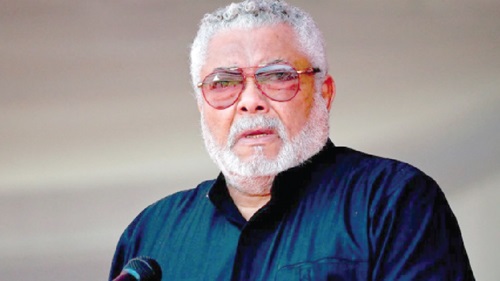
Though he is no longer with us, the name Jerry John Rawlings continues to echo through the corridors of Ghana’s history, politics, and democratic journey. As the former President would have marked his 79th birthday, Ghanaians are once again reflecting on the extraordinary legacy of the soldier-turned-statesman whose influence remains deeply embedded in the nation’s story.
Few leaders have left as profound an imprint on Ghana as Rawlings. Admired by supporters as a fearless revolutionary and criticized by opponents for the excesses of military rule, his life remains one of the most compelling chapters in the country’s post-independence history.
Born on June 22, 1947, Rawlings first burst onto the national scene as a young Flight Lieutenant determined to challenge what he saw as corruption and mismanagement within the political establishment. His dramatic involvement in the June 4, 1979 uprising transformed him from an obscure military officer into a household name and a symbol of radical change.
The events that followed would forever alter Ghana’s political trajectory. Rawlings led the Armed Forces Revolutionary Council (AFRC), overseeing a turbulent period marked by sweeping reforms and controversial actions that continue to generate debate decades later.
Yet it was his return to power through the December 31, 1981 intervention and subsequent leadership of the Provisional National Defence Council (PNDC) that cemented his place in history. Under his administration, Ghana embarked on difficult economic reforms aimed at stabilizing a struggling economy, attracting international support, and laying the groundwork for future growth.
Perhaps Rawlings’ most enduring contribution was his role in Ghana’s democratic transition. In 1992, he oversaw the country’s return to constitutional rule and successfully transformed himself from military ruler into democratically elected president under the banner of the National Democratic Congress (NDC).
Serving two constitutional terms, Rawlings presided over a period that strengthened democratic institutions and culminated in Ghana’s historic peaceful transfer of power in 2001—an achievement widely regarded as a milestone in the country’s democratic development.
Beyond politics, Rawlings cultivated an image as a champion of accountability, discipline, and social justice. His passionate speeches often challenged corruption, inequality, and abuse of power, themes that remained central to his public life even after leaving office.
More than five years after his passing, the debate over Rawlings’ legacy remains as vibrant as ever. To some, he was a patriot who rescued Ghana from economic decline and entrenched democratic governance. To others, unanswered questions about human rights abuses during periods of military rule continue to cast a shadow over parts of his record.
What is undeniable, however, is the scale of his impact. Rawlings shaped political discourse, influenced generations of leaders, and left behind a legacy that continues to inspire admiration, criticism, reflection, and debate.
As Ghana remembers what would have been his 79th birthday, the nation is once again confronted with a familiar question: How will history ultimately judge Jerry John Rawlings?
For many, the answer lies not in simple praise or condemnation, but in recognizing a complex leader whose actions fundamentally transformed Ghana and whose legacy will continue to be examined for generations to come.