Tag: Jerry John Rawlings

  • RAWLINGS’ TRUE LEGACY UNDER THREAT: GHANA MUST EMBRACE DISCIPLINE OVER EMPTY SYMBOLISM — OPONG-FOSU WARNS

    RAWLINGS’ TRUE LEGACY UNDER THREAT: GHANA MUST EMBRACE DISCIPLINE OVER EMPTY SYMBOLISM — OPONG-FOSU WARNS

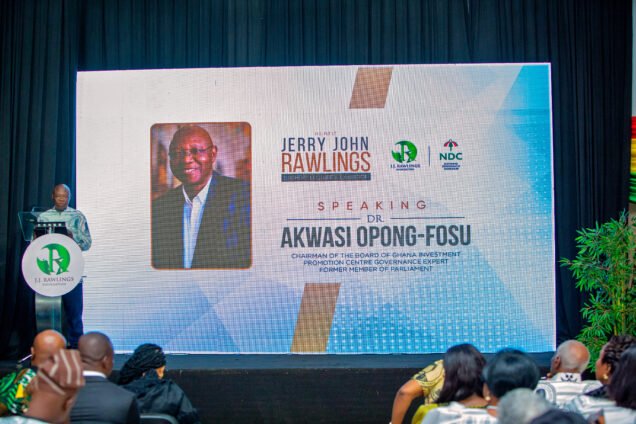
    Former government minister and political commentator, E. T. Mensah Opong-Fosu, has issued a powerful call for Ghana to move beyond ceremonial tributes and embrace the deeper values associated with the legacy of Jerry Rawlings — warning that institutional discipline, accountability, and strong governance systems must become the real measure of his impact.

    Opong-Fosu argued that remembering Rawlings should not be reduced to public celebrations, speeches, or symbolic gestures, but should instead focus on rebuilding the systems of discipline and responsibility that defined much of Rawlings’ political era.

    According to him, the late former president’s greatest contribution was the emphasis on order, integrity, and the demand that public institutions serve the people with seriousness and commitment.
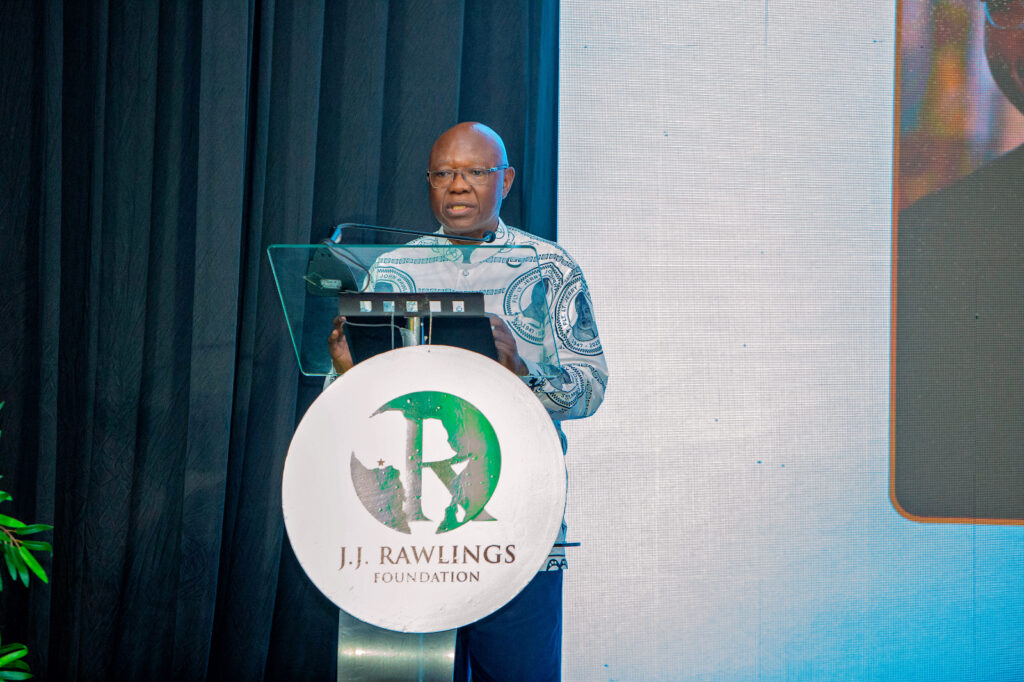
    “Rawlings’ legacy cannot survive on symbolism alone,” Opong-Fosu stressed, insisting that Ghana’s institutions must demonstrate the values that many associate with the former leader.

    He warned that a nation cannot honour a political figure while ignoring the principles that shaped that person’s leadership. For him, the real tribute lies in strengthening public institutions, enforcing accountability, and creating a culture where rules apply equally to everyone.

    The comments have reignited debate about how Ghana should preserve the memory of Rawlings and whether the country has moved away from the governance ideals associated with his leadership.

    Supporters of Rawlings often point to his focus on discipline, anti-corruption efforts, and institutional reforms, while critics continue to debate aspects of his political methods and governance record.

    However, Opong-Fosu maintained that the conversation should focus less on personalities and more on building a functioning state where institutions are respected and effective.

    “True remembrance is not about monuments and ceremonies; it is about keeping alive the principles that can strengthen the country,” he said.

    The remarks come at a time when calls for stronger governance, accountability, and institutional reforms continue to dominate Ghana’s national conversation.

    For Opong-Fosu, the biggest test of Rawlings’ legacy is whether Ghana can transform the ideals associated with his leadership into lasting national institutions.
  • Jerry John Rawlings @ 79: The Legacy — Remembering the Revolutionary Who Redefined Ghana’s Political Landscape

    Jerry John Rawlings @ 79: The Legacy — Remembering the Revolutionary Who Redefined Ghana’s Political Landscape

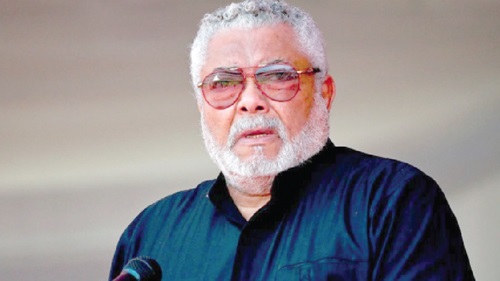
    Though he is no longer with us, the name Jerry John Rawlings continues to echo through the corridors of Ghana’s history, politics, and democratic journey. As the former President would have marked his 79th birthday, Ghanaians are once again reflecting on the extraordinary legacy of the soldier-turned-statesman whose influence remains deeply embedded in the nation’s story.

    Few leaders have left as profound an imprint on Ghana as Rawlings. Admired by supporters as a fearless revolutionary and criticized by opponents for the excesses of military rule, his life remains one of the most compelling chapters in the country’s post-independence history.

    Born on June 22, 1947, Rawlings first burst onto the national scene as a young Flight Lieutenant determined to challenge what he saw as corruption and mismanagement within the political establishment. His dramatic involvement in the June 4, 1979 uprising transformed him from an obscure military officer into a household name and a symbol of radical change.

    The events that followed would forever alter Ghana’s political trajectory. Rawlings led the Armed Forces Revolutionary Council (AFRC), overseeing a turbulent period marked by sweeping reforms and controversial actions that continue to generate debate decades later.

    Yet it was his return to power through the December 31, 1981 intervention and subsequent leadership of the Provisional National Defence Council (PNDC) that cemented his place in history. Under his administration, Ghana embarked on difficult economic reforms aimed at stabilizing a struggling economy, attracting international support, and laying the groundwork for future growth.

    Perhaps Rawlings’ most enduring contribution was his role in Ghana’s democratic transition. In 1992, he oversaw the country’s return to constitutional rule and successfully transformed himself from military ruler into democratically elected president under the banner of the National Democratic Congress (NDC).

    Serving two constitutional terms, Rawlings presided over a period that strengthened democratic institutions and culminated in Ghana’s historic peaceful transfer of power in 2001—an achievement widely regarded as a milestone in the country’s democratic development.

    Beyond politics, Rawlings cultivated an image as a champion of accountability, discipline, and social justice. His passionate speeches often challenged corruption, inequality, and abuse of power, themes that remained central to his public life even after leaving office.

    More than five years after his passing, the debate over Rawlings’ legacy remains as vibrant as ever. To some, he was a patriot who rescued Ghana from economic decline and entrenched democratic governance. To others, unanswered questions about human rights abuses during periods of military rule continue to cast a shadow over parts of his record.

    What is undeniable, however, is the scale of his impact. Rawlings shaped political discourse, influenced generations of leaders, and left behind a legacy that continues to inspire admiration, criticism, reflection, and debate.

    As Ghana remembers what would have been his 79th birthday, the nation is once again confronted with a familiar question: How will history ultimately judge Jerry John Rawlings?

    For many, the answer lies not in simple praise or condemnation, but in recognizing a complex leader whose actions fundamentally transformed Ghana and whose legacy will continue to be examined for generations to come.

  • SHOCK ANNOUNCEMENT: NDC Renames National Headquarters After Jerry John Rawlings

    SHOCK ANNOUNCEMENT: NDC Renames National Headquarters After Jerry John Rawlings

    In a dramatic move aimed at cementing the legacy of one of Ghana’s most influential political figures, the National Democratic Congress (NDC) has officially named its national headquarters in Adabraka after its founder and former President, Jerry John Rawlings.

    The decision, unveiled amid applause and emotional tributes from party faithful, marks a historic moment for the governing party as it seeks to honor the man widely regarded as the architect of the NDC’s political philosophy and enduring influence in Ghanaian politics.

    The newly designated “Jerry John Rawlings House” is expected to serve as a lasting symbol of the former President’s contributions to democracy, governance, and the growth of the party he established decades ago.

    Senior NDC officials described the move as a fitting recognition of Rawlings’ pivotal role in shaping the party’s identity and steering Ghana through critical periods of its political history. Party leaders emphasized that his ideals, sacrifices, and commitment to social justice continue to inspire generations of members.

    The announcement sparked excitement among supporters, many of whom hailed the decision as long overdue. Crowds gathered to celebrate the tribute, recalling Rawlings’ enduring impact on Ghana’s political landscape and his unwavering dedication to the NDC cause.

    Political observers say the renaming could further strengthen the emotional connection between the party and its grassroots base, particularly as the NDC seeks to reinforce its historical roots and legacy.

    Jerry John Rawlings, who founded the NDC and served as Ghana’s President for nearly two decades, remains one of the most influential and debated figures in the nation’s history. His name now stands permanently attached to the party’s headquarters in Adabraka, ensuring that his legacy will continue to loom large over the NDC’s future.

    As the party looks ahead, the message is clear: the spirit of Rawlings remains firmly at the heart of the NDC.