

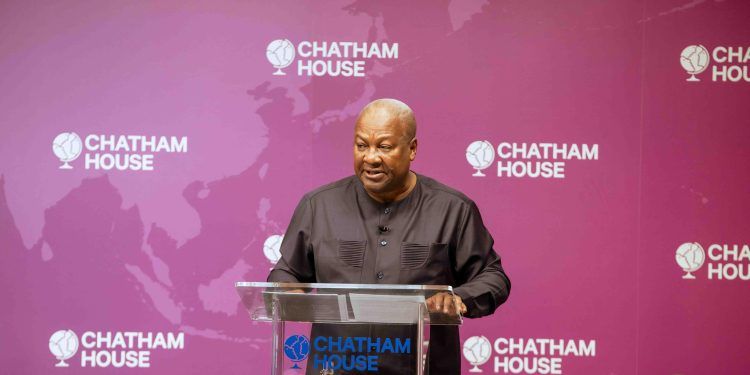
Former Ghanaian President Pushes Strong Message on Africa’s Global Relations
Former President of Ghana, John Dramani Mahama, has delivered a bold and uncompromising message to the international community, declaring that Africa is no longer seeking sympathy, but instead demands fair, mutually beneficial partnerships built on respect and shared prosperity.
Speaking on the future of Africa’s development and international cooperation, Mahama emphasized that the continent is moving away from dependency-driven relationships and toward strategic collaborations that reflect its growing economic and demographic strength.
According to him, Africa’s narrative must shift from one of aid dependence to one of equal partnership, where investments, trade agreements, and development initiatives are structured to benefit all sides rather than reinforce imbalance.
Mahama stressed that African nations are increasingly capable of shaping their own destinies through improved governance, resource management, and regional cooperation, and therefore deserve to be treated as equal stakeholders in global decision-making.
He warned against outdated perceptions that continue to portray Africa solely through the lens of poverty and assistance, arguing that such framing undermines the continent’s progress in innovation, entrepreneurship, and infrastructure development.
The former president called on global powers, financial institutions, and development partners to rethink their engagement models with Africa, urging a transition from aid-based relationships to investment-driven and trade-focused partnerships.
His remarks have sparked discussion among policy analysts and development experts, many of whom say his message reflects a broader continental push for economic sovereignty and a stronger voice in global affairs.
Mahama’s statement adds to ongoing debates about Africa’s place in the global order, particularly at a time when several countries on the continent are renegotiating trade deals and seeking more equitable investment frameworks.
Observers say his comments are likely to resonate strongly across Africa, where leaders have increasingly called for reforms in global governance structures and international financial systems.