

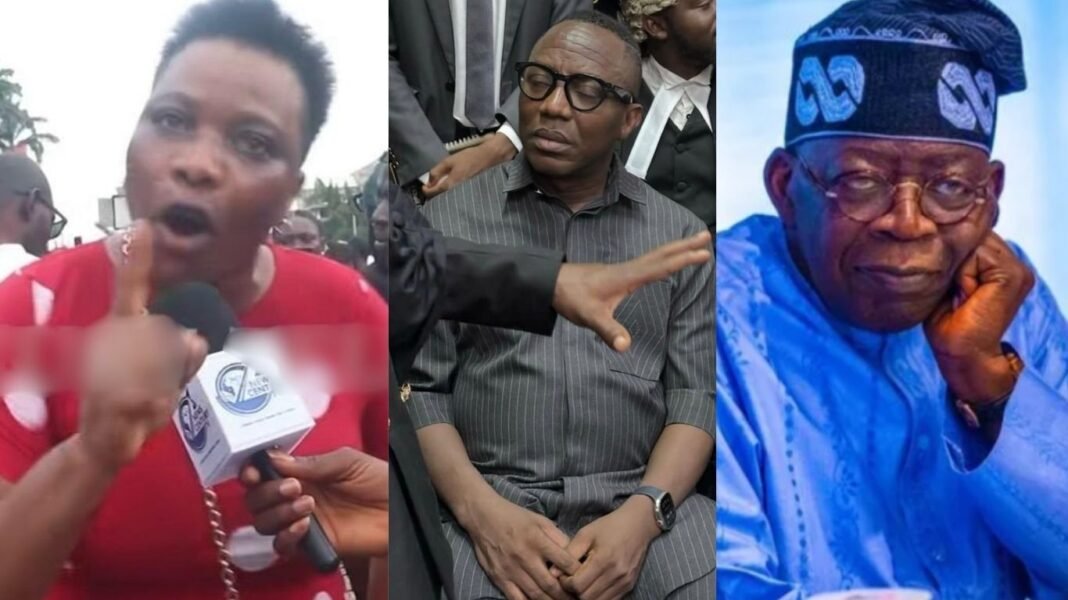
Outspoken Actress Sparks Political Firestorm Amid Growing Tension Over Arrest
Nigerian actress and public commentator Doris Ogala has ignited a fresh wave of political debate after launching a scathing attack on President Bola Ahmed Tinubu, demanding his resignation if he is unable to effectively govern the country.
Her explosive remarks come in the wake of the continued detention of activist and politician Omoyele Sowore, a development that has stirred controversy and drawn criticism from sections of the public and civil society groups.
In a strongly worded reaction shared on social commentary platforms, Ogala expressed outrage over Sowore’s arrest and detention, describing the situation as unacceptable and symptomatic of deeper governance concerns.
“If Tinubu can’t lead Nigeria, he should resign,” she declared, a statement that has since gone viral and triggered intense debate across
social media.

Rising Political Temperature in Nigeria
The controversy adds to growing political tension in Nigeria, where issues of civic rights, freedom of expression, and government accountability continue to dominate public discourse.
Supporters of Sowore argue that his repeated confrontations with authorities reflect broader struggles over political dissent and civil liberties, while critics of the activist maintain that due process must be respected in ongoing legal matters.
Public Figures Join Heated Debate
Doris Ogala’s comments have further polarised opinions online, with some praising her for speaking out boldly against perceived injustice, while others accuse her of escalating political rhetoric.
The incident has also reignited discussions about the role of celebrities and entertainers in political activism, especially in moments of national sensitivity.
Tension Continues to Build
As reactions continue to pour in, the detention of Sowore remains a focal point in Nigeria’s broader conversation on governance and human rights.
For now, Ogala’s remarks have added fuel to an already charged political atmosphere—turning a legal case into a wider debate about leadership, accountability, and the direction of the nation’s democracy.