Category: Entertainment

  • Ghana Entertainment Erupts as Nana Akua Addo and Yvonne Nelson Red Carpet Dispute Resurfaces

    Ghana Entertainment Erupts as Nana Akua Addo and Yvonne Nelson Red Carpet Dispute Resurfaces

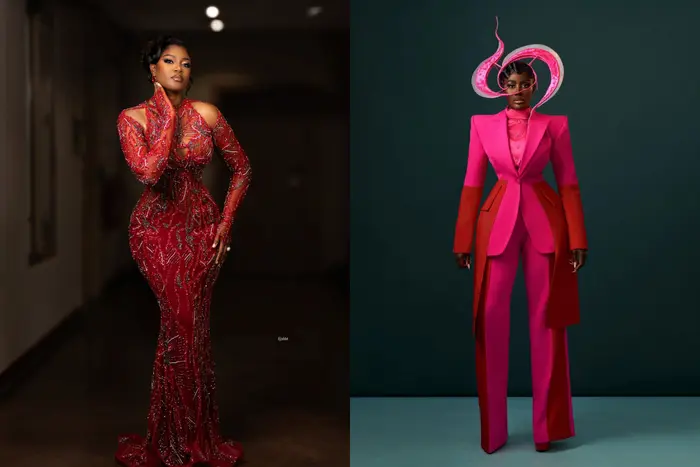
    A familiar tension in Ghana’s entertainment space has resurfaced, pulling fashion personality Nana Akua Addo and actress Yvonne Nelson back into the spotlight over a controversial red carpet debate that has reignited intense public discussion.

    How the controversy returned

    The renewed attention stems from older comments made by Yvonne Nelson, in which she criticized the growing focus on red carpet appearances among celebrities, suggesting that emphasis should be placed more on craft than glamour.

    Although those remarks were made years ago, they have resurfaced in recent discussions and quickly triggered a wave of reactions across the entertainment community.

    Nana Akua Addo responds firmly

    Nana Akua Addo responded strongly to the revived conversation, pushing back against interpretations of the comments and defending the role of red carpet fashion in shaping modern celebrity branding.

    She emphasized that red carpet culture is not merely about appearance, but about visibility, identity, and positioning Ghanaian creatives on global platforms.

    In her response, she presented herself as one of the key figures who helped elevate red carpet fashion into a more structured and influential space within Ghana’s entertainment industry.

    Claims of influence spark debate

    Her remarks escalated the discussion further when she suggested that her work and presence contributed significantly to transforming red carpet fashion into what it is today.

    That assertion immediately divided public opinion, with some agreeing that she has been a consistent fashion force, while others questioned the extent of her influence in shaping the broader industry.

    Social media reactions intensify

    Following her comments, old images and clips from previous red carpet events began circulating online. These resurfaced visuals fueled comparisons between different eras of celebrity fashion and intensified debate over who has truly shaped the culture.

    Online reactions have been sharply divided. Some users support Nana Akua Addo’s position and credit her with elevating Ghana’s fashion visibility, while others argue that the situation is being blown out of proportion and rooted in a misunderstood or outdated comment from Yvonne Nelson.

    A wider cultural argument emerges

    Beyond the personalities involved, the situation has evolved into a broader conversation about Ghana’s entertainment industry and the role of red carpet culture.

    The debate now centers on whether red carpet fashion is a meaningful form of artistic expression and branding, or whether it distracts from the core work of film, acting, and creative production.

    Where things stand now

    While neither side appears to have escalated the matter further publicly, the conversation continues to generate strong opinions online.

    What began as a resurfaced comment has now developed into a wider industry debate, with both Nana Akua Addo and Yvonne Nelson remaining central figures in a discussion that shows no signs of fading quickly.
  • “THIS CARTIER WATCH CAN SPONSOR THREE BLOGGERS ABROAD!” — Oseikrom Sikani’s Viral Flex Sparks Massive Online Reactions

    “THIS CARTIER WATCH CAN SPONSOR THREE BLOGGERS ABROAD!” — Oseikrom Sikani’s Viral Flex Sparks Massive Online Reactions

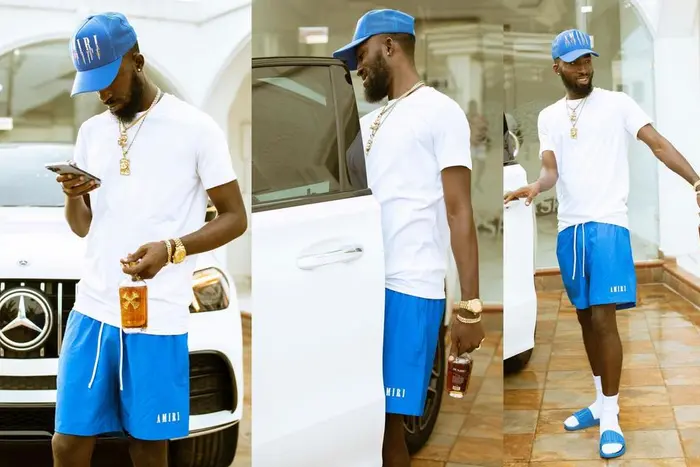
    A viral video featuring popular Ghanaian social media personality Oseikrom Sikani has set social media ablaze after he boldly claimed that a single luxury watch could be enough to sponsor “three bloggers abroad,” a statement that has triggered widespread reactions, debate, and amusement online.

    In the now-trending clip, Sikani is seen flaunting what he suggests is a high-value luxury timepiece from Cartier, while making the provocative remark that its worth could fund the travel or livelihood of multiple content creators outside the country.

    The comment, delivered in his signature flashy and humorous tone, immediately caught fire across social platforms, with users split between admiration, sarcasm, and outright criticism.

    Some viewers interpreted the statement as typical “flex culture” content designed to entertain and stir conversation, while others questioned the message behind it, arguing that such comparisons highlight growing concerns about materialism and social media influence among young creators.

    The video has since been widely circulated, sparking memes, debates, and heated commentary about wealth display, influencer culture, and the economics of content creation in Ghana’s digital space.

    As reactions continue to pour in, Oseikrom Sikani’s statement has once again placed him at the center of online attention—proving that in the world of social media, even a watch can become a headline-grabbing controversy.

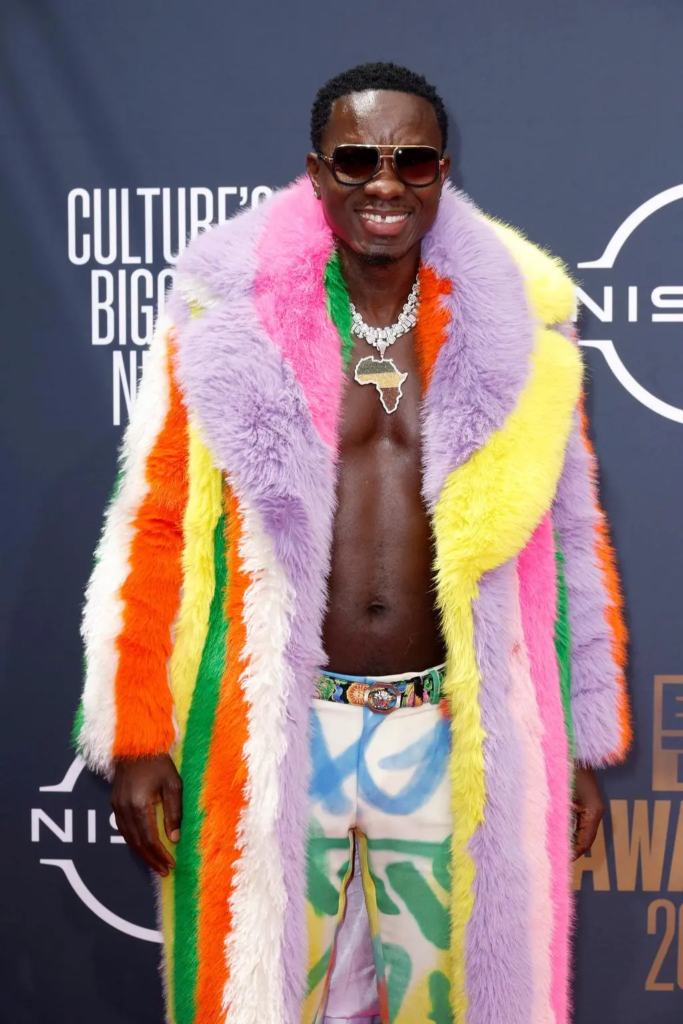
  • MICHAEL BLACKSON CALLS FOR AFRICAN UNITY! Actor Urges Solidarity After South Africa Becomes Online Mockery Target Over World Cup Loss

    MICHAEL BLACKSON CALLS FOR AFRICAN UNITY! Actor Urges Solidarity After South Africa Becomes Online Mockery Target Over World Cup Loss

    Comedian Breaks Silence as Social Media Storm Follows South Africa’s Tournament Setback

    Ghanaian-American comedian Michael Blackson has stepped into the conversation surrounding South Africa’s recent World Cup disappointment, appealing for African solidarity after the country was widely mocked online following its defeat.

    In a passionate message shared on social platforms, Blackson urged Africans to avoid turning on one another during moments of sporting disappointment, stressing that continental unity should take precedence over rivalry and ridicule.

    His comments come amid a wave of online reactions in which South Africa’s performance in the 2026 FIFA World Cup context has been heavily criticized and, in some cases, turned into memes and jokes across social media platforms.

    Blackson, known for his outspoken views on African identity and unity, cautioned that such mockery risks deepening divisions among African nations at a time when collective representation on the global stage is increasingly important.

    He emphasized that while football naturally triggers strong emotions and rivalries, Africans should remember they share a broader identity that should not be undermined by competitive outcomes.

    The appeal has sparked mixed reactions online—some users applauding his call for unity, while others argue that sports banter is a normal part of football culture and should not be overinterpreted.

    Still, his intervention has reignited discussions about how African fans engage with each other during international tournaments, especially in the age of viral social media commentary.

    As debates continue, Blackson’s message stands out as a reminder that beyond the wins and losses, the continent’s shared identity remains a recurring theme in global sports conversations.

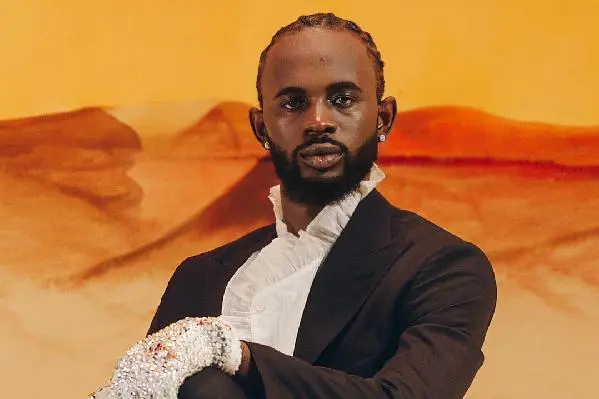
  • Shockwaves in Music Industry as Black Sherif’s Former Manager ‘Snap C’ Reportedly Arrested Over Alleged $1 Million Fraud Case

    Shockwaves in Music Industry as Black Sherif’s Former Manager ‘Snap C’ Reportedly Arrested Over Alleged $1 Million Fraud Case

    Explosive Allegations Rock Entertainment Circles Amid Investigation Claims

    The Ghanaian entertainment industry has been thrown into fresh controversy following reports that former manager of award-winning artist Black Sherif, popularly known as Snap C, has allegedly been arrested in connection with a suspected $1 million fraud case.

    According to emerging reports, Snap C—who previously played a key role in the early management and rise of Black Sherif—was picked up by authorities over allegations involving large-scale financial discrepancies tied to undisclosed transactions.

    While official details remain limited, the alleged case is said to involve accusations of misappropriation and financial irregularities amounting to approximately one million US dollars, sparking widespread shock within entertainment and management circles.

    The development has quickly gained traction on social media, with fans and industry stakeholders expressing concern over the implications for artist-management relationships in Ghana’s fast-growing music industry.

    Although neither Snap C nor his legal representatives have publicly issued a detailed statement at the time of reporting, sources suggest that investigations are ongoing and authorities are working to establish the full circumstances surrounding the alleged fraud.

    The news has also reignited conversations about transparency, accountability, and contractual safeguards within the creative industry, particularly as Ghanaian music continues to gain international recognition.

    Supporters of Black Sherif have largely urged caution, emphasizing that the artist himself is not implicated in the matter and should not be drawn into the legal controversy surrounding his former management team.

    As the situation develops, industry watchers say the case could have broader implications for how young artists structure management agreements and protect their financial interests in high-value entertainment deals.

    For now, the alleged arrest of Snap C remains a developing story, with many awaiting official confirmation and further legal clarity.

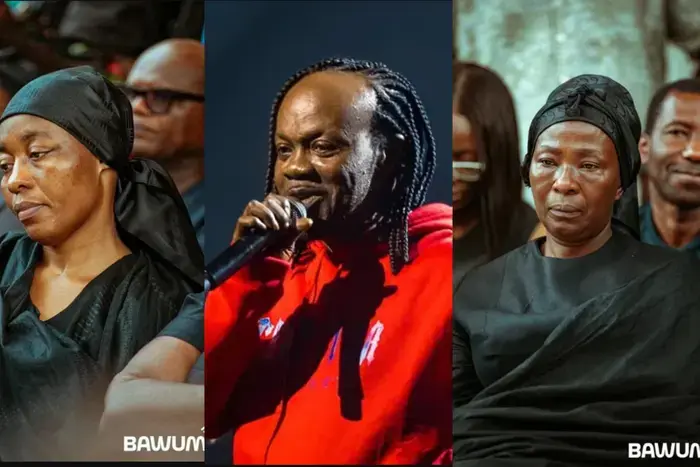
  • LEGAL SHOWDOWN INTENSIFIES! Daddy Lumba’s Widow Akosua Serwaa Files Fresh Appeal in Heated Battle With Odo Broni

    LEGAL SHOWDOWN INTENSIFIES! Daddy Lumba’s Widow Akosua Serwaa Files Fresh Appeal in Heated Battle With Odo Broni

    Accra, Ghana – The long-running legal dispute surrounding the estate and personal affairs of late highlife legend Daddy Lumba has taken a dramatic new twist, as his widow, Akosua Serwaa, has reportedly filed fresh appeal documents in her ongoing legal battle with Odo Broni.

    The latest filing signals a renewed escalation in a case that has continued to attract widespread public attention, drawing in fans, family members, and legal observers closely following developments tied to one of Ghana’s most iconic music figures.

    Court sources indicate that the new appeal seeks to challenge earlier proceedings, with Akosua Serwaa reportedly pushing for a review of key decisions that have shaped the direction of the dispute so far. The move is expected to reopen arguments over contested issues that have yet to be fully resolved.

    The case, which has remained in the public spotlight due to Daddy Lumba’s legendary status in Ghanaian music, continues to generate intense discussion both in legal circles and among supporters of the late musician’s legacy.

    Legal representatives involved in the matter are expected to return to court in the coming sessions, where further arguments and counter-filings are anticipated as both sides prepare for another round of legal confrontation.

    Fans of the highlife icon have expressed mixed reactions online, with some calling for privacy and peaceful resolution, while others closely track each development in what has become one of the most talked-about entertainment-related legal battles in recent times.

    As proceedings continue, the dispute underscores the complex legal and emotional issues often surrounding the estates of major public figures, particularly those with significant cultural and musical influence.

    For now, all eyes remain on the court as Akosua Serwaa’s latest appeal sets the stage for yet another chapter in the unfolding legal drama.

  • “Black Sherif Built Fame Through WhatsApp Status” — Kafui Dey Drops Viral Career Claim

    “Black Sherif Built Fame Through WhatsApp Status” — Kafui Dey Drops Viral Career Claim

    A fresh conversation has erupted in Ghana’s entertainment space after broadcaster and media personality Kafui Dey made a striking revelation about the rise of award-winning musician Black Sherif, claiming the star’s early popularity was significantly powered by strategic use of WhatsApp Status.

    According to Kafui Dey, long before the streaming numbers, international recognition, and chart-topping success, Black Sherif’s music circulated rapidly through personal networks via the status feature of WhatsApp. He suggested that this grassroots digital exposure played a crucial role in building the buzz that later transformed the artiste into a national and global sensation.

    The revelation has sparked widespread discussion about how modern music careers are being shaped outside traditional media channels, with social platforms increasingly acting as launchpads for emerging talent. In Black Sherif’s case, supporters argue that his emotional storytelling and relatable lyrics made his early content highly shareable, fueling organic growth across mobile networks.

    Kafui Dey’s comments also highlight a broader shift in the entertainment industry, where virality, peer-to-peer sharing, and digital word-of-mouth are now as influential as radio play or formal promotion. Critics of traditional gatekeeping in the industry say the story underscores how artists can now break through without heavy institutional backing.

    While Black Sherif’s rise has since become a mainstream success story—with hit records, awards, and international collaborations—this latest narrative reinforces the idea that his journey may have started in the most unassuming of places: everyday WhatsApp Status updates shared between friends.

    The discussion continues to gain traction online, with fans debating just how pivotal those early digital moments were in shaping one of Ghana’s most celebrated modern music careers.

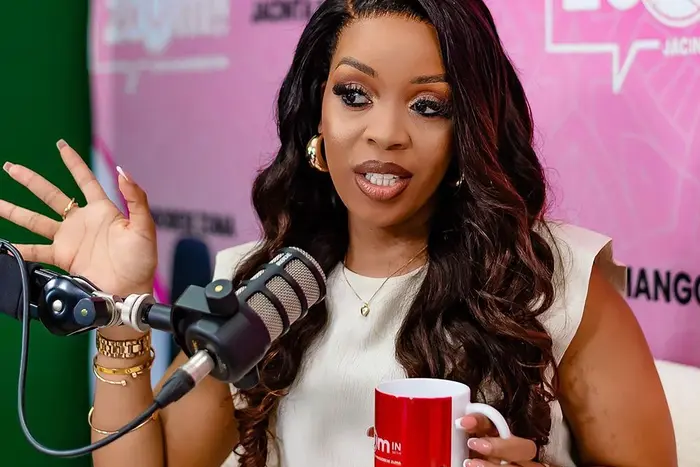
  • “YOUR COUNTRY IS STILL UNDERDEVELOPED!” — South Africa’s Jacinta Sparks Outrage With Blistering Attack on Africans Who Supported Mexico

    “YOUR COUNTRY IS STILL UNDERDEVELOPED!” — South Africa’s Jacinta Sparks Outrage With Blistering Attack on Africans Who Supported Mexico

    A heated online and political debate has erupted after South African commentator Jacinta launched a fiery critique aimed at Africans who expressed support for Mexico in a recent international discourse, delivering a message that has been widely described as provocative and divisive.

    In a blunt and emotionally charged statement, Jacinta reportedly told critics that their “country is still underdeveloped,” a remark that has triggered immediate backlash across social media platforms and ignited conversations about identity, nationalism, and intra-African solidarity.

    The comments, which quickly went viral, have drawn mixed reactions from users across the continent, with some defending her position as a call for self-reflection on national development priorities, while others condemned the tone as insulting and counterproductive to African unity.

    Observers note that the controversy highlights long-standing tensions in online political spaces, where discussions about international support in sports, politics, or global events often escalate into broader debates about development disparities and continental pride.

    South Africa has frequently been at the center of such debates, particularly on social media platforms where national identity and regional comparisons often collide in emotionally charged exchanges.

    As reactions continue to pour in, calls are growing for more responsible public commentary from influential voices, with critics urging restraint and emphasizing the need for discourse that strengthens rather than fractures African solidarity.

    Whether Jacinta will clarify or double down on her remarks remains to be seen, but the controversy has already cemented itself as another flashpoint in the increasingly volatile intersection of politics, identity, and social media expression.

  • “WELL-DESERVED!” — GHANAIAN CELEBRITIES REACT AFTER SOUTH AFRICA’S SHOCK DEFEAT TO MEXICO

    “WELL-DESERVED!” — GHANAIAN CELEBRITIES REACT AFTER SOUTH AFRICA’S SHOCK DEFEAT TO MEXICO

    Reactions have been pouring in from Ghana’s entertainment and sports circles following South Africa’s disappointing loss to Mexico in a high-profile international fixture, with several Ghanaian celebrities weighing in on the outcome in dramatic fashion.

    The match, which saw South Africa national football team fall to Mexico national football team, quickly became a trending topic across African social media platforms, where fans and public figures alike shared strong opinions on the result.

    Among the loudest reactions were those from Ghanaian celebrities who described the defeat as “well-deserved,” sparking further debate online and intensifying the already passionate football rivalry discourse between African and international fan bases.

    While some commenters echoed the celebratory tone, others urged restraint, arguing that African teams should support each other on the global stage regardless of individual match outcomes. The split reactions reflect the deep emotional investment fans and celebrities often place in international football results.

    Sports analysts, meanwhile, noted that Mexico’s performance exposed defensive weaknesses in the South African side, contributing to the decisive outcome. The result adds another layer to ongoing discussions about consistency and competitiveness among national teams.

    As reactions continue to trend, the incident highlights once again how football results can quickly spill beyond the pitch, triggering waves of commentary from celebrities, fans, and pundits across continents

  • “CELEBRITY CLASH IGNITES SOCIAL MEDIA FIRESTORM!” — AMA K. A. ABEBRESE SLAMS NANA AKUA ADDO OVER YVONNE NELSON CONTROVERSY

    “CELEBRITY CLASH IGNITES SOCIAL MEDIA FIRESTORM!” — AMA K. A. ABEBRESE SLAMS NANA AKUA ADDO OVER YVONNE NELSON CONTROVERSY

    Accra, Ghana — A fresh wave of tension has erupted in Ghana’s entertainment industry after award-winning actress and activist, Ama K. Abebrese, publicly criticised fashion icon Nana Akua Addo over comments linked to a recent jab directed at actress Yvonne Nelson.

    The controversy, which has quickly gained traction on social media, stems from a perceived exchange of indirect remarks among the three public figures, sparking intense debate among fans and industry observers.

    Ama K. Abebrese, known for her outspoken stance on social issues, did not hold back in her response, questioning the tone and intent of the comments attributed to Nana Akua Addo. She suggested that public figures should exercise restraint and responsibility when engaging in issues involving colleagues, especially in the public eye.

    Her remarks have since fueled widespread discussion online, with many social media users weighing in on what some are calling an escalating celebrity feud.

    Supporters of Yvonne Nelson have also joined the conversation, with some defending the actress and author, while others argue that the situation has been amplified beyond its original context due to online commentary and speculation.

    Industry watchers say the episode highlights the increasingly blurred lines between personal expression and public scrutiny in Ghana’s entertainment space, where celebrity interactions often become viral talking points within hours.

    While none of the parties involved have issued a joint statement to clarify or de-escalate the matter, the situation continues to generate reactions across entertainment blogs and social platforms.

    Observers are now calling for calm, urging all parties to avoid further public exchanges that could deepen tensions within the creative industry.

    A SOCIAL MEDIA STORM STILL UNFOLDING

    As the debate rages on, fans remain divided, with some calling for accountability and others urging reconciliation among the high-profile personalities involved. For now, the controversy shows no signs of slowing down as public interest continues to grow.

    @ama_k_abebrese

    Was iit necessary for Nana Akua Addo to come for Yvonne Nelson? My musings …. what are you thoughts? #fy #fyp #yvonnenleson #nanaakuaaddo #ghanatiktok🇬🇭

    ♬ original sound – Ama K Abebrese
  • TOURISM MINISTER OPENS DIPLOMATIC TALKS WITH INTERNATIONAL SLAVERY MUSEUM IN HISTORIC ENGAGEMENT

    TOURISM MINISTER OPENS DIPLOMATIC TALKS WITH INTERNATIONAL SLAVERY MUSEUM IN HISTORIC ENGAGEMENT

    Move sparks cultural diplomacy push and renewed focus on heritage tourism collaboration

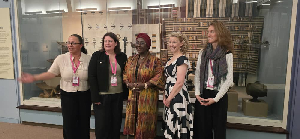
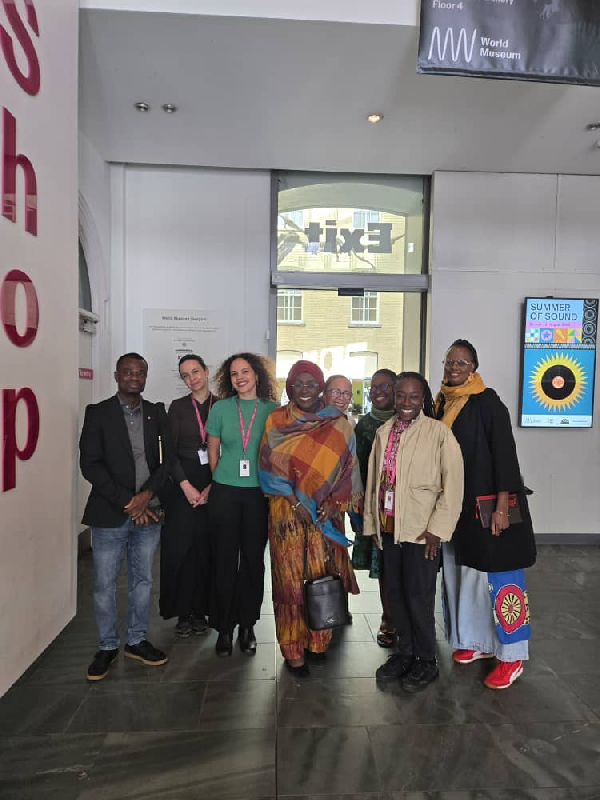
    Ghana’s Tourism Minister has held high-level engagements with the International Slavery Museum, in what officials describe as a strategic step toward strengthening cultural ties, heritage preservation, and diaspora tourism development.

    The engagement, facilitated under the agenda of the Ministry of Tourism, Arts and Culture, is aimed at deepening collaboration on historical education, memorialization of the transatlantic slave trade, and boosting heritage tourism links between Africa and Europe.

    HERITAGE, HISTORY, AND HEALING AT THE CENTER

    Discussions reportedly centered on ways to expand joint programming, improve historical research exchange, and enhance educational exhibitions that reflect the shared history between Ghana and the wider African diaspora.

    Officials say the initiative is part of a broader strategy to position Ghana as a leading destination for heritage and “roots tourism,” particularly among African descendants seeking to reconnect with their ancestry.

    BOOSTING DIASPORA TOURISM AGENDA

    The Ministry emphasized that partnerships with institutions like the International Slavery Museum are critical to promoting authentic storytelling and attracting international visitors interested in historical and cultural experiences.

    Tourism stakeholders believe such collaborations could help increase visitor numbers, generate revenue, and strengthen Ghana’s global cultural footprint.

    CULTURAL DIPLOMACY IN FOCUS

    Analysts say the engagement reflects a growing use of cultural diplomacy to advance tourism goals, with Ghana increasingly leveraging its historical significance in the transatlantic slave trade narrative.

    They note that partnerships with global heritage institutions could enhance the country’s visibility on the international tourism map.

    LOOKING AHEAD

    The Ministry of Tourism, Arts and Culture says further discussions are expected to translate into formal cooperation frameworks, including exhibitions, educational exchanges, and joint commemorative projects.

    As Ghana continues to expand its tourism strategy, the engagement with the International Slavery Museum marks another step in strengthening the country’s cultural and historical diplomacy efforts.