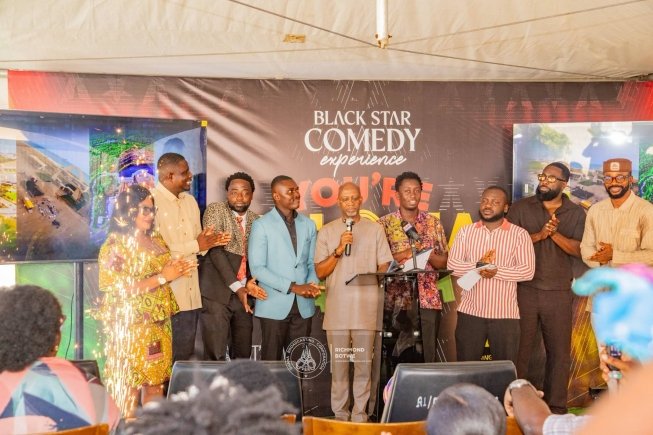
ACCRA, Ghana — Ghana’s entertainment and tourism landscape is set for a fresh dose of humour as the Black Star Experience launches its latest initiative, “You’re Ghana Laugh.”
The new comedy-focused project is designed to put Ghanaian humour, creativity and storytelling in the spotlight while creating another platform for comedians and entertainers to connect with audiences.
Ghana gets ready to laugh
With comedy continuing to play a major role in Ghana’s entertainment industry, “You’re Ghana Laugh” arrives with a clear message: there is plenty to celebrate — and plenty to laugh about.
The initiative is expected to provide a platform for comedians to showcase their talents while highlighting the uniquely Ghanaian experiences, expressions and everyday situations that resonate with audiences.
More than just comedy
The launch also forms part of the broader vision of the Black Star Experience to promote Ghana as a destination for culture, entertainment and memorable experiences.
By placing comedy at the centre of the initiative, organisers are tapping into one of the country’s most popular forms of entertainment and creating opportunities for performers to reach wider audiences.
A platform for Ghanaian talent
For emerging and established comedians, initiatives such as “You’re Ghana Laugh” can provide opportunities to showcase original material and connect with audiences beyond traditional comedy venues.
The project also highlights the growing importance of Ghana’s creative economy, where comedy, music, film and other forms of entertainment continue to attract audiences locally and internationally.
The spotlight is on Ghanaian humour
From everyday Ghanaian experiences to language, culture and social observations, comedy has long provided a distinctive way for Ghanaians to tell their stories.
“You’re Ghana Laugh” seeks to build on that tradition by giving those stories a bigger platform.
As the initiative gets underway, entertainment lovers can expect humour, creativity and plenty of distinctly Ghanaian moments.
The message from the Black Star Experience is simple: Ghana has stories to tell — and some of them are guaranteed to make you laugh.
Veteran filmmaker warns against political wrangling as debate over Ghana’s diaspora initiative intensifies
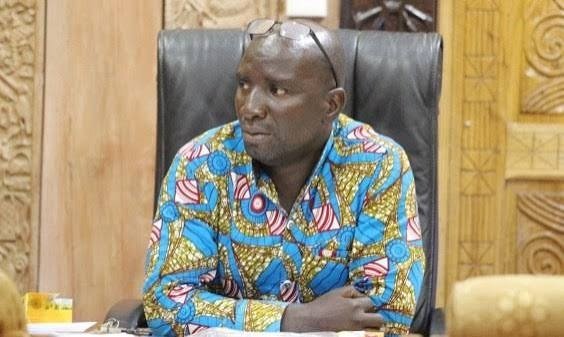
ACCRA, Ghana — Veteran Ghanaian filmmaker and media personality Socrate Safo has issued a strong warning against what he describes as “petty politics” around Ghana’s Beyond the Return initiative.
Safo’s comments have reignited conversation about the programme and the need to protect its broader objectives from political disagreements.
Socrate Safo raises concern
In a strongly worded intervention, Safo urged stakeholders to avoid allowing political disputes to overshadow the purpose of Beyond the Return.
His warning comes amid broader discussions about how Ghana can sustain and strengthen initiatives designed to deepen engagement with the African diaspora.
For Safo, the focus should remain on the opportunities and long-term benefits associated with the programme rather than political rivalry.
A programme with a global audience
Beyond the Return was launched as a Ghanaian initiative aimed at encouraging Africans in the diaspora to visit, connect with and invest in Ghana.
Over the years, the programme has become associated with tourism, investment, cultural exchange and efforts to strengthen Ghana’s relationship with the global African diaspora.
Its activities have also contributed to Ghana’s efforts to position itself as a destination for diaspora engagement.
“Don’t destroy it”
Safo’s central message is a call for caution.
By warning against “petty politics,” he is urging those involved in discussions surrounding the initiative to consider its longer-term significance rather than allowing political disagreements to dominate the conversation.
His remarks have since generated reactions, particularly among those interested in Ghana’s tourism, creative industries and diaspora engagement.
The bigger question
Beyond the political debate lies a broader question about how national programmes can maintain continuity and public confidence when governments, political parties and other stakeholders disagree over their management.
Safo’s intervention has therefore added his voice to calls for greater attention to the programme’s underlying objectives.
For now, his message is clear: whatever political differences may exist, he believes they should not come at the expense of an initiative intended to connect Ghana with the global African community.
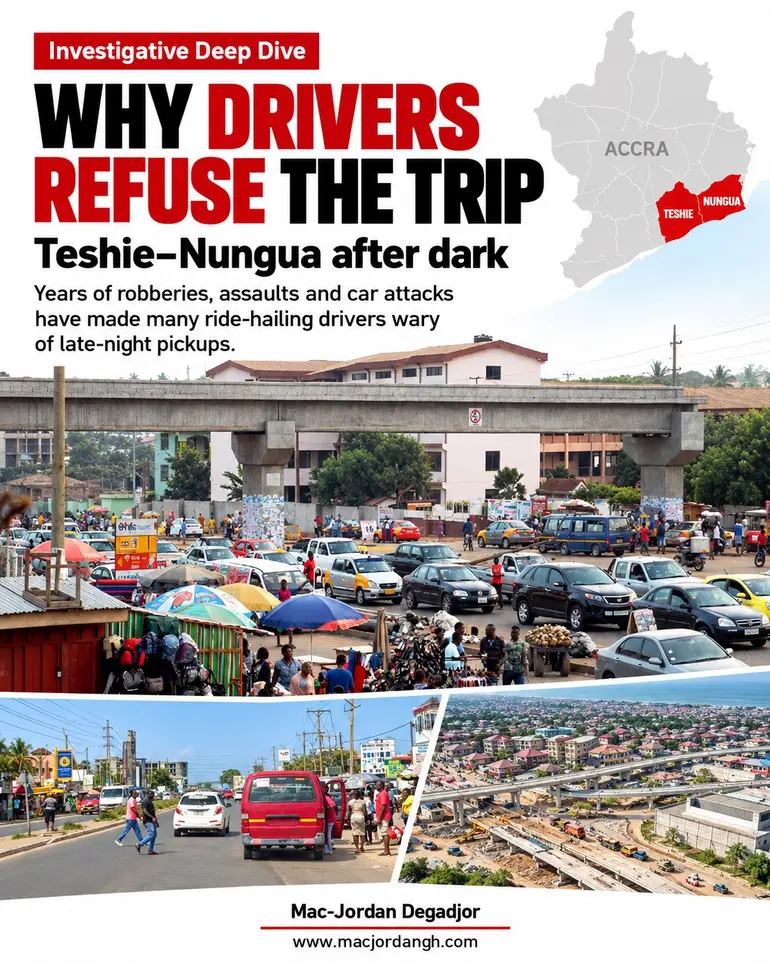
Safety concerns among ride-hailing drivers have resurfaced in parts of Teshie and across Accra, with some drivers reportedly becoming reluctant to accept late-night trips to unfamiliar or poorly lit locations.
The renewed discussion follows reports surrounding the death of Circle-based phone dealer Nana Yaw Kyere, popularly known as Terry or Dinero, who reportedly travelled to Teshie for a business transaction before communication with him was lost. His family later confirmed that he had been found dead, while investigations into the circumstances continued.
Against that background, accounts from some Uber, Bolt and Yango drivers have highlighted locations they say they approach with particular caution after dark.
Locations in Teshie-Nungua reportedly causing concern
The locations mentioned in recent reports include:
Teshie Malik
Teshie Agblezaa
Teshie Market
Teshie Mobil
The LEKMA Hospital area
Greda Estate
Nungua Barrier
Reports attribute the concerns to incidents and experiences involving alleged robbery, phone snatching, assault and vehicle theft, as well as concerns about poorly lit or isolated roads.
However, these locations have not been officially designated by the Ghana Police Service as a definitive list of dangerous neighbourhoods. They reflect accounts attributed to drivers and reported incidents rather than an official crime ranking.
Teshie Mobil and LEKMA area
There is documented court reporting involving an alleged robbery of a Yango driver in Teshie.
According to the Ghana News Agency, two men were arraigned in February 2026 over an alleged robbery involving a Yango driver who had picked them up around Teshie Mobil. The prosecution alleged that the driver was robbed of his phone and GH¢1,500 during the journey toward the LEKMA Hospital area. Both accused persons pleaded not guilty and were granted bail.
The case is an allegation before the courts and should not be taken as evidence that everyone travelling through the area faces such a risk.
Other Accra roads flagged in safety reports
The concerns extend beyond Teshie.
Current UK government travel advice says local police have highlighted risks to vehicles on several Accra roads and areas, including:
Teshie-Nungua Road
Graphic Road
George Walker Bush Highway
Accra Mall Roundabout
Awudome Cemetery Road
Pokuase-Amasaman Road
Labadi beach area
GIMPA Road and surrounding areas
Kokrobite beach area
The same advice says attacks involving vehicles have occurred and recommends keeping windows up and doors locked, while advising against travelling alone in taxis after dark.
An ASIRT Ghana road-safety review similarly identifies several of these Accra locations in connection with reported attacks on vehicles, including taxis.
Why night driving is a particular concern
The issue is not limited to one neighbourhood.
A 2026 academic study examining the experiences of 23 female ride-hailing drivers in Accra and Kumasi found that 19 participants, or 83%, reported avoiding night driving or particular neighbourhoods because of safety concerns. The concerns included robbery or assault, vehicle theft, unfamiliar areas and late-night driving in places with limited traffic or police presence.
The researchers did not establish a national list of dangerous neighbourhoods, nor did they conclude that Teshie as a whole is unsafe.
Drivers urged to take precautions
For drivers accepting trips after dark, practical precautions include checking the destination before accepting an unfamiliar journey, sharing trip details with a trusted person, keeping doors locked and windows up, and avoiding unnecessary stops in isolated areas.
Drivers should also remain alert when picking up or dropping off passengers, particularly where lighting and pedestrian activity are limited.
The UK’s Ghana travel guidance specifically recommends keeping vehicle doors locked and windows up because attacks on vehicles have been reported.
Teshie is not uniformly unsafe
The reports should not be interpreted as meaning that every part of Teshie or Nungua is dangerous.
Teshie-Nungua is a large, densely populated part of Accra where residents, businesses, commuters and ride-hailing passengers move around every day. The available evidence points instead to specific reported incidents and concerns about certain routes or circumstances, particularly late at night.
The recent discussion nevertheless highlights a broader safety challenge for drivers who work after dark and has renewed calls for improved street lighting, stronger police visibility and better protection for ride-hailing operators.
For drivers, the message is less about avoiding an entire community and more about exercising heightened caution when accepting unfamiliar late-night trips, particularly along poorly lit or isolated routes.
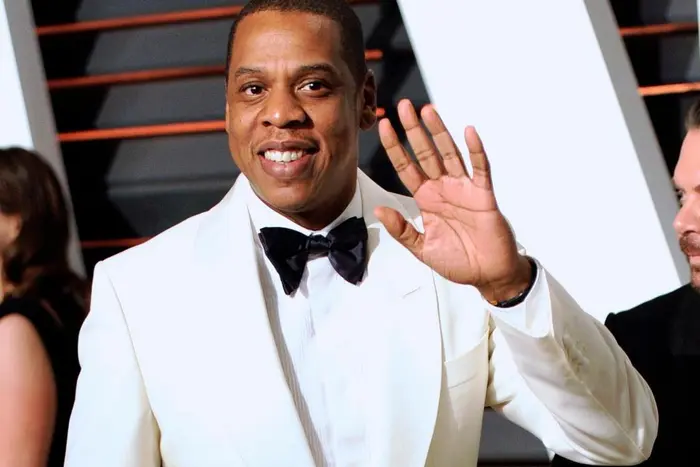
A woman who previously accused Jay-Z of rape has withdrawn her allegations, saying she never met or spoke to the rapper, in a dramatic development surrounding the case.
The woman’s latest account marks a major change from her earlier allegations, which had placed Jay-Z at the centre of a serious legal controversy.
In withdrawing the claims, she reportedly acknowledged that she never met or had any direct communication with the music mogul.
The development has drawn renewed attention to the allegations and the circumstances surrounding how they were initially made.
Jay-Z, whose legal name is Shawn Carter, had denied the allegations. The rapper has maintained his innocence throughout the dispute.
The woman’s decision to withdraw the claims now represents a significant turn in a case that had attracted widespread public and media attention because of the high-profile nature of the accused.
The latest development also underscores the importance of distinguishing allegations from established facts, particularly in cases involving serious criminal accusations.
Further details about the circumstances surrounding the withdrawal and any legal consequences will depend on the relevant court proceedings and statements from the parties involved.
From pioneering local productions to modern African blockbusters, Ghanaian cinema has evolved for more than a century. Here are 10 films that helped shape the industry—and where audiences can watch them today.
Ghana’s film industry has a remarkable history stretching back more than a century, reflecting the country’s changing society, culture, politics and identity through the moving image.
From early productions that helped establish filmmaking in the Gold Coast to contemporary movies that have found audiences beyond Ghana, the country’s cinematic journey has been marked by experimentation, cultural storytelling and a growing generation of filmmakers determined to tell Ghanaian stories on their own terms.
Over the decades, several films have stood out for their cultural influence, commercial success, technical achievements or contribution to the development of Ghanaian filmmaking.
Here are 10 landmark Ghanaian films, why they mattered and where audiences can look for them.
1. Zorome – A pioneering chapter
Early Ghanaian filmmaking was shaped by a desire to document local life and tell stories that reflected the experiences of people in the Gold Coast.
Films from the early period laid the foundation for a national cinema, creating opportunities for local filmmakers and performers at a time when African stories were largely controlled by foreign production systems.
Why it mattered: It represents the formative period of Ghana’s screen history.
Where to watch: Availability of early Ghanaian films varies, with some surviving works appearing in archives, film festivals and specialist collections.
2. Love Brewed in the African Pot (1980)
Directed by Kwaw Ansah, Love Brewed in the African Pot remains one of Ghana’s most celebrated films.
The movie explores love, family, class and social expectations through the relationship between two young people whose backgrounds create tension between their families.
Why it mattered: It demonstrated that Ghanaian filmmakers could produce sophisticated stories rooted firmly in local culture and social realities.
Where to watch: Check major African streaming platforms and Ghanaian film distributors for current availability.
3. Heritage Africa (1989)
Kwaw Ansah’s Heritage Africa is widely regarded as one of the most important films in African cinema.
Set against the colonial period, the film examines identity, colonial influence and the psychological consequences of cultural alienation.
Why it mattered: Its ambitious storytelling and historical themes helped establish Ghana as a serious force in African cinema.
Where to watch: Availability can include specialist African cinema platforms, archives and curated film collections.
4. The Visitor (1995)
Ghana’s video-film era brought filmmaking closer to mass audiences, with productions increasingly distributed through VHS and later VCD.
The Visitor is representative of the period when Ghanaian filmmakers began producing stories for a rapidly expanding home-video audience.
Why it mattered: The video-film movement transformed how Ghanaian movies were produced, distributed and consumed.
Where to watch: Older titles from the era can sometimes be found through Ghanaian film archives, YouTube channels and specialist distributors.
5. The Deadly Voyage (1996)
This Ghanaian-produced television film became notable for its powerful portrayal of migration and the dangers faced by Africans seeking better opportunities abroad.
Why it mattered: It tackled migration, exploitation and human vulnerability at a time when such stories were receiving growing attention.
Where to watch: Check archival television collections and online video platforms for legitimate uploads.
6. Run Baby Run (2002)
Directed by Akosua Busia, Run Baby Run brought together themes of ambition, relationships and social pressures.
The film formed part of a period in which Ghanaian cinema was increasingly reaching audiences across Africa and the diaspora.
Why it mattered: It contributed to the development of Ghana’s modern commercial film industry.
7. The Perfect Picture (2009)
Shirley Frimpong-Manso’s The Perfect Picture became a defining title of Ghana’s contemporary romantic-drama era.
The film followed the lives and relationships of three women, combining romance, friendship and social expectations.
Why it mattered: It helped demonstrate the commercial potential of polished Ghanaian productions aimed at both local and international audiences.
Where to watch: Streaming availability changes by territory, so viewers should check services carrying Ghanaian and African films.
8. Single and Married (2012)
Another Shirley Frimpong-Manso production, Single and Married explored relationships, marriage and infidelity through the lives of several characters.
Why it mattered: It became part of a wave of Ghanaian films that appealed strongly to young urban audiences and helped establish a recognizable contemporary Ghanaian cinema style.
9. Beast of No Nation (2015)
Although directed by Cary Joji Fukunaga and not a conventional Ghanaian production, Beasts of No Nation holds an important place in Ghana’s screen history because much of the film was shot in Ghana and involved Ghanaian locations and talent.
The film, starring Abraham Attah, brought international attention to Ghana’s film-production capabilities.
Why it mattered: It demonstrated Ghana’s potential as a location for major international productions while introducing a Ghanaian young actor to a global audience.
Where to watch: The film was released internationally through Netflix.
10. The Black Book (2023)
The rise of streaming has created a new avenue for African filmmakers to reach global audiences, and Ghanaian actors and filmmakers have increasingly participated in this expanding ecosystem.
Films from Ghana and the wider West African industry are now reaching viewers far beyond traditional theatrical and home-video markets.
Why it mattered: The streaming era has fundamentally changed how African films can find international audiences.
From celluloid to streaming
The story of Ghanaian cinema is ultimately a story of transformation.
The industry has moved from early filmmaking and colonial-era production through the golden age of local video films, the rise of commercial cinema and, most recently, the streaming revolution.
Each era has brought new challenges. Financing, distribution, piracy, access to equipment and international competition have all shaped the industry.
Yet Ghanaian filmmakers have continued to find ways to tell stories that reflect the country’s culture, humour, struggles, ambitions and changing identity.
And as streaming platforms make African films increasingly accessible around the world, the audience for Ghanaian cinema is no longer limited by geography.
After 103 years, Ghanaian cinema is not simply looking back at its history—it is continuing to write it.
ACCRA, Ghana — Ghanaian musician Kelvyn Boy has opened up about his involvement in the long-running rivalry between dancehall giants Stonebwoy and Shatta Wale, admitting that he now feels bad about taking sides.
The candid reflection offers a glimpse into the singer’s perspective on one of Ghana’s most closely followed music rivalries.
“I feel bad for taking sides”
Kelvyn Boy reportedly acknowledged that his decision to take a position during the rivalry is something he now views differently.
“I feel bad for taking sides in the Stonebwoy-Shatta Wale rivalry,” he said.
His comments have sparked interest among music fans, particularly given the history and intense public attention surrounding interactions between the two dancehall stars.
A rivalry that has dominated headlines
Stonebwoy and Shatta Wale have been at the centre of numerous discussions within Ghana’s music industry, with their rivalry attracting significant attention from fans and the media over the years.
Their exchanges and differences have frequently generated debate, while supporters of both artistes have often taken opposing positions.
Against that backdrop, Kelvyn Boy’s admission has added another perspective to the conversation.
Looking back on his decision
Taking sides in a highly publicised dispute between major artistes can place other musicians in the middle of an already intense situation.
Kelvyn Boy’s comments suggest that, with the benefit of hindsight, he wishes he had approached the situation differently.
His remarks also underline how relationships and alliances within the entertainment industry can become complicated when public disagreements involve some of the country’s biggest music stars.
Fans react to the revelation
The statement is likely to fuel fresh discussion among Ghanaian music fans, many of whom have followed the Stonebwoy-Shatta Wale rivalry for years.
For Kelvyn Boy, however, the focus appears to be on reflection and acknowledging that his past decision to take sides is something he now regrets.
As Ghana’s music scene continues to evolve, Kelvyn Boy’s admission provides a fresh perspective on a rivalry that has remained a major talking point in the country’s entertainment industry.
Black Sherif weighs in as Akwaboah Jnr’s relationship advice sparks heated conversation online
ACCRA, Ghana — Ghanaian musician Black Sherif has reacted to a comment by fellow musician Akwaboah Jnr about relationships, work and the role of a woman in a partnership.
Akwaboah Jnr’s statement — “Never let your woman work for another man” — has triggered discussion among social media users, with differing opinions emerging over what the advice means in modern relationships.
Black Sherif’s reaction has now added another layer to the conversation.
A statement that sparked debate
The comment attributed to Akwaboah Jnr has quickly become a talking point, particularly because it touches on questions about relationships, financial independence and expectations between partners.
While some may interpret the statement as relationship advice centred on protecting or providing for one’s partner, others may view it as raising broader questions about a woman’s independence and professional choices.
Black Sherif joins the conversation
Black Sherif’s reaction has attracted attention because of his own influence among Ghanaian music fans.
The award-winning musician is known for his distinctive musical style and outspoken artistic identity, and his response to Akwaboah Jnr’s remarks has prompted fans to pay closer attention to the debate.
Social media divided
As the conversation spread online, social media users offered contrasting perspectives.
Some supported the idea that partners should strive to provide financial security within a relationship, while others argued that women should have the freedom to pursue careers and professional opportunities regardless of who employs them.
The discussion has consequently moved beyond music, touching on wider questions about modern relationships, gender roles and financial independence.
The conversation continues
Akwaboah Jnr’s comment has clearly struck a nerve, and Black Sherif’s reaction has ensured that the discussion continues to attract attention.
As opinions remain divided, the central question remains: Should financial responsibility in a relationship determine where a woman can work — or should career choices remain an individual decision?
The debate is still unfolding, with fans and social media users continuing to weigh in.
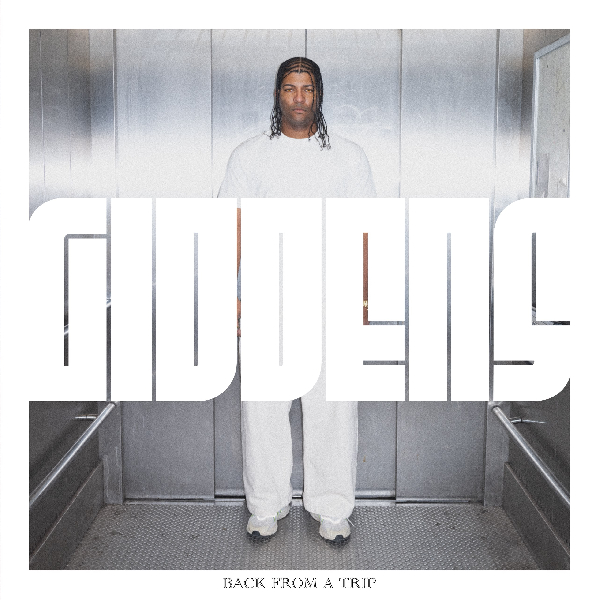
Ghanaian-German artiste Giddens has officially stepped into a new chapter of his musical journey with the release of his debut album, Far Too Modular, introducing listeners to an ambitious body of work shaped by his cross-cultural identity and creative vision.
The album marks a major milestone for Giddens, transforming years of musical development into a full-length project designed to establish his artistic identity and give audiences a deeper understanding of his sound.
A debut with a statement to make
Far Too Modular arrives as more than simply a collection of songs. As a debut album, it represents Giddens’ opportunity to introduce the world to his artistic personality on his own terms.
The title itself suggests a project interested in flexibility, movement and the combination of different elements — ideas that can also be viewed through the lens of Giddens’ Ghanaian-German background.
His multicultural upbringing provides a distinctive foundation for an artist operating across different cultural spaces, allowing him to draw inspiration from experiences connected to both Ghana and Germany.
Ghana meets Germany
Giddens’ Ghanaian-German identity is an important part of his artistic story.
The growing movement of African and diaspora artists connecting sounds and experiences across continents has created new possibilities for musicians who refuse to be defined by a single geographical or cultural category.
For Giddens, Far Too Modular provides an opportunity to explore that space while establishing his own musical language.
A milestone moment
Releasing a debut album is one of the biggest moments in an emerging artiste’s career. It signals a transition from individual releases and experimentation toward a more complete artistic statement.
For Giddens, the arrival of Far Too Modular represents that transition.
The project gives both existing supporters and new listeners an opportunity to engage with his work on a larger scale while providing a foundation for the next phase of his career.
The road ahead
With his debut album now available, attention will turn to how Giddens builds on the momentum surrounding Far Too Modular.
The project introduces an artiste with a Ghanaian-German identity and a desire to carve out his own space in an increasingly global music industry.
With Far Too Modular, Giddens is no longer simply introducing himself — he is making his first full-length statement and inviting the world to listen.
Ghanaian songstress Gyakie has etched her name into the history books after becoming the first female Ghanaian artiste to surpass 100 million streams on Boomplay.
The major streaming milestone marks another significant achievement in the career of the celebrated singer, whose music has continued to attract listeners across Ghana and beyond.
Gyakie’s latest feat highlights the growing reach of Ghanaian female musicians on major digital streaming platforms, as artistes increasingly use streaming to connect with audiences around the world.
Crossing the 100-million mark on Boomplay represents a remarkable level of listener engagement and further underscores Gyakie’s growing influence within Ghana’s contemporary music scene.
The achievement has also sparked celebrations among her fans, who have taken to social media to congratulate the singer on reaching the milestone.
Gyakie, known for hit songs that have earned her a strong following locally and internationally, has steadily built her profile since breaking onto the Ghanaian music scene.
Her latest record adds another landmark to her career and places her among the Ghanaian artistes making significant strides in the digital music era.
With streaming becoming an increasingly important measure of an artiste’s global reach, Gyakie’s 100-million-stream milestone signals a new chapter in the singer’s already impressive career.
LAGOS, Nigeria — Nigeria’s entertainment industry has been thrown into mourning following the reported death of a popular singer in a tragic robbery attack.
The shocking incident has sparked an outpouring of grief among fans, fellow entertainers and members of the public, as details surrounding the circumstances of the attack continue to emerge.
A career cut short
The singer, who had built a name for himself in Nigeria’s vibrant music scene, reportedly lost his life during the robbery incident.
News of the death has sent shockwaves through the entertainment community, with fans struggling to come to terms with the sudden loss of an artiste whose music had earned him recognition.
Robbery turns deadly
What was reportedly a robbery attack ended in tragedy when the singer was fatally attacked.
The incident has once again drawn attention to concerns over violent crime and the dangers faced by members of the public, particularly during vulnerable moments.
Fans react with disbelief
As news of the tragedy spread, social media platforms were flooded with messages of condolence and tributes.
Fans remembered the singer for his contribution to Nigerian music, while fellow entertainers expressed sadness over a promising life and career reportedly being brought to a sudden end.
Questions surrounding the attack
Details about exactly how the robbery unfolded, the identity of those responsible and whether any arrests have been made remain important aspects of the developing story.
Authorities are expected to investigate the circumstances surrounding the incident and work to establish what happened.
The tragic death has left many fans mourning and has once again highlighted the devastating consequences that violent robbery attacks can have on individuals, families and communities.
The Nigerian music industry now mourns the loss of a singer whose life was reportedly cut short in a tragic attack.