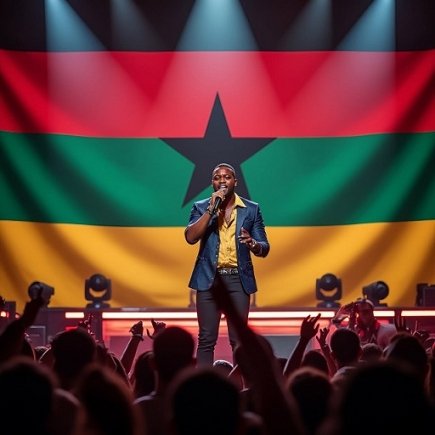
Accra — It was an electrifying night of worship and spiritual celebration as gospel music lovers gathered for Joe Mettle’s Praise Reloaded concert, turning the atmosphere into what many described as a “river of praises.”
The event, headlined by award-winning gospel artiste Joe Mettle, drew hundreds of worshippers who filled the venue with songs, dance, and intense moments of praise.
From high-energy worship sessions to soulful ministrations, the concert delivered a powerful spiritual experience that left many attendees deeply moved and inspired.
Fans and worshippers described the night as more than just a musical event, but a spiritual encounter marked by unity, gratitude, and renewed faith.
Joe Mettle, known for his impactful gospel ministry, led the audience through a series of his popular worship songs, creating an atmosphere of deep reflection and celebration.
The event also featured guest performances and collaborations that further elevated the night, reinforcing its theme of praise and thanksgiving.
Organizers say Praise Reloaded is designed to bring people together through worship while promoting gospel music and inspiring spiritual growth among attendees.
As the night came to a close, the overwhelming consensus among participants was clear — the “river of praises” had left a lasting spiritual imprint on everyone present.
Popular Nigerian actor Deyemi Okanlawon has stirred controversy after boldly stating that “noise” is increasingly being rewarded more than quality in Nollywood, igniting fresh debate about standards in the film industry.
The award-winning actor made the remark while reflecting on the evolving nature of Nigeria’s film scene, suggesting that attention and visibility are now often driven more by hype, publicity, and social media buzz than by genuine talent and craft.
According to him, many deserving projects and performers are being overlooked, while louder, more aggressively promoted content tends to dominate conversations and gain wider recognition.
His comments have quickly gained traction online, with fans and industry stakeholders divided over whether Nollywood is truly prioritizing popularity over artistic excellence or simply adapting to changing audience dynamics.
Some supporters of his view argue that the industry is facing a shift where marketing and online visibility increasingly influence success, sometimes at the expense of storytelling depth and production quality.
Others, however, contend that Nollywood remains one of the fastest-growing film industries in the world and that both quality and visibility are necessary for commercial survival in a highly competitive entertainment market.
Despite the debate, Deyemi Okanlawon’s statement has reignited broader conversations about the balance between art and commerce in African cinema, and what it truly takes for quality productions to stand out.
As reactions continue to pour in, his critique has added fuel to ongoing discussions about how Nollywood can better support creative excellence while still embracing modern promotional realities.
Calls are growing louder within Ghana’s creative industry over alleged unpaid or underpaid royalties from telecommunications companies, with musicians and stakeholders arguing that artists deserve fair compensation for the use of their works.
According to concerns circulating within the entertainment space, telecom operators—who benefit from the distribution of music through caller tunes, mobile streaming services, and digital downloads—are being urged to fully account for and remit royalties owed to musicians whose content drives significant consumer engagement.
Industry voices say the issue is not new, but it has become increasingly urgent as digital music consumption continues to expand. Many artists rely on royalties as a key source of income, especially in a streaming-driven era where physical sales have sharply declined.
Some musicians and industry advocates argue that while telcos profit from music-related services, payments to rights holders remain inconsistent or insufficient, leaving many creatives struggling to benefit from their own intellectual property.
The debate has also reignited broader discussions about copyright enforcement in Ghana’s music industry, with calls for stronger regulatory oversight, transparent reporting systems, and timely disbursement of royalties to ensure fairness across the value chain.
Others, however, caution that the issue may be more complex, pointing to the need for clearer agreements, improved tracking systems, and better collaboration between telecom firms, collecting agencies, and rights holders to avoid disputes and delays.
As the conversation continues, stakeholders are increasingly framing the matter as a critical test of Ghana’s commitment to protecting creative work in the digital economy.
For many musicians, the message is simple: if their music helps drive telecom revenue, then proper payment is not optional—it is overdue.
As Ghana’s Ghana national football team push through the high-pressure stages of the 2026 World Cup, attention has shifted beyond the pitch — to the glamorous, loyal, and fiercely supportive women standing behind the players.
From emotional stadium celebrations to stylish matchday appearances, the wives and partners of the Black Stars have become an unexpected but powerful part of Ghana’s tournament story.
JORDOEN BUCKLEY STEALS THE SHOW BEHIND SEMENYO’S HEROICS
At the centre of the spotlight is Jordeen Buckley, partner of Ghana forward Antoine Semenyo, whose matchday presence has turned heads across North America.
Often seen celebrating passionately from the stands, she has blended fashion, loyalty, and national pride — becoming one of the most recognisable faces among the Black Stars’ travelling support.
Her appearances have added a touch of glamour to Ghana’s campaign, especially as Semenyo continues to grow into a key attacking figure.
TANJA OPOKU: FAMILY, FOOTBALL AND FIERCE SUPPORT
Defender Jerome Opoku has also enjoyed strong emotional backing from his wife, Tanja, who has been spotted at key matches alongside their children.
Her presence reflects the quieter but equally powerful side of football support — stability at home translating into confidence on the pitch.
VICENTIA MENSAH AND THE DEFENSIVE HEARTBEAT
Left-back Gideon Mensah draws strength from his wife, Vicentia Mensah, who has been part of his journey through both club and international football.
Her support has been described as a grounding force as Ghana navigates high-intensity World Cup fixtures.
JANINE MACKSON AND THE GLOBAL LIFESTYLE STORY
Midfield star Thomas Partey is married to British model and influencer Janine Mackson, who has also drawn attention for her polished presence and public support.
Their relationship adds an international dimension to Ghana’s squad profile, reflecting the global nature of modern football families.
MORE THAN JUST MATCHDAY GLAMOUR
Beyond the headlines and social media attention, these women represent something deeper — emotional stability, family sacrifice, and constant encouragement behind elite performance.
From hotel room conversations to stadium celebrations, their influence extends far beyond the cameras.
THE UNSUNG SUPPORT SYSTEM OF THE BLACK STARS
Other partners — including those of senior figures like Jordan Ayew and several squad members — also continue to provide behind-the-scenes motivation that players often credit for their mental strength.
In a tournament defined by pressure, travel, and expectation, this support network has quietly become part of Ghana’s competitive edge.
A DIFFERENT KIND OF TEAM BEHIND THE BLACK STARS
As the World Cup drama unfolds, one thing is clear: Ghana’s story is no longer just about 11 players on the pitch.
It is also about the families, partners, and loved ones who carry the emotional weight of the journey — and in many ways, help fuel the dream itself.
A major shake-up is coming to the creative industry as the Creative Arts Agency prepares to introduce mandatory registration and licensing for all creative businesses operating within the sector.
The proposed directive is expected to fundamentally reshape how creative enterprises—ranging from music and film production to fashion, events, and digital content creation—are formally recognized and regulated.
According to officials, the policy is designed to bring structure, accountability, and professionalism to an industry that continues to grow rapidly but remains largely fragmented and informally operated in many areas.
Under the new framework, all creative businesses will be required to register and obtain official licences before they can legally operate, a move authorities say will help streamline operations, improve data collection, and enhance support systems for industry players.
The initiative is also expected to curb unregulated practices, improve tax compliance, and strengthen the government’s ability to support creative entrepreneurs through targeted policies and funding opportunities.
While the proposal has been welcomed by some stakeholders who believe it will elevate standards and increase credibility in the sector, others have raised concerns about potential financial burdens and bureaucratic hurdles for emerging creatives.
Industry observers say the policy could mark a turning point for the creative economy, potentially formalizing thousands of small businesses and redefining how creative work is structured and governed.
As consultations continue, attention is now focused on how the final implementation will balance regulation with the need to preserve creativity, accessibility, and innovation across Ghana’s fast-growing creative landscape.
Ghanaian rap icon Sarkodie has strongly condemned renewed reports of xenophobic attacks in South Africa, describing the situation as “insane” and “completely senseless.”
Reacting to the disturbing incidents circulating on social media and in news reports, the award-winning artiste expressed disbelief over the continued targeting of foreign nationals, calling for an immediate end to violence and discrimination.
Sarkodie stressed that Africa must be a place of unity and opportunity, not division, urging citizens across the continent to reject hatred and embrace peaceful coexistence.
His comments have resonated widely online, with fans and observers praising him for using his platform to speak out against injustice and highlight issues affecting migrants and vulnerable communities.
The backlash against xenophobia in South Africa has once again sparked continental debate, with many calling on leaders, civil society groups, and influential figures to push for stronger protections for foreign residents.
Sarkodie’s intervention adds to growing calls for tolerance and unity, reinforcing the message that violence against innocent civilians has no place in modern African society.
Accra — Social commentator and activist Oliver Barker-Vormawor has stirred reactions online after posting a dramatic remark following a High Court decision that clears the way for the extradition of alleged suspect Abu Trica to the United States.
The development follows a ruling by the High Court of Ghana which reportedly upheld legal processes allowing extradition proceedings involving Abu Trica, a move that has now set the stage for possible transfer to US authorities.
Reacting to the ruling, Oliver Barker-Vormawor posted the cryptic but viral phrase: “FBI 1 – Abu 1,” a comment that has since exploded across social media, drawing intense debate and speculation.
The message has been widely interpreted as a tongue-in-cheek scoreboard-style reaction to the legal battle, with users online dissecting its meaning amid the seriousness of extradition proceedings.
The case involving Abu Trica has attracted significant public attention, particularly due to its international dimension and the involvement of US law enforcement interests.
Legal observers say the court’s decision marks a key procedural step, though further processes are expected before any final extradition is executed.
As discussions continue, Barker-Vormawor’s reaction has added a layer of social media drama to an already closely watched legal and diplomatic matter.
The Accra High Court has dismissed an application filed by Ghanaian national Abu Trica seeking to halt his extradition to the United States, clearing the way for authorities to proceed with the legal process.
The application, which was filed in an attempt to block or delay his transfer, was rejected by the court after legal arguments were reviewed. Details of the ruling indicate that the court was not persuaded by the grounds presented in the application.
Abu Trica had reportedly sought judicial intervention to prevent his extradition, arguing against the move to the U.S. However, the High Court’s decision effectively upholds earlier steps taken in the extradition process.
The ruling marks a significant development in the case, which has attracted public and legal attention due to its international dimension and the involvement of U.S. authorities.
With the application dismissed, the extradition process is expected to continue in accordance with Ghana’s legal obligations and international agreements, unless further legal action is pursued.
Authorities have not yet disclosed the exact timeline for his transfer.
American singer and performer Chris Brown has reportedly been ordered to pay $13 million in damages following a court ruling tied to a disturbing incident in which his dog allegedly attacked a housekeeper, leaving her with serious and life-altering injuries.
The decision marks a major legal setback for the superstar, as the civil case concludes with one of the most significant compensation awards linked to an incident involving his property.
COURT FINDS LIABILITY IN DOG ATTACK CASE
According to court findings, the housekeeper suffered severe injuries after being attacked by one of Brown’s dogs while on his property.
The victim reportedly pursued legal action seeking compensation for medical expenses, pain, suffering, and long-term impact on her health and livelihood.
After reviewing the evidence, the court ruled in her favour, ordering the singer to pay damages amounting to $13 million.
INJURIES DESCRIBED AS SERIOUS AND TRAUMATIC
Legal documents and testimony presented in court described the attack as severe, with the victim sustaining injuries that required extensive medical treatment and ongoing care.
The ruling highlighted the lasting physical and emotional consequences of the incident, which played a key role in determining the size of the award.
A MAJOR LEGAL BLOW FOR THE MUSIC STAR
The verdict represents a significant financial and reputational challenge for Chris Brown, who has faced multiple legal controversies over the years.
While the case is civil in nature, the size of the payout has drawn widespread attention across entertainment and legal circles.
NO IMMEDIATE PUBLIC RESPONSE
At the time of the ruling, there has been no widely confirmed public statement from the singer addressing the decision.
The development adds another chapter to the long-running scrutiny surrounding the artist’s personal and legal affairs.
CASE CLOSES WITH HEAVY CONSEQUENCES
With the court’s decision now delivered, attention shifts to how the judgment will be enforced and whether any further legal steps will follow.
For now, the ruling stands as a stark reminder of the serious consequences tied to incidents occurring on private property — even for global superstars.
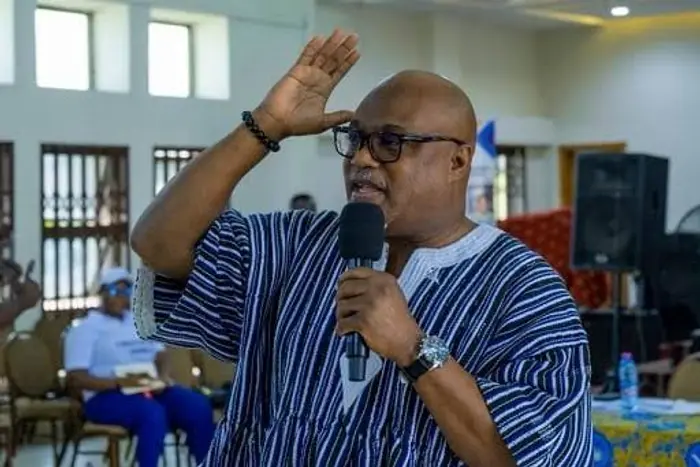
Accra — Veteran media scholar Prof. Kwabena Agyapong Ayeboafoh has thrown a pointed challenge at politician and businessman Ken Agyapong, questioning the true motivation behind his political ambitions.
Addressing the public debate surrounding the future of the New Patriotic Party, Prof. Kwabena Agyapong Ayeboafoh asked Kennedy Agyapong a direct question: “Are you doing this out of greed or for love of the country?”
The remark has intensified conversations about leadership, public service, and the motivations of politicians seeking high office, with many interpreting it as a call for greater transparency and accountability.
Prof. Ayeboafoh stressed that anyone aspiring to lead the country must be driven by patriotism, integrity, and a genuine commitment to national development rather than personal ambition or self-interest.
His comments have sparked mixed reactions, with supporters describing the question as timely and necessary, while others argue that political leaders should be judged by their records and policy proposals rather than speculation about their motives.
The statement comes as political discussions continue to gather momentum ahead of key decisions within the opposition party, with potential contenders coming under increasing public scrutiny.
As debate over the future leadership of the party intensifies, Prof. Ayeboafoh’s challenge has added another layer to the national conversation on what qualities should define Ghana’s next generation of political leaders.