Author: Daniel Sasu

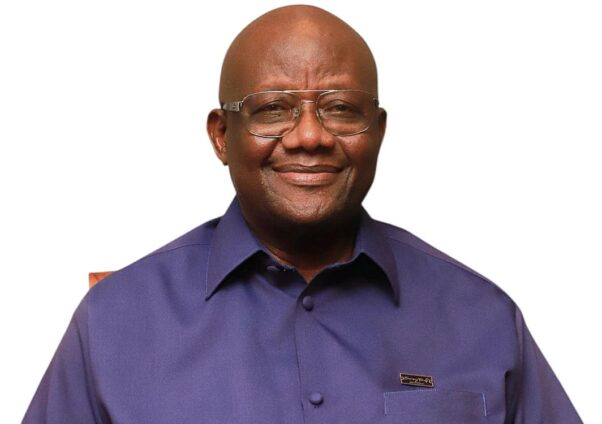
  • DRAMA IN TAMALE: Police Arrest Fuseini ‘Fuzzy’ Sorku Over Alleged Assault Case

    DRAMA IN TAMALE: Police Arrest Fuseini ‘Fuzzy’ Sorku Over Alleged Assault Case

    Shock arrest sends ripples through community

    A wave of shock has hit Tamale following the arrest of Fuseini Sorku by police over an alleged assault case that has drawn widespread attention in the Northern Regional capital.

    The arrest, carried out by officers of the Ghana Police Service, reportedly follows a complaint lodged against the suspect in connection with an alleged altercation that escalated into violence.

    EARLY MORNING OPERATION

    Sources indicate that officers moved in on the suspect in Tamale after preliminary investigations linked him to the incident. He was subsequently taken into custody to assist with ongoing inquiries.

    Authorities have not yet released full details of the alleged assault, but say investigations are progressing as they work to establish the circumstances surrounding the case.

    COMMUNITY REACTS WITH SHOCK AND SPECULATION

    News of the arrest has quickly spread across Tamale, sparking intense discussion and speculation among residents, many of whom are awaiting clarity on what led to the reported confrontation.

    While some community members have expressed surprise, others are calling for calm and due process as the legal process unfolds.

    POLICE ASSURE THOROUGH INVESTIGATION

    The Ghana Police Service has assured the public that the matter will be handled professionally and that all necessary steps will be taken to ensure a fair and transparent investigation.

    Officials have urged the public to refrain from spreading unverified information as the case develops.

    CASE UNDER CLOSE WATCH

    As investigations continue, attention now turns to possible court proceedings and further disclosures that may shed light on the alleged incident.

    For now, Fuseini ‘Fuzzy’ Sorku remains in custody as authorities piece together the details of a case that has quickly become a talking point in Tamale.
  • POLITICAL FIRESTORM ERUPTS: NPP BLASTS GOVERNMENT OVER “SELECTIVE JUSTICE” CLAIMS IN SEDINA TAMAKLOE SENTENCING

    POLITICAL FIRESTORM ERUPTS: NPP BLASTS GOVERNMENT OVER “SELECTIVE JUSTICE” CLAIMS IN SEDINA TAMAKLOE SENTENCING

    A fresh political storm is brewing as the New Patriotic Party (NPP) has accused the government of engaging in what it describes as “selective justice,” warning against any perceived interference in the sentencing of former MASLOC Chief Executive Officer Sedina Christine Tamakloe Attionu.

    The opposition party’s allegations have intensified scrutiny of the handling of high-profile corruption-related cases, with the NPP arguing that justice must be applied consistently, regardless of political affiliation or status.

    In strongly worded remarks, party officials insisted that the rule of law must be upheld without fear or favor, stressing that any attempt to influence judicial outcomes undermines public confidence in Ghana’s justice system.

    The statement has added fuel to ongoing political tensions, with the NPP positioning itself as a defender of institutional integrity while raising concerns about what it perceives as uneven enforcement of accountability measures.

    The case involving Sedina Tamakloe Attionu, a former head of the Microfinance and Small Loans Centre (MASLOC), has been widely followed due to its implications for public sector accountability and anti-corruption enforcement. The NPP maintains that how such cases are handled sets a critical precedent for governance and transparency in the country.

    Government representatives have not yet issued a direct response to the latest accusations, but the issue is expected to deepen debate over judicial independence and political influence in high-profile prosecutions.

    Political analysts note that such exchanges are becoming increasingly common in Ghana’s polarized political environment, where major parties frequently clash over governance, accountability, and the interpretation of justice.

    As the controversy unfolds, the NPP is calling for restraint, fairness, and transparency in all legal proceedings, warning that any deviation could erode trust in national institutions.

    For now, the dispute underscores a familiar fault line in Ghanaian politics—where law, politics, and public perception often collide in high-stakes cases with national attention.

  • “Election in Crisis!” — NPP Executives Petition Regional Leadership to Annul Bibiani-Anhwiaso-Bekwai Electoral Area Poll

    “Election in Crisis!” — NPP Executives Petition Regional Leadership to Annul Bibiani-Anhwiaso-Bekwai Electoral Area Poll

    Tension is reportedly brewing within the New Patriotic Party (NPP) in the Bibiani-Anhwiaso-Bekwai constituency after local executives formally petitioned regional leadership to annul the recently held electoral area election.

    The aggrieved party executives claim that the process was marred by alleged irregularities, prompting concerns about fairness, transparency, and compliance with internal party rules. Their petition has now placed the outcome of the contest under intense scrutiny.

    According to sources within the constituency, the executives are demanding that the entire election be set aside and a fresh exercise conducted to restore confidence among delegates and party members.

    The controversy has sparked heightened political tension in the area, with supporters on different sides trading accusations over how the election was conducted and whether proper procedures were followed.

    The matter has now been escalated to the regional leadership of the NPP, who are expected to review the petition and determine the next course of action. Their decision is likely to have significant implications for party unity in the area ahead of future internal contests.

    Political observers say the situation reflects broader internal pressures within the party as local structures continue to navigate issues of credibility, competition, and organizational discipline.

    For now, attention remains fixed on the regional leadership’s response, which will determine whether the disputed election stands—or is annulled and rerun under closer supervision in Ghana’s political landscape.

  • DRAMA OVER BANK OWNERSHIP: GOVERNMENT DENIES SALE OF GHANA INTERNATIONAL BANK SHARES AFTER KOFI BENTIL’S ALARM

    DRAMA OVER BANK OWNERSHIP: GOVERNMENT DENIES SALE OF GHANA INTERNATIONAL BANK SHARES AFTER KOFI BENTIL’S ALARM

    A political and financial storm is brewing after the Government moved swiftly to deny allegations that shares in the Ghana International Bank are being sold off, following public concerns raised by governance expert Kofi Bentil.

    The controversy erupted after Bentil publicly questioned reports suggesting possible transactions involving state-linked interests in the bank, warning that such moves—if true—would require urgent transparency and public accountability.

    His remarks quickly gained traction, sparking debate across political and economic circles and fueling speculation about the future of Ghana’s stake in the international financial institution.

    In response, government officials firmly rejected the claims, insisting that no sale of shares is underway and describing the reports as inaccurate and misleading. Authorities maintained that there has been no authorized transaction involving state holdings in the bank.

    The swift denial has done little to calm public curiosity, however, as many continue to demand clarity on whether any discussions, proposals, or behind-the-scenes considerations have taken place regarding the institution’s ownership structure.

    Observers say the episode highlights growing sensitivity around state assets and financial governance, with increased scrutiny from civil society actors and policy analysts who are calling for full disclosure in matters involving public investments.

    While the government insists there is no deal to disclose, critics argue that transparency must go beyond denials to include clear communication on the status of all state-linked financial assets.

    For now, the situation remains a developing controversy—one that has placed the Ghana International Bank firmly in the national spotlight, and turned a policy question into a public debate over trust, transparency, and accountability.

  • “Nothing Is Ever Truly Closed!” – Tuah-Yeboah Warns Future NPP Government Could Reopen Discontinued Criminal Cases

    “Nothing Is Ever Truly Closed!” – Tuah-Yeboah Warns Future NPP Government Could Reopen Discontinued Criminal Cases

    Former Deputy Attorney General Sparks Debate Over Legal Finality and Political Power

    Former Deputy Attorney General Alfred Tuah-Yeboah has triggered fresh legal and political debate after suggesting that a future administration of the New Patriotic Party (NPP) could revisit and potentially reopen criminal cases that were previously discontinued.

    His remarks have stirred controversy, raising questions about the permanence of prosecutorial decisions and the extent of executive influence over criminal justice processes in Ghana.

    “Discontinuation Is Not the End,” He Warns

    Tuah-Yeboah argued that decisions to discontinue criminal prosecutions do not necessarily erase the possibility of future legal action, especially if new evidence emerges or if a different administration reviews past decisions.

    According to him, prosecutorial discretion is subject to review under certain legal conditions, meaning that cases once halted may not be permanently buried.

    Political Undertones Spark Debate

    The comments have quickly gained political traction, with critics and supporters interpreting them through partisan lenses. Some view the statement as a warning to individuals currently benefiting from discontinued cases, while others see it as a reminder of the legal system’s flexibility.

    Legal analysts suggest the remarks could intensify ongoing debates about the independence of prosecutorial authority and whether political transitions influence legal accountability.

    Concerns Over Legal Certainty

    Opponents of the idea argue that reopening discontinued cases could undermine confidence in the justice system, potentially creating uncertainty for individuals and institutions who rely on finality in legal decisions.

    Others, however, insist that justice must remain dynamic, especially in situations where new evidence or public interest demands reconsideration.

    Growing National Conversation

    The discussion has added to broader national conversations about governance, accountability, and the role of law enforcement agencies in politically sensitive cases.

    As Ghana continues to navigate complex legal and political transitions, Tuah-Yeboah’s comments are expected to remain a talking point among legal practitioners, policymakers, and the public.

    For now, the debate centers on one pressing question: when a case is discontinued, is it ever truly closed?

  • ATO FORSON SURGES AHEAD: Explosive NDC Flagbearer Poll Puts Finance Minister in Commanding Lead as Asiedu Nketia and Haruna Iddrisu Trail

    ATO FORSON SURGES AHEAD: Explosive NDC Flagbearer Poll Puts Finance Minister in Commanding Lead as Asiedu Nketia and Haruna Iddrisu Trail

    New poll shakes NDC race as leadership battle intensifies

    A fresh political poll by New Global Info Analytics has sent shockwaves through the opposition National Democratic Congress (NDC), showing a dramatic shift in the party’s internal flagbearer contest — with Ato Forson reportedly taking a commanding lead over key contenders.

    The findings suggest a tightening but uneven race, with party heavyweights Asiedu Nketia and Haruna Iddrisu trailing behind in a contest that is rapidly reshaping internal party dynamics.

    FORSON EMERGES AS FRONT-RUNNER

    According to the poll results, Ato Forson has surged ahead on the back of growing support among party delegates and grassroots members who view him as a fresh, technocratic option with strong economic credentials.

    Analysts say his rise reflects increasing appetite within segments of the party for renewed leadership direction ahead of future national elections.

    HEAVYWEIGHTS STRUGGLE TO KEEP PACE

    Meanwhile, Asiedu Nketia — long regarded as a powerful force within the NDC’s organizational structure — is reportedly facing unexpected pressure from the emerging rankings.

    Haruna Iddrisu, a seasoned legislator and former parliamentary leader, also remains in contention but trails behind the frontrunner in the latest survey snapshot.

    POLITICAL UNDERCURRENTS INTENSIFY

    The poll has triggered intense debate within political circles, with supporters of each camp interpreting the figures as either a warning sign or a temporary fluctuation in an evolving race.

    Party insiders say the results could influence early positioning, alliance-building, and campaign strategies as internal competition heats up.

    A RACE STILL OPEN BUT HEATING UP FAST

    While the numbers point to a current advantage for Ato Forson, analysts caution that the NDC flagbearer contest remains fluid, with delegate sentiment capable of shifting rapidly as campaigning intensifies.

    With major political figures still expected to declare or consolidate support, the race is far from settled — but the latest poll has undeniably raised the stakes.

    WHAT COMES NEXT?

    As the party navigates internal competition and strategic positioning, attention now turns to whether the leading candidates can sustain momentum or whether the race will once again be reshaped by new political developments.

    For now, one thing is clear: the battle for the NDC’s future leadership has entered a more volatile and unpredictable phase.

  • 2028 ELECTION IN FOCUS: “UNITY COULD DELIVER VICTORY” — Afoko Makes Bold Claim About NPP’s Chances

    2028 ELECTION IN FOCUS: “UNITY COULD DELIVER VICTORY” — Afoko Makes Bold Claim About NPP’s Chances

    Former New Patriotic Party (NPP) chairman Paul Afoko has sparked fresh political debate after declaring that the New Patriotic Party (NPP) stands a strong chance of winning the 2028 general election—if the party manages to stay united.

    Afoko’s remarks have intensified conversations within Ghana’s political circles, especially as parties begin early positioning ahead of the next electoral cycle. His message was direct: internal cohesion, not just policy or popularity, could be the deciding factor in the party’s future electoral success.

    According to him, divisions within political organizations often weaken their ability to mobilize supporters effectively, while unity strengthens strategy, messaging, and voter confidence. He suggested that if the NPP is able to reconcile internal differences and work as a cohesive force, it could return to a dominant position in national politics.

    The comments come at a time when discussions about party reforms, leadership direction, and internal reconciliation continue to shape conversations within the NPP. Political watchers say such statements from a former top official add weight to ongoing debates about unity and restructuring.

    Supporters of the party have reacted with mixed views—some agreeing that unity is essential for electoral success, while others argue that beyond cohesion, the party must also address broader concerns such as economic conditions, governance record, and voter trust.

    As Ghana gradually turns its attention toward the 2028 elections, Afoko’s remarks add another layer to the evolving political narrative: whether internal unity alone can translate into electoral victory, or whether deeper reforms will be required to win the confidence of the electorate.

    For now, his message lands as both a warning and a challenge—unity, he suggests, may be the NPP’s most powerful campaign tool if it hopes to reclaim power in 2028.

  • “Resignation Accepted, Replacement Process Underway” — Kwakye Ofosu Confirms Sophia Akuffo Exit as Mahama Moves to Fill Vacancy

    “Resignation Accepted, Replacement Process Underway” — Kwakye Ofosu Confirms Sophia Akuffo Exit as Mahama Moves to Fill Vacancy

    A major development in Ghana’s political and governance space has emerged following confirmation that former Chief Justice Sophia Akuffo has had her resignation formally accepted, with processes now underway to appoint a replacement.

    According to Presidential Spokesperson Felix Kwakye Ofosu, President John Mahama has received and accepted the resignation, triggering constitutional and administrative steps to begin the selection of a successor.

    Kwakye Ofosu confirmed that the appropriate procedures are being followed to ensure a smooth transition, emphasizing that the presidency is handling the matter in line with established governance protocols.

    While full details surrounding the resignation have not yet been publicly expanded upon, the announcement has already sparked widespread public interest, given Sophia Akuffo’s prominence as a respected jurist and former head of Ghana’s judiciary.

    Her departure marks a significant moment in Ghana’s legal and institutional landscape, with attention now shifting to who will be appointed to fill the role and how the transition may shape ongoing judicial and governance priorities.

    Observers say the development is likely to generate further political and public discussion in the coming days, particularly around transparency, timing, and the implications for institutional continuity.

    For now, all eyes remain on the presidency as the replacement process unfolds under the watch of Ghana’s executive authority.

  • CPP AT 77: Historic Party Launches Major Membership Drive in Bid for Political Revival

    CPP AT 77: Historic Party Launches Major Membership Drive in Bid for Political Revival

    The atmosphere was one of celebration, reflection, and renewed ambition as the Convention People’s Party (CPP) marked its 77th anniversary with a nationwide membership drive aimed at strengthening its grassroots base and reclaiming its relevance in Ghana’s political landscape.

    Founded by Ghana’s first President, Kwame Nkrumah, the CPP remains one of the most iconic political movements in the country’s history. As the party commemorates 77 years since its establishment, leaders say the anniversary is not only a moment to celebrate its legacy but also an opportunity to chart a new course for the future.

    Party officials used the occasion to rally supporters, urging Ghanaians—particularly young people—to join the CPP and become part of what they describe as a renewed movement committed to national development, social justice, and economic transformation.

    The membership drive is expected to target communities across the country, with organizers focusing on expanding the party’s reach, rebuilding local structures, and attracting a new generation of supporters. According to party leaders, strengthening the grassroots remains critical to the CPP’s long-term political strategy.

    Speakers at the anniversary celebrations highlighted the party’s historical role in Ghana’s independence struggle and its contribution to nation-building, while emphasizing the need for renewed unity and organizational growth in the years ahead.

    The anniversary also served as a platform for reflection on the party’s journey, challenges, and aspirations. Supporters expressed hope that the membership campaign would inject fresh energy into the organization and position it for greater influence in future elections.

    Political observers note that while the CPP has faced electoral challenges in recent decades, its historical significance and enduring brand continue to resonate with many Ghanaians. The latest membership drive is being viewed as an effort to translate that legacy into renewed political momentum.

    As the CPP celebrates nearly eight decades of existence, party leaders insist that the organization’s mission remains alive, declaring that the anniversary marks not just a celebration of the past, but the beginning of a new chapter in its quest to shape Ghana’s future.

    For the CPP, turning 77 is more than a milestone—it is a call to mobilize, rebuild, and reconnect with the ideals that once inspired a nation.

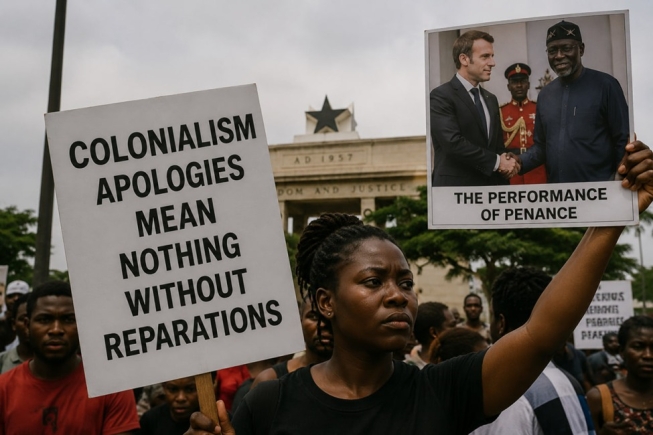
  • “COLONIALISM APOLOGIES MEAN NOTHING WITHOUT REPARATIONS” — GROWING CALLS FOR JUSTICE ECHO ACROSS AFRICA

    “COLONIALISM APOLOGIES MEAN NOTHING WITHOUT REPARATIONS” — GROWING CALLS FOR JUSTICE ECHO ACROSS AFRICA

    Symbolic apologies for the horrors of colonialism are no longer enough. That is the message emerging from activists, scholars, and political leaders who argue that true accountability must come with reparations.

    As former colonial powers increasingly acknowledge the injustices of their past, demands are growing for tangible action to address the economic, social, and cultural damage inflicted on colonized nations.

    Critics argue that expressions of regret, however welcome, do little to repair generations of exploitation, resource extraction, forced labor, and systemic inequality that continue to shape the fortunes of many countries today.

    “An apology without reparations is merely words,” campaigners insist, contending that meaningful justice requires financial compensation, debt relief, investment in affected communities, and the return of looted cultural artifacts.

    The debate has gained momentum in recent years as African and Caribbean nations intensify calls for former colonial powers to confront their historical responsibilities. Advocates say the wealth accumulated during colonial rule helped build powerful economies in Europe while leaving lasting scars across formerly colonized societies.

    Supporters of reparations argue that acknowledging history must go beyond speeches and ceremonies. They believe concrete measures are necessary to address the enduring legacy of colonialism and create a more equitable future.

    Opponents, however, maintain that modern generations should not be held financially responsible for actions committed centuries ago, warning that reparations could prove politically and legally complex.

    Despite the divisions, one thing is clear: the conversation is far from over. As pressure mounts on former colonial powers, calls for reparative justice are becoming increasingly difficult to ignore.

    For many advocates, the issue is simple—history cannot be changed, but its consequences can be addressed. And until that happens, they argue, apologies alone will never be enough.