Author: Daniel Sasu

  • FLOOD CRISIS WARNING: Parliament and Local Assemblies Urged to Unite as Accra Drowns in Recurring Flood Threat

    FLOOD CRISIS WARNING: Parliament and Local Assemblies Urged to Unite as Accra Drowns in Recurring Flood Threat

    Committee on Local Government Calls for Coordinated Action to Save Capital from Seasonal Disaster

    Authorities have been urged to forge a stronger partnership to confront the worsening flood situation in Accra, as concerns grow over the capital’s vulnerability to heavy rains and poor drainage systems.

    The call came from the Parliamentary Committee on Local Government and Rural Development of Ghana, which stressed that only a united front between Parliament and local assemblies can provide a lasting solution to the recurring devastation caused by floods.

    “No Room for Fragmented Action” — Committee Warns

    The Committee cautioned that isolated interventions by metropolitan, municipal and district assemblies will not be enough to address the scale of the problem, describing the flooding crisis as a national concern that demands coordinated planning, financing and enforcement.

    It emphasized that infrastructure deficits, blocked drainage channels and rapid urban expansion continue to worsen flooding in Accra, leaving residents exposed to property loss, displacement and public health risks after every major rainfall.

    Growing Public Frustration Over Repeated Flooding

    Residents in several parts of the capital have repeatedly raised alarm over the lack of sustainable drainage solutions, with many communities experiencing annual flood disasters despite repeated government assurances.

    The Committee stressed that the situation requires urgent alignment between legislative oversight and local governance structures, warning that failure to act decisively could deepen the humanitarian and economic impact of future floods.

    Call for Long-Term Infrastructure Strategy

    Lawmakers are now pushing for a comprehensive flood management strategy that includes improved urban planning, enforcement of building regulations, desilting of drains and stronger investment in climate-resilient infrastructure.

    They argue that short-term responses are no longer sufficient, insisting that Ghana must adopt a proactive approach to urban resilience and disaster prevention.

    A Test for Governance and Coordination

    As discussions intensify, the flooding challenge in Accra is increasingly being seen as a test of institutional coordination between national lawmakers and local authorities.

    The Committee maintains that only sustained collaboration between Parliament, government agencies and local assemblies will protect lives and property in future rainy seasons and restore public confidence in urban management systems.
  • “THE REAL HEROES ARE IN THE BRANCHES!” – Ashie Moore Hails Grassroots Executives Behind NDC’s Electoral Triumph

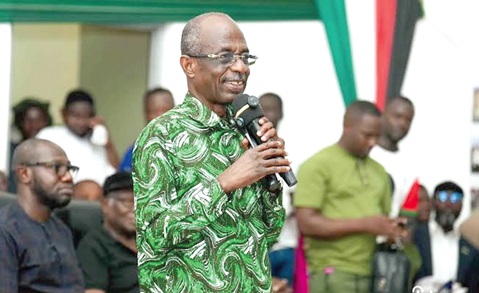
    “THE REAL HEROES ARE IN THE BRANCHES!” – Ashie Moore Hails Grassroots Executives Behind NDC’s Electoral Triumph

    Accra, Ghana – In a bold and appreciative statement that is stirring conversation within political circles, Ashie Moore has publicly credited branch-level executives for what he describes as the backbone of the National Democratic Congress (NDC)’s electoral success.

    Speaking on the party’s recent political performance, Moore emphasized that victory at the polls was not the result of elite decision-making alone, but the tireless efforts of grassroots organizers who worked under intense pressure to mobilize voters, defend polling stations, and sustain campaign momentum.

    According to him, branch executives remain the “engine room” of the party, often working quietly in communities without recognition, yet delivering results that shape national outcomes.

    He praised their commitment during the election period, highlighting their role in voter outreach, door-to-door campaigns, community engagement, and ensuring strong voter turnout in key constituencies.

    Moore’s remarks have resonated strongly among party supporters, many of whom have long argued that grassroots workers deserve greater recognition, resources, and inclusion in post-election decision-making.

    Political observers note that his comments come at a crucial time when internal party unity and reward systems are under renewed scrutiny, with growing calls for reforms that better reflect contributions at all levels of the organization.

    As discussions continue within the NDC, Moore’s statement is being interpreted as both a celebration and a reminder: that electoral victories are built from the ground up, not from the top down.

    Party insiders say the acknowledgment could fuel further debate on how grassroots loyalty is rewarded in future elections, especially as the NDC positions itself for upcoming political contests.

    For now, Moore’s message has struck a chord—placing the spotlight firmly on the branch executives who, he insists, turned political strategy into real electoral success.

  • “Don’t Touch PWDs Funds!” – Parliament’s Local Government Committee Warns MMDCEs in Strong Message

    “Don’t Touch PWDs Funds!” – Parliament’s Local Government Committee Warns MMDCEs in Strong Message

    Accra, Ghana – The Parliamentary Committee on Local Government has issued a stern warning to Metropolitan, Municipal and District Chief Executives (MMDCEs), urging them to strictly avoid the misuse of funds earmarked for Persons with Disabilities (PWDs).

    The Committee, operating under the oversight of the Parliament of Ghana, emphasized that allocations for PWDs are non-negotiable social protection resources meant to support vulnerable groups and must not be diverted under any circumstances.

    According to the Committee, concerns have been raised over lapses in the management and application of the Disability Common Fund across some districts, prompting renewed calls for accountability, transparency, and strict compliance with financial guidelines.

    Lawmakers stressed that the funds are intended to improve the livelihoods of Persons with Disabilities through initiatives such as skills training, assistive devices, education support, and income-generating activities—not for administrative or unrelated expenditures.

    The Committee further cautioned that any official found misapplying or misappropriating these funds would face appropriate sanctions in line with public financial management laws and parliamentary oversight procedures.

    MMDCEs were urged to strengthen monitoring systems and ensure that beneficiaries directly receive the intended support, while also maintaining proper records to enhance auditing and transparency.

    Stakeholders in the disability advocacy space have long called for tighter controls on the Disability Common Fund, arguing that better supervision is key to ensuring that Persons with Disabilities receive meaningful and timely assistance.

    The Committee’s warning is being seen as part of a broader effort to tighten governance around social intervention funds and restore public confidence in their administration across the country.

  • NPP KICKS OFF POWER BATTLE! Party Opens Nominations for Crucial Constituency Executive Elections

    NPP KICKS OFF POWER BATTLE! Party Opens Nominations for Crucial Constituency Executive Elections

    Grassroots Contest Set to Shape Party’s Future Ahead of Key Political Battles

    The opposition New Patriotic Party (NPP) has officially opened nominations for its highly anticipated constituency executive elections, setting the stage for intense political competition and strategic maneuvering across the country.

    The announcement marks the beginning of what party insiders describe as a critical phase in the NPP’s reorganization efforts as it seeks to strengthen its structures, rebuild momentum, and position itself for future electoral contests.

    With nominations now open, party faithful are expected to scramble for key constituency positions, including Chairman, First Vice Chairman, Second Vice Chairman, Secretary, Organizer, Treasurer, Women’s Organizer, Youth Organizer, and other influential roles that form the backbone of the party’s grassroots machinery.

    Political observers believe the elections could trigger fierce contests in several constituencies as aspiring executives vie for control of local party structures and influence over future decision-making processes.

    Party officials have urged prospective candidates to adhere strictly to the nomination guidelines and conduct their campaigns in a manner that promotes unity and strengthens the NPP’s democratic traditions.

    According to the party, the constituency executive elections are designed to renew leadership at the grassroots level, energize supporters, and enhance the party’s organizational capacity ahead of future national assignments.

    The opening of nominations comes at a crucial time for the NPP as members reflect on recent political developments and chart a new course for the party’s future. Many see the exercise as more than just an internal election; it is viewed as a decisive test of influence, loyalty, and leadership within the party’s ranks.

    Party supporters across the country are expected to closely monitor the process as prominent figures, emerging political actors, and long-serving grassroots organizers prepare to enter the race for strategic positions.

    High Stakes, High Expectations

    As nomination forms become available, anticipation is mounting in constituencies nationwide, with many predicting spirited contests that could reshape local power dynamics within the NPP.

    The outcome of the elections is expected to play a significant role in determining the party’s strength, cohesion, and readiness for future political challenges.

    For now, the race has officially begun—and the battle for the NPP’s grassroots leadership is set to take center stage.

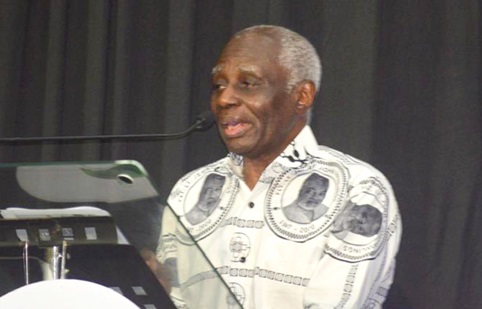
  • “Ghanaians Demand More Than Promises!” — Tsatsu Tsikata Challenges NDC to Raise Governance Standards and Deliver Results

    “Ghanaians Demand More Than Promises!” — Tsatsu Tsikata Challenges NDC to Raise Governance Standards and Deliver Results

    Legal Luminary Issues Strong Call for Excellence as Expectations Mount on Governing Party

    Renowned lawyer and statesman Tsatsu Tsikata has challenged the National Democratic Congress (NDC) to set a higher benchmark for governance and leadership, warning that Ghanaians expect tangible results, accountability, and a clear commitment to national development.

    Speaking at a time when public scrutiny of government performance remains intense, Tsikata emphasized that electoral victory alone is not enough to satisfy citizens who are looking for meaningful improvements in their daily lives.

    According to him, the NDC must demonstrate a level of governance that inspires confidence, strengthens democratic institutions, and delivers on the hopes of the electorate.

    “The Standard Must Be Higher”

    Tsikata stressed that the responsibility of governing comes with enormous expectations and that the party must continuously strive for excellence in policy implementation, transparency, and public service delivery.

    He noted that Ghanaians are increasingly demanding accountability from their leaders and are paying close attention to how promises made during campaigns are translated into action.

    “The people expect effective leadership and measurable progress,” he indicated, urging party officials and government appointees to remain focused on serving the national interest.

    Pressure Builds as Citizens Watch Closely

    His remarks come amid ongoing national conversations about economic recovery, job creation, infrastructure development, and the overall performance of government institutions.

    Political observers say Tsikata’s comments reflect growing recognition that public confidence can only be sustained through consistent delivery and responsible governance.

    Many analysts believe that maintaining public trust will require the government to demonstrate competence, responsiveness, and a willingness to address challenges confronting ordinary citizens.

    A Defining Test for the NDC Administration

    As the NDC navigates the complexities of governance, Tsikata’s call is being viewed as a reminder that political success must be matched by effective leadership and concrete achievements.

    Supporters argue that raising governance standards will strengthen democratic accountability and enhance the party’s credibility. Others see the remarks as a timely warning against complacency in office.

    With expectations running high across the country, the message from Tsatsu Tsikata is unmistakable: Ghanaians are watching, and the true measure of success will be judged not by rhetoric, but by results.

    Governance Under the Spotlight

    As the nation looks ahead, the challenge facing the NDC is clear—deliver policies that improve lives, uphold transparency, and prove that the trust placed in the party can translate into meaningful national progress.

    For many citizens, the coming years will reveal whether the government can meet the high standards it promised and whether its leadership can rise to the demands of the moment.

  • EXPLOSIVE WARNING: NDC Is Not a Platform for Self-Enrichment — Totobi Quakyi Fires Shot at Opportunists

    EXPLOSIVE WARNING: NDC Is Not a Platform for Self-Enrichment — Totobi Quakyi Fires Shot at Opportunists

    Veteran Party Stalwart Demands Loyalty, Sacrifice and Service as Internal Power Struggles Intensify

    A leading figure in the National Democratic Congress (NDC), Kwamena Ahwoi Totobi Quakyi, has issued a stern warning to party members, declaring that the NDC was founded to serve the people and not to advance the personal ambitions of individuals seeking power, wealth or political advantage.

    In a strongly worded statement that is already generating debate within political circles, Totobi Quakyi stressed that the party’s core values of sacrifice, social justice and collective responsibility must never be overshadowed by selfish interests.

    “The NDC is not a vehicle for personal aggrandisement,” he emphasized, urging members to remain committed to the ideals upon which the party was built.

    Sharp Rebuke to Political Opportunists

    The veteran politician’s remarks are being interpreted by many observers as a direct challenge to individuals who may be placing personal ambitions ahead of party unity and national development.

    According to Totobi Quakyi, the strength of the NDC has always rested on discipline, loyalty and a shared commitment to improving the lives of ordinary Ghanaians. He warned that any attempt to transform the party into a platform for individual gain could undermine its credibility and weaken public confidence.

    Political analysts say the comments come at a critical time when internal competition, leadership calculations and future political positioning are increasingly dominating conversations within major political parties.

    Party Unity Under the Spotlight

    Totobi Quakyi called on members at all levels to put the interests of the party and the nation above personal considerations, stressing that political power should be viewed as an opportunity to serve rather than a means of self-promotion.

    He reminded party faithful that the NDC’s historical mission has been rooted in advancing social justice, promoting accountability and defending the welfare of the ordinary citizen.

    “The focus must always remain on service to the people,” he stressed, adding that genuine leadership requires humility, dedication and a willingness to make sacrifices for the greater good.

    Growing Debate Within Political Ranks

    His comments have sparked renewed discussion about political ethics, leadership responsibility and the future direction of party politics in Ghana.

    Supporters have welcomed the intervention, describing it as a timely reminder of the principles that should guide public service. Others believe the remarks signal a broader effort to reinforce discipline and unity ahead of future political contests.

    As debates continue, Totobi Quakyi’s message is resonating far beyond the NDC, raising wider questions about whether political parties are staying true to their founding ideals or becoming vehicles for personal ambition.

    For many observers, the warning serves as a powerful reminder that political leadership must ultimately be measured not by personal gain, but by service, integrity and commitment to the people.

  • “STAND UP OR LOSE IT!” – Asiedu Nketiah Calls for Bold Action to Save Ghana’s Environment

    “STAND UP OR LOSE IT!” – Asiedu Nketiah Calls for Bold Action to Save Ghana’s Environment

    Accra, Ghana – Veteran politician and National Chairman of the NDC, Johnson Asiedu Nketiah, has issued a passionate call for Ghanaians to remain vigilant and embrace what he describes as “positive defiance” in the fight to protect the nation’s environment from escalating destruction.

    Speaking on the growing threats posed by illegal mining, pollution, deforestation, and environmental degradation, Asiedu Nketiah warned that Ghana’s natural resources are under unprecedented pressure and require urgent collective action to safeguard them for future generations.

    According to him, protecting the environment cannot be left solely in the hands of government institutions and regulatory bodies. Instead, citizens must become active defenders of their communities, refusing to remain silent when environmental laws are violated.

    He stressed that vigilance is essential in exposing activities that threaten forests, rivers, farmlands, and ecosystems, while “positive defiance” involves standing up against destructive practices through lawful and responsible means.

    “The environment belongs to all of us, and its protection demands courage, awareness, and active participation from every Ghanaian,” he emphasized.

    His remarks come at a time when concerns over environmental destruction continue to dominate national discussions, particularly the impact of illegal mining activities on major water bodies and agricultural lands across the country.

    Environmental advocates have welcomed the call, arguing that community involvement remains one of the most effective tools in combating environmental crimes and ensuring sustainable development.

    As Ghana intensifies efforts to address environmental challenges, Asiedu Nketiah’s message serves as a rallying cry for citizens to become frontline guardians of the nation’s natural heritage before irreversible damage is done.

    Observers say the appeal could reignite public engagement in environmental conservation and strengthen grassroots efforts aimed at preserving Ghana’s ecosystems for generations to come.

  • Bolgatanga Municipal Assembly Finally Elects Presiding Member After Crucial Vote

    Bolgatanga Municipal Assembly Finally Elects Presiding Member After Crucial Vote

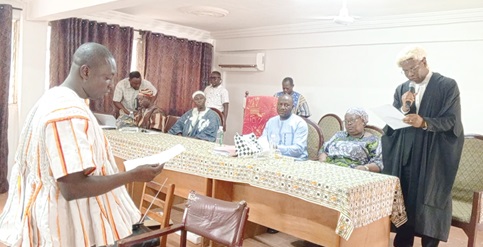
    Bolgatanga, Ghana – The Bolgatanga Municipal Assembly has successfully elected a new Presiding Member following a decisive voting process that brought together assembly members and key stakeholders in a significant moment for local governance.

    The election, which attracted keen interest from residents and political observers, marks a major step toward strengthening the administrative and legislative functions of the Assembly. The newly elected Presiding Member is expected to play a pivotal role in steering discussions, coordinating Assembly business, and promoting development initiatives across the municipality.

    Assembly members expressed optimism after the outcome, describing the election as a victory for democracy, unity, and effective local governance. The successful election is expected to pave the way for smoother decision-making processes and accelerate the implementation of key development projects within the municipality.

    Speaking after the announcement of the results, stakeholders called for collaboration and teamwork among members to address the pressing needs of residents and advance the development agenda of the Bolgatanga Municipality.

    The newly elected Presiding Member, in an acceptance address, pledged to serve with dedication, fairness, and transparency while working closely with all assembly members to ensure progress and prosperity for the municipality.

    Residents have welcomed the development, expressing hope that the Assembly will now focus on tackling challenges related to infrastructure, sanitation, education, healthcare, and economic growth.

    The election is being viewed as a significant milestone that signals a renewed commitment to good governance and sustainable development in the Bolgatanga Municipality.

  • MINORITY SOUNDS ALARM: ‘Legalise NAIMOS NOW or Lose the War Against Galamsey!’

    MINORITY SOUNDS ALARM: ‘Legalise NAIMOS NOW or Lose the War Against Galamsey!’

    Opposition Demands Immediate Legislative Backing for Anti-Illegal Mining Task Force

    The Minority in Parliament has issued a passionate call for the government to urgently formalise the National Anti-Illegal Mining Operations Secretariat (NAIMOS) through a Legislative Instrument (L.I.), warning that Ghana’s relentless battle against illegal mining, popularly known as galamsey, risks collapse without a firm legal foundation.

    According to the Minority, the absence of a clear legal framework governing NAIMOS could undermine its authority, weaken enforcement efforts, and create loopholes that illegal miners may exploit to continue devastating the country’s forests, rivers, and farmlands.

    Addressing the media, Minority lawmakers stressed that while the establishment of NAIMOS signals government’s commitment to tackling galamsey, good intentions alone are not enough to win what they describe as a “national emergency.”

    “NAIMOS must not operate on goodwill and administrative directives alone. It needs the force of law behind it,” the Minority declared, insisting that a Legislative Instrument would provide the institution with the legitimacy, powers, and operational clarity required to execute its mandate effectively.

    The opposition argued that illegal mining has evolved into a sophisticated and deeply entrenched enterprise, demanding stronger institutional mechanisms backed by law. They warned that without legal protection and clearly defined powers, anti-galamsey operatives could face challenges in enforcement, prosecutions, and coordination with other state agencies.

    The Minority also expressed concern over the continued destruction of major water bodies and forest reserves across the country, describing the environmental damage as alarming and potentially irreversible if decisive action is not taken immediately.

    They urged the government to move swiftly to lay the necessary Legislative Instrument before Parliament, insisting that the fight against galamsey should transcend politics and become a united national mission.

    “The future of our environment, our water resources, and generations yet unborn depends on the decisions we make today,” the Minority cautioned.

    Their call comes amid growing public concern over the resurgence of illegal mining activities in several parts of the country despite intensified operations by security agencies and anti-galamsey task forces.

    As pressure mounts on government to deliver lasting solutions, the Minority maintains that formalising NAIMOS through legislation could be the critical step needed to transform the anti-galamsey campaign from a series of operations into a sustained and legally empowered national crusade.

    Battle for Ghana’s Environment Intensifies

    With rivers turning brown, forests disappearing, and communities raising fresh concerns about the environmental impact of illegal mining, the demand for a legally empowered NAIMOS is likely to fuel renewed debate over the country’s anti-galamsey strategy.

    Whether government acts on the Minority’s proposal could determine the next chapter in Ghana’s high-stakes fight to reclaim its natural resources from the grip of illegal mining.

  • “NPP MUST CHANGE OR PERISH!” — Former Subin MP Demands Radical ‘One Member, One Vote’ Reform After Crushing 2024 Election Defeat

    “NPP MUST CHANGE OR PERISH!” — Former Subin MP Demands Radical ‘One Member, One Vote’ Reform After Crushing 2024 Election Defeat

    Former Lawmaker Sounds Alarm as Party Faces Growing Calls for Grassroots Revolution

    The New Patriotic Party (NPP) has been urged to undertake sweeping internal reforms following its disappointing performance in the 2024 general elections, with former Subin Member of Parliament, Eugene Boakye Antwi, declaring that the party’s future depends on embracing a bold “one member, one vote” system.

    Speaking amid growing post-election soul-searching within the opposition party, the former legislator argued that the NPP can no longer rely on its traditional delegate system if it hopes to reconnect with its grassroots supporters and regain power in the years ahead.

    According to him, the devastating electoral setback should serve as a wake-up call for party leaders to rethink how internal elections are conducted and ensure that every registered member has a direct say in choosing the party’s leaders and presidential candidate.

    “The Grassroots Must Be Heard”

    Eugene Boakye Antwi stressed that the current structure leaves too much power in the hands of a limited number of delegates, creating opportunities for manipulation, division, and dissatisfaction among ordinary party members.

    He maintained that introducing a one-member, one-vote system would deepen democracy within the party, increase transparency, and restore confidence among supporters who feel excluded from critical decision-making processes.

    “The party belongs to its members, and they must have the ultimate voice in determining its direction,” he reportedly emphasized.

    After Historic Defeat, Pressure Mounts for Major Reforms

    The call comes at a time when the NPP is grappling with intense internal debate over the causes of its 2024 electoral defeat. Political analysts and party insiders have pointed to several factors, including internal divisions, voter dissatisfaction, and organizational challenges that may have contributed to the party’s loss.

    With preparations for future leadership contests already generating discussions across party ranks, many members are demanding reforms that would make the selection process more inclusive and reflective of the broader membership base.

    Observers believe the push for one-member, one-vote could become one of the most contentious issues ahead of the party’s next national conference.

    A Defining Moment for the NPP

    Political watchers say the proposal represents more than just an electoral reform—it is part of a larger battle over the future identity and direction of the NPP.

    Supporters of the idea argue that empowering ordinary members could revitalize the party, strengthen unity, and rebuild public trust after the painful election loss. Critics, however, warn that implementing such a system could present logistical and financial challenges.

    As the debate intensifies, one thing is becoming increasingly clear: the NPP faces a critical crossroads, and the decisions made in the coming months could shape the party’s political fortunes for years to come.

    Whether party leaders embrace the grassroots revolution being championed by Eugene Boakye Antwi or maintain the status quo, the battle over reform is set to dominate discussions as the party seeks a path back to power.