Author: Daniel Sasu

  • I Fell Into the Grave While Shooting a Burial” — Photographer Recalls His Most Embarrassing Moment

    I Fell Into the Grave While Shooting a Burial” — Photographer Recalls His Most Embarrassing Moment

    A professional photographer has shared the most mortifying experience of his career — falling into an open grave while covering a burial ceremony. The incident happened in 2018 at a crowded burial site when he slipped while trying to get the perfect angle, suddenly plunging into the grave he was photographing.

    The fall not only embarrassed him but also caused minor damage to the casket, leaving onlookers shocked and silent for a moment. The photographer later described the experience as surreal and something he couldn’t immediately process.

    Looking back, he says the episode taught him a hard lesson in situational awareness, especially when working in unpredictable or crowded environments. What was once a deeply embarrassing moment has since become a cautionary story among colleagues about staying alert, even during solemn occasions.

  • He Said He Was ‘Marking His Territory’ — Woman Reveals Shocking Wedding Night Ordeal

    He Said He Was ‘Marking His Territory’ — Woman Reveals Shocking Wedding Night Ordeal

    A newlywed woman has shared a harrowing account of her wedding night, describing a shocking incident that has left her and her family traumatized. According to her recounting, the night that was supposed to celebrate love and union instead turned into a disturbing confrontation when her husband allegedly made threatening and controlling claims, saying he was “marking his territory.”

    The woman, who spoke to journalists under strict anonymity, described feeling terrified and violated, emphasizing that the event went far beyond typical marital disputes. Friends and family were left in disbelief as they learned the details of what she called an “unthinkable intrusion” on what should have been a joyful occasion.

    Authorities are reportedly looking into the matter, and legal experts warn that such incidents can fall under domestic abuse laws, emphasizing the need for awareness and protection for victims.

    The story has sparked a wave of reactions online, with many expressing shock and calling for stronger measures to protect individuals from abuse within marriage, highlighting that consent and respect must remain central to any marital relationship.

    This incident serves as a stark reminder that even moments meant for celebration can sometimes mask dangerous and abusive behavior, underscoring the importance of vigilance and support for victims.

  • BIBIANA GYASI UNVEILS CHILDREN’S BOOK TO SPARK CULTURAL LITERACY

    BIBIANA GYASI UNVEILS CHILDREN’S BOOK TO SPARK CULTURAL LITERACY

    Ghanaian author and cultural advocate Bibiana Gyasi has officially launched her latest project: a children’s book aimed at promoting cultural literacy and fostering a deeper appreciation for Ghanaian traditions among young readers.

    The book, designed for early and middle-grade readers, blends storytelling with educational elements, introducing children to folklore, proverbs, and historical narratives that reflect the richness of Ghanaian heritage. Gyasi explained that her goal is to provide young minds with engaging content that encourages both reading and cultural awareness.

    Speaking at the launch, she highlighted the importance of equipping children with knowledge about their roots: “Cultural literacy is about understanding where we come from, who we are, and the values that shape our society. Through stories, we can plant seeds that grow into pride and curiosity.”

    The initiative has already drawn praise from educators, parents, and cultural commentators, who see it as a vital step in bridging the gap between modern education and traditional knowledge. By combining captivating illustrations with compelling narratives, the book seeks to make learning about culture both fun and meaningful.

    Gyasi’s launch signals a growing movement among Ghanaian writers to create content that empowers young readers while preserving the country’s cultural heritage, ensuring that the next generation grows up connected to the stories, values, and history that define their identity.

  • ‘No Divisions, Support TGMA Nominees’ — Nii Noi Rallies Gospel Fraternity Ahead of Awards

    ‘No Divisions, Support TGMA Nominees’ — Nii Noi Rallies Gospel Fraternity Ahead of Awards

    As tensions and debates simmer ahead of this year’s Telecel Ghana Music Awards, gospel musician Nii Noi has issued a strong call for unity, urging industry players to set aside differences and rally behind all nominees.

    Speaking amid growing conversations within the gospel space, he emphasized that the awards season should not be a battleground for rivalry, but a moment to celebrate collective achievements and elevate the genre as a whole.

    Nii Noi cautioned against divisions that often surface during award periods, noting that internal conflicts only weaken the industry’s influence and public image. Instead, he encouraged artists, fans, and stakeholders to throw their full support behind nominated acts, regardless of personal affiliations.

    According to him, unity within the gospel fraternity is essential not just for awards recognition, but for long-term growth, collaboration, and global reach. He stressed that a united front would position gospel music more strongly within the broader entertainment landscape.

    His message comes at a time when discussions around fairness, recognition, and competition are once again dominating conversations ahead of the awards ceremony.

    With TGMA drawing closer, Nii Noi’s appeal serves as a reminder that beyond trophies and titles, the strength of the gospel industry lies in its ability to stand together.

  • INDUSTRY WAKE-UP CALL: AFRO AGES DEMANDS Telecel Ghana Music Awards SPOTLIGHT EMERGING TALENT OR RISK STAGNATION!

    INDUSTRY WAKE-UP CALL: AFRO AGES DEMANDS Telecel Ghana Music Awards SPOTLIGHT EMERGING TALENT OR RISK STAGNATION!

    A bold call is shaking Ghana’s music scene as Afro Ages urges the Telecel Ghana Music Awards to shift focus and give emerging artists the recognition they deserve—or risk holding back the future of the industry.

    According to the group, while established stars continue to dominate the spotlight, a new generation of creatives is being overlooked despite their innovation and growing fanbases. They argue that without intentional support, these rising talents may struggle to break through on the national stage.

    Afro Ages insists the TGMA platform—long regarded as the pinnacle of musical achievement in Ghana—must evolve to reflect the changing soundscape and youthful energy driving the industry forward. From viral hits to underground movements, they say the next wave of stars is already here, just waiting for recognition.

    The call has sparked intense debate among fans and insiders, with some backing the push for inclusivity, while others defend the awards’ traditional focus on proven success.

    Will the Telecel Ghana Music Awards rise to the challenge and usher in a new era—or continue business as usual? The pressure is on, and the future of Ghanaian music could hang in the balance.

  • CRACKS IN THE SYSTEM: THE FLAW IN TGMA’S CONTROVERSIAL “SWING PERIOD”

    CRACKS IN THE SYSTEM: THE FLAW IN TGMA’S CONTROVERSIAL “SWING PERIOD”

    Questions are mounting over the fairness and transparency of the “swing period” in the Telecel Ghana Music Awards, with critics arguing that the system could be distorting the true reflection of Ghana’s music landscape.

    The swing period—typically a window that allows late-year releases to be considered for the next awards cycle—was designed to ensure no major hit slips through the cracks. But instead of solving a problem, many industry insiders say it has created a new one.

    At the heart of the criticism is timing. Songs released within this swing window can enjoy extended visibility, effectively competing across two award cycles. This, critics argue, gives certain artists an unfair advantage over others whose songs fall strictly within the standard calendar period.

    The issue becomes even more glaring in categories dominated by chart performance and popularity. A song that gains momentum during the swing period can build sustained hype, increasing its chances of nominations and wins—sometimes at the expense of equally deserving tracks that don’t benefit from that extended exposure.

    Some analysts also point to confusion among fans and even stakeholders about eligibility rules, raising concerns about consistency and transparency. The lack of widespread understanding of how the swing period works has, in some cases, fueled accusations of bias and manipulation.

    Supporters of the system, however, argue that Ghana’s music release cycle doesn’t neatly align with award timelines, making the swing period a necessary compromise. Without it, late-year hits could be unfairly excluded altogether.

    Still, the growing debate suggests that reform may be inevitable. Proposals range from shortening the swing window to introducing stricter eligibility guidelines or even restructuring the awards calendar entirely.

    As the TGMA continues to shape the narrative of Ghanaian music excellence, one thing is clear: the integrity of its processes matters just as much as the winners it celebrates.

  • EDITOR’S LENS: TGMA27 — Gospel Fraternity Urged to Face Hard Truths Beyond the Spotlight

    EDITOR’S LENS: TGMA27 — Gospel Fraternity Urged to Face Hard Truths Beyond the Spotlight

    As anticipation builds toward the 27th edition of the Telecel Ghana Music Awards (TGMA27), a critical conversation is emerging within Ghana’s gospel music space — one that goes far beyond nominations, wins, and red-carpet moments.

    This year’s awards season is not just about celebration, but reflection. Observers say the gospel fraternity must confront deeper, long-standing issues that continue to shape — and in some cases limit — the growth and global impact of the genre.

    At the heart of the discussion is the question of unity versus division. Despite the genre’s spiritual foundation, internal rivalries, lack of collaboration, and public disagreements have often overshadowed its core message. Critics argue that without a stronger sense of collective purpose, the gospel industry risks stagnation.

    There are also concerns about artistic evolution and relevance. While other genres continue to innovate and expand their reach internationally, sections of the gospel community are being challenged to push creative boundaries, invest in quality production, and embrace modern platforms to stay competitive.

    Another pressing issue is recognition and structure within award schemes. Some industry players believe gospel music is still underrepresented or not fully appreciated within major award categories, sparking recurring debates each year. TGMA27, they say, presents yet another opportunity to reassess how gospel contributions are measured and honored.

    Beyond awards, the editorial lens points to a need for stronger leadership, mentorship, and industry systems to support upcoming gospel artists. Without intentional development, the next generation may struggle to break through or sustain long-term careers.

    Ultimately, the message is clear: TGMA27 should not just be a night of trophies, but a turning point. For Ghana’s gospel fraternity, the real challenge lies in confronting uncomfortable truths, embracing change, and aligning more closely with both its spiritual mission and industry realities.

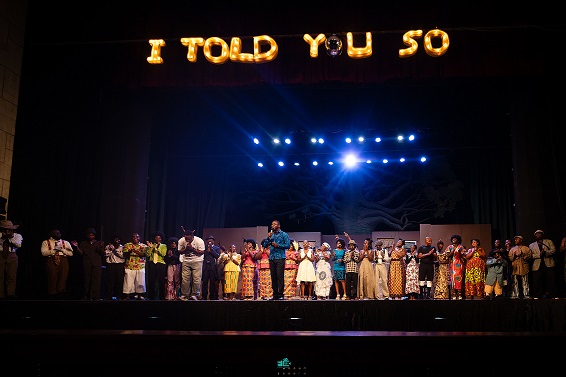
  • Theatre Triumph or Overhyped Revival? “I Told You So” Storms the Stage with Bold Drama and Sharp Humor

    Theatre Triumph or Overhyped Revival? “I Told You So” Storms the Stage with Bold Drama and Sharp Humor

    The stage production of I Told You So doesn’t tiptoe into relevance—it bursts onto the scene with confidence, color, and a powerful sense of purpose. Reviving a beloved Ghanaian classic, the play delivers a gripping mix of nostalgia and reinvention that keeps audiences hooked from curtain rise to final bow.

    From the very first scene, the production makes a statement. The staging is bold, the lighting deliberate, and the set design cleverly bridges tradition and modern theatre. Every transition feels intentional, pulling the audience deeper into a story that is as culturally rooted as it is dramatically engaging.

    But it is the cast that truly ignites the stage. Performances are electric, with actors seamlessly shifting between humor and heartbreak. The dialogue crackles with wit, drawing laughter one moment and silence the next as the weight of the story settles in. The chemistry among the performers elevates the experience, making each scene feel alive and unpredictable.

    At its core, the play thrives on its timeless message. Themes of love, betrayal, and the consequences of ignoring advice are delivered with renewed urgency, making the story feel strikingly relevant. The production leans heavily into satire, using humor not just to entertain, but to challenge and provoke thought.

    While ambitious in its execution, the play occasionally pushes its limits. Some transitions feel rushed, and a few creative risks don’t land as smoothly as intended. Yet these moments do little to diminish the overall impact. If anything, they highlight the production’s willingness to experiment and push boundaries.

    Audience response has been overwhelmingly enthusiastic, with many praising the play for breathing new life into a familiar story. It stands as proof that Ghanaian theatre is not just preserving its past—it is actively redefining it.

    In the end, I Told You So is more than a revival. It is a bold, energetic, and emotionally charged production that demands attention.

    Verdict: A daring and captivating stage experience that blends culture, comedy, and drama into a performance that lingers long after the curtains close.


  • Prayer and Faith Saved Me — Agradaa Speaks After Prison Release

    Prayer and Faith Saved Me — Agradaa Speaks After Prison Release

    Controversial evangelist Nana Agradaa has broken her silence following her release from prison, describing the experience as frightening, humbling, and deeply spiritual.

    She revealed that fear overwhelmed her when she was first taken into custody, admitting she thought she might not survive the ordeal. Faced with uncertainty and a long sentence, she said she turned completely to prayer as her only source of hope.

    According to Agradaa, the moment she learned of her sentence left her in shock, forcing her to rely on her faith to cope with the harsh reality of prison life. She spent much of her time reading the Bible and reflecting on stories of people who endured imprisonment but eventually found freedom.

    She insists that her release was nothing short of divine intervention, crediting constant prayer and unwavering belief in God for seeing her through the darkest period of her life.

    Now out of prison, Agradaa says the experience has changed her perspective, leaving her with a renewed commitment to her faith and a stronger sense of purpose moving forward.

  • Tears and Tributes: K.K. Fosu Bids Final Farewell as He Lays Father to Rest

    Tears and Tributes: K.K. Fosu Bids Final Farewell as He Lays Father to Rest

    Grief and solemn emotion filled the air as highlife star K.K. Fosu laid his beloved father to rest in a deeply moving ceremony attended by family, friends, and figures from Ghana’s entertainment scene. The occasion was marked by heartfelt tributes, music, and moments of reflection as the singer said his final goodbye.

    Dressed in mourning attire, K.K. Fosu was seen visibly emotional as he paid his respects, honoring the man he described as a pillar in his life and career. Loved ones gathered to celebrate the life of the deceased, sharing stories of his impact, values, and the legacy he leaves behind.

    The burial ceremony drew notable personalities from the music industry, many of whom came to support the grieving artist and stand in solidarity during the difficult moment. Traditional rites blended with modern tributes, creating a powerful farewell that underscored the importance of family, culture, and remembrance.

    As the final rites were performed, the atmosphere shifted from sorrow to quiet strength, with mourners urging K.K. Fosu to stay strong and carry forward his father’s legacy.

    The emotional send-off serves as a reminder of the deep personal moments behind public figures, showing that beyond the spotlight, they too endure life’s most painful losses.