

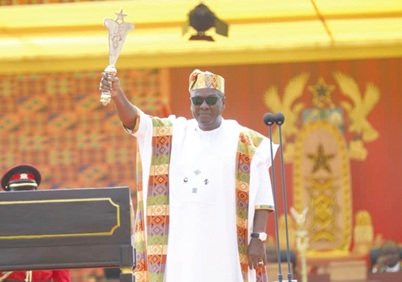
Two years into his presidency, John Dramani Mahama continues to command remarkable political attention. But what is behind his enduring appeal? Is it his leadership style, political experience, personal charisma, or the promise of a better Ghana?
Two years into his return to power, President John Dramani Mahama remains one of Ghana’s most compelling and talked-about political figures. From the corridors of power to the streets, markets and social media platforms, the Mahama phenomenon continues to generate intense public interest, political debate and passionate reactions.
But what exactly explains the enduring fascination with the man many Ghanaians continue to regard as a familiar face with a renewed political mission?
Is it the charisma? The communication style? The political resilience? Or is there something deeper about the Mahama brand that continues to resonate with a significant section of the Ghanaian electorate?
Whatever the explanation, one thing is increasingly difficult to ignore: the Mahama mystique has refused to fade.
A POLITICAL COMEBACK THAT REDEFINED THE NARRATIVE
Mahama’s political journey has been anything but ordinary. Having served as president from 2012 to 2017, he experienced both the privileges and pressures of the highest office in the land.
His defeat in the 2016 general election could easily have marked the end of his presidential ambitions. Yet, rather than disappear from the political landscape, he remained active, rebuilt his political machinery and eventually returned to the presidency following the 2024 general election.
That comeback helped reshape his political image.
To his supporters, Mahama became a symbol of perseverance, political maturity and the possibility of redemption. His return was not merely another electoral victory; it was a dramatic political comeback that reinforced his standing as one of Ghana’s most consequential political figures.
For many, the man who once left the Jubilee House had returned with unfinished business.
THE POWER OF FAMILIARITY: A PRESIDENT GHANAIANS ALREADY KNOW
One of Mahama’s greatest political assets may be the familiarity he enjoys with the Ghanaian electorate.
Unlike a political newcomer, he does not need to introduce himself to the country. Ghanaians have witnessed his leadership, heard his speeches, examined his decisions and debated his record.
That familiarity creates a unique political advantage.
His supporters see an experienced leader who understands the machinery of government and the challenges facing the country. Even some of his critics acknowledge that he brings considerable political experience to the presidency.
In a political environment where voters increasingly demand results, experience and institutional knowledge can become powerful selling points.
But familiarity also comes with expectations. Having occupied the presidency before, Mahama is being judged not only on his promises but also on his previous record and his ability to demonstrate what he has learned.
THE CHARISMA FACTOR: WHY HIS COMMUNICATION STYLE MATTERS
Politics is not always about policies, statistics and government programmes. Sometimes, it is also about personality, connection and the ability to communicate a compelling vision.
Mahama has cultivated a public image that combines political confidence with a relatively conversational communication style.
His speeches, public engagements and interactions with citizens have helped sustain his visibility and strengthen his connection with supporters.
For his admirers, he is approachable, articulate and politically relatable. His ability to connect national conversations with everyday concerns remains an important feature of his public appeal.
In an age where political communication is increasingly shaped by social media, personality and public perception, this ability to remain visible and relevant matters enormously.
THE ECONOMIC QUESTION: CAN POPULARITY SURVIVE THE TEST OF PERFORMANCE?
Yet, behind the political excitement lies a more difficult question: can Mahama’s enduring appeal withstand the realities of governance?
Ghanaians are not simply looking for a president who can command headlines, deliver memorable speeches or dominate political conversations. They want tangible improvements in their daily lives.
The cost of living, employment opportunities, inflation, the stability of the cedi, business conditions, public infrastructure and access to essential services remain central to the national conversation.
For many citizens, the true measure of Mahama’s presidency will be whether economic conditions improve and whether government policies translate into meaningful opportunities.
This is where the Mahama mystique faces its biggest test.
Political goodwill can generate patience, but it cannot indefinitely replace performance. Public enthusiasm can sustain a government through difficult moments, but ultimately, citizens will demand evidence that their confidence was justified.
THE OPPOSITION FACTOR: WHY THE POLITICAL DEBATE REMAINS INTENSE
Mahama’s political appeal cannot be separated from Ghana’s fiercely competitive political environment.
The National Democratic Congress (NDC) and the New Patriotic Party (NPP) have long been at the centre of Ghana’s electoral contest, with their supporters offering sharply contrasting interpretations of the country’s political and economic direction.
For the NDC faithful, Mahama represents a leader who has returned with renewed determination and a mandate to deliver on his promises.
For the opposition, however, his administration must be scrutinised, challenged and held accountable.
This political contest helps explain why his presidency continues to attract such intense attention. Every major announcement, policy decision, public appearance and economic development becomes another opportunity for supporters and critics to advance their competing narratives.
Mahama is therefore not merely governing a country; he is also navigating a political environment in which public perception can be almost as consequential as policy delivery.
THE EXPECTATION TRAP: WHEN HOPE BECOMES A DEMANDING TASKMASTER
Perhaps the most fascinating aspect of Mahama’s enduring appeal is the weight of expectation surrounding his presidency.
His return to power generated considerable optimism among supporters who believed his previous experience had prepared him for another opportunity to lead Ghana.
But high expectations can become a double-edged sword.
The more people invest emotionally and politically in a leader, the more demanding they become when results are slow to materialise.
Mahama must therefore contend with a delicate balancing act: preserving the goodwill that helped propel him back into office while making difficult decisions capable of delivering measurable results.
His political legacy will ultimately depend less on the excitement surrounding his return and more on what his administration achieves.
THE MAHAMA MYSTIQUE: A PERSONALITY, A POLITICAL BRAND OR A NATIONAL PHENOMENON?
Two years into his renewed presidency, the Mahama phenomenon raises a bigger question about Ghanaian politics.
Are voters increasingly attracted to individual political personalities? Has his comeback strengthened his image as a resilient leader? Or does his appeal reflect the continuing influence of party loyalty, political nostalgia and the search for an alternative direction?
The answer is probably a combination of these factors.
Mahama’s political brand draws strength from experience, familiarity, communication, personal resilience and the expectations attached to his return.
But the mystique should not be mistaken for universal approval. Ghana remains politically divided, and his administration will continue to face scrutiny from citizens with different expectations and political loyalties.
Ultimately, the real test is whether the excitement surrounding his leadership can be converted into lasting national progress.
THE FINAL VERDICT: THE HONEYMOON WILL NOT LAST FOREVER
The Mahama mystique is a fascinating political story, but it is also a story with an uncertain ending.
His journey from president to opposition leader and back to the presidency has cemented his place in Ghana’s political history. His comeback demonstrated remarkable political resilience and confirmed his ability to remain relevant in a highly competitive political landscape.
Yet, history will not judge him simply by how spectacularly he returned to power.
It will judge him by what he does with the opportunity.
Can he translate political goodwill into economic relief? Can he create jobs, strengthen institutions, improve public services and restore confidence in the economy? Can he meet the expectations of those who voted for him while earning the confidence of those who did not?
These are the questions that will determine whether the Mahama mystique becomes a lasting political legacy or simply another chapter in Ghana’s fascinating electoral history.
For now, the fascination endures. But in the final analysis, Ghanaian voters will want more than a charismatic president and a remarkable political comeback. They will want results.