Tag: President Mahama

  • NPP has no trust in Mahama’s pledge not to seek third term – Richard Gyamfi

    NPP has no trust in Mahama’s pledge not to seek third term – Richard Gyamfi

    The opposition party’s communicator says concerns over ongoing Supreme Court proceedings on presidential term limits require closer scrutiny, despite the President’s stated position.

    A member of the New Patriotic Party’s (NPP) communications team, Richard Gyamfi, has expressed reservations about President John Dramani Mahama’s pledge not to seek a third term, amid continuing debate over the constitutional limits on presidential tenure.

    The concerns reflect the NPP’s broader position that the country must guard against any interpretation of the 1992 Constitution that could allow a president to remain in office beyond the permitted number of terms.

    The debate has intensified following legal proceedings at the Supreme Court seeking clarification on whether the constitutional limit of two presidential terms applies to consecutive terms only or to two terms served at different periods.

    The NPP has filed a case asking the court to clarify the provisions governing presidential tenure and affirm that a person cannot be elected president more than twice, irrespective of whether the terms are consecutive or non-consecutive. 

    The party has repeatedly questioned whether the ongoing legal proceedings could create an avenue for President Mahama to contest another presidential election.

    In July 2026, NPP National Organiser Henry Nana Boakye, popularly known as Nana B, accused the President of being behind what he described as a “veiled third-term agenda”. He argued that the constitutional term limits must be upheld and warned against any interpretation that could weaken them. 

    The NPP’s concerns centre on the constitutional interpretation being sought rather than any declared intention by the President to contest a third term.

    President Mahama has previously stated that he does not intend to seek a third term, while government spokesperson Felix Kwakye Ofosu has dismissed the allegations as political propaganda.

    Mr Kwakye Ofosu has maintained that the President’s position on the matter is clear and that the legal proceedings should not be interpreted as evidence of a plan to extend his tenure. 

    Supreme Court proceedings remain central

    The Supreme Court’s interpretation of Articles 58 and 66 of the 1992 Constitution is expected to provide clarity on the limits of presidential eligibility and the treatment of non-consecutive terms.

    The outcome could have implications for future presidential elections and the interpretation of Ghana’s constitutional safeguards against prolonged political tenure.

    The controversy has generated competing positions between the NPP and the governing National Democratic Congress (NDC), with the opposition demanding strict adherence to the two-term limit and government representatives rejecting suggestions that the President intends to circumvent the Constitution.

    The court’s eventual determination will be central to resolving the legal question. Until then, claims about a possible third-term bid remain contested political assertions rather than an established presidential decision.
  • President Mahama Explains Why He Wants a National Forum on Regulating TikTok and New Media

    President Mahama Explains Why He Wants a National Forum on Regulating TikTok and New Media

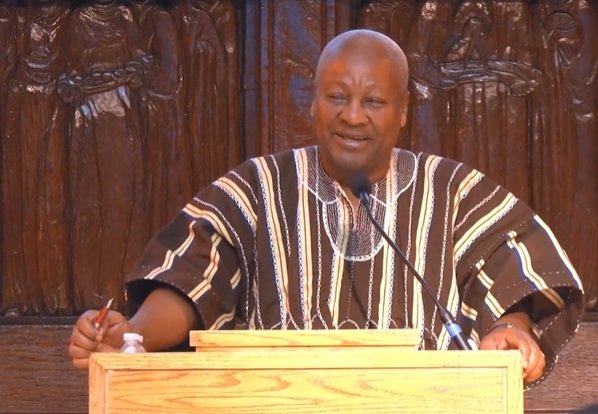
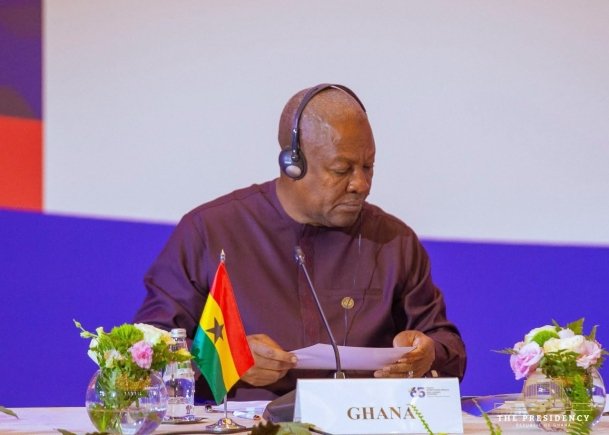
    President John Dramani Mahama has called for a broad national stakeholder engagement to determine how Ghana should address harmful content on TikTok and other emerging digital platforms, while stressing that legitimate criticism and freedom of expression must be protected.

    The President has directed the Media Foundation for West Africa (MFWA) and the Ghana Journalists Association (GJA) to convene the engagement, which is expected to bring together government institutions, media organisations, content creators, bloggers, influencers, civil society groups, legal experts and digital platforms.

    Why the forum?

    The Presidency says the rapid growth of social media and emerging platforms has fundamentally changed Ghana’s public-information landscape.

    Bloggers, TikTok creators and influencers can now command audiences comparable to, or larger than, some traditional media outlets, but they do not necessarily operate under the same editorial standards or accountability mechanisms.

    Mahama therefore wants stakeholders to examine whether Ghana’s existing legal and regulatory framework remains adequate for the digital environment.

    Protecting free speech

    Importantly, the proposed process is not framed solely around restricting online content.

    The Presidency says the roadmap should distinguish between lawful criticism, political commentary, satire and dissent on one hand, and hate speech, threats, incitement and other unlawful conduct on the other.

    Mahama has also expressed concern about what he considers disproportionate arrests over criticism or politically charged commentary, arguing that such actions could undermine confidence in state institutions.

    What could change?

    The forum is expected to examine possible policy, legislative, regulatory and non-legislative measures, alongside public education and digital-literacy initiatives.

    Stakeholders are also expected to consider professional and ethical standards for online creators, accessible complaints mechanisms and alternatives to arrest and prosecution where conduct does not involve clearly criminal behaviour.

    The development comes amid an increasingly intense debate in Ghana over online speech, misinformation and the treatment of bloggers and social-media users. The MFWA has previously raised concerns about what it described as the potential criminalisation of speech under existing laws, while also acknowledging the need to address genuinely harmful online content.

    A debate that could reshape Ghana’s digital space

    The planned stakeholder engagement could therefore become an important moment in Ghana’s ongoing conversation about where freedom of expression ends and unlawful online conduct begins.

    Rather than announcing a specific new TikTok law, the Presidency says the immediate task is to bring the relevant actors together and develop a roadmap for the President’s consideration.

    Watch the video as President Mahama explains why he believes Ghana needs a national conversation before deciding how TikTok and other new-media platforms should be regulated.

  • See Full List of Board Members Removed as Mahama Dissolves Boards of Nine State Institutions

    See Full List of Board Members Removed as Mahama Dissolves Boards of Nine State Institutions

    President John Dramani Mahama has dissolved the governing boards of nine state institutions with immediate effect, in a major shake-up affecting key sectors of Ghana’s public economy.

    The decision, announced on Wednesday, September 2, 2026, affects institutions operating in the petroleum, mining, banking, infrastructure, housing, postal and sports sectors. The Presidency said the affected boards would be reconstituted in due course.

    The dissolution was communicated in a statement issued by Presidential Spokesperson and Minister for Government Communications, Felix Kwakye Ofosu. The statement did not provide specific reasons for the decision.

    The Nine Institutions Affected

    The institutions whose boards have been dissolved are:

    1. Ghana National Petroleum Corporation (GNPC)
    2. Bulk Oil Storage and Transportation Company Limited (BOST)
    3. Volta Aluminium Company Limited (VALCO)
    4. Consolidated Bank Ghana Limited (CBG)
    5. Ghana Post Company Limited
    6. Road Maintenance Trust Fund
    7. TDC Ghana Limited
    8. Prestea Sankofa Gold Limited
    9. National Sports Authority (NSA)

    The institutions are responsible for important areas of the national economy and public service, making the development one of the more significant board-level changes under the Mahama administration in recent times.

    Board Chairpersons and Members Affected

    Among the prominent board chairpersons whose appointments have effectively come to an end are Professor Joe Oteng-Adjei of GNPC, Professor Saint Kuttu of BOST, Ernest Mawuli Agbesi of CBG and Emmanuel Nii Ashie Moore of Prestea Sankofa Gold Limited.

    Others include Ambassador Horace Nii Ayi Ankrah, who chaired VALCO; Petra Aba Asamoah, who chaired Ghana Post; Isaac Adjei Mensah, chair of the Road Maintenance Trust Fund; Isaac Ashai Odamtten, chair of TDC Ghana Limited; and Professor Fred Awaah, chair of the National Sports Authority.

    BOST

    The dissolved BOST board was chaired by Prof. Saint Kuttu. Other members listed in reports include:

    • Prof. Saint Kuttu — Chair
    • Delphina Jones
    • Allister Otoo
    • Ludwig Hlodze
    • Albert Tibe Anarwat
    • Atchere Asuah-Kwasi
    • Bright Dorgbefu
    • Charles Asiedu

    VALCO

    The VALCO board was chaired by Amb. Horace Nii Ayi Ankrah. Members included:

    • Amb. Horace Nii Ayi Ankrah — Chair
    • Yusif Sulemana
    • Reindorf Twumasi Ankrah
    • Kofi Arko Nokoe
    • Lawrencia Abena Wurah
    • Joshua Bawa Nyambika
    • Ibrahim Yakubu Bingle
    • Abdul Nasser Adam

    Consolidated Bank Ghana

    The CBG board was chaired by Ernest Mawuli Agbesi, with members including:

    • Ernest Mawuli Agbesi — Chairman
    • Dr. Sa-ad Iddrisu
    • Immaculate Kawe Kanlisi
    • Dr. Irene Ackuaku
    • Stephen Kpordzih
    • David Adom
    • Michael Kwasi Anyamesem
    • John Alexander Ackon

    The published list of the dissolved boards also covers the remaining affected institutions.

    What Happens Next?

    The Presidency has directed the relevant sector ministers to take the necessary steps, in accordance with the applicable laws and governing instruments, to give effect to the dissolution.

    For now, the affected institutions are expected to continue operating under their management teams while the government works toward appointing new boards. However, management teams have been instructed not to take major policy, financial or contractual decisions requiring board approval without prior authorisation from the appropriate authority.

    The Presidency has said the boards will be reconstituted in due course, meaning the latest decision does not amount to the permanent abolition of the governing structures of the institutions.

    The move has nevertheless generated significant attention, particularly because it affects several strategically important state-owned institutions at the same time. The coming days are expected to reveal the composition of the new boards and whether further changes will follow.

  • Minority Pressures President Mahama to Scrap Criminal Libel Provisions

    Minority Pressures President Mahama to Scrap Criminal Libel Provisions

    The Minority in Parliament has intensified calls for President John Dramani Mahama to repeal Sections 207 and 208 of Ghana’s Criminal Offences Act, arguing that the provisions threaten freedom of expression and democratic accountability.

    According to the Minority, the continued existence of the criminal libel provisions raises concerns about free speech and could have a chilling effect on journalists, media practitioners, political critics, and ordinary citizens who express their views on matters of public interest.

    The lawmakers urged President Mahama to take decisive action by initiating the repeal of the controversial sections, describing the move as a crucial step toward strengthening Ghana’s democratic credentials and protecting constitutional rights.

    The Minority maintains that abolishing the provisions would reaffirm the government’s commitment to press freedom, human rights, and open democratic discourse. They also called on stakeholders, including civil society organizations and the media, to support efforts aimed at ensuring that laws governing public expression align with democratic principles.

    The appeal is expected to reignite national debate over freedom of speech, media independence, and legal reforms, with many observers closely watching the government’s response to the Minority’s demands.

  • “Stop Dumping Waste Into Drains!” — President Mahama Issues Strong Warning to Ghanaians After Devastating Floods

    “Stop Dumping Waste Into Drains!” — President Mahama Issues Strong Warning to Ghanaians After Devastating Floods

    President John Dramani Mahama has issued a passionate appeal to Ghanaians to stop dumping refuse into drains, warning that the practice is a major contributor to the devastating floods that continue to wreak havoc across the country.

    Addressing the nation in the wake of recent flooding, the President stressed that preventing future disasters requires not only government intervention but also responsible behavior from citizens.

    “Stop dumping waste into drains,” President Mahama urged, emphasizing that choked drainage systems have become a significant factor behind recurring floods, the destruction of property, and the loss of lives.

    He called on communities, local authorities, and environmental agencies to work together to keep drains clear, improve sanitation, and enforce laws against indiscriminate waste disposal.

    The President also reaffirmed the government’s commitment to strengthening drainage infrastructure, enhancing flood prevention measures, and supporting affected communities as part of broader efforts to build resilience against future disasters.

    His message comes amid growing calls for stricter enforcement of sanitation regulations and increased public awareness, as many Ghanaians seek lasting solutions to the country’s perennial flooding challenges.

  • ‘For the Sake of the NPP, I Forgive’ – Paul Afoko Calls for Unity Ahead of Party’s Future

    ‘For the Sake of the NPP, I Forgive’ – Paul Afoko Calls for Unity Ahead of Party’s Future

    Former National Chairman of the New Patriotic Party, Paul Afoko, has declared that he has chosen the path of forgiveness, saying he is putting past grievances behind him for the sake of the party’s unity and progress.

    Speaking on the need for reconciliation within the NPP, Afoko said he harbours no bitterness despite the challenges and controversies that marked his tenure. According to him, the party’s collective interest must take precedence over personal differences and longstanding disputes.

    “For the sake of the NPP, I forgive,” he stated, urging members to embrace reconciliation and work together to strengthen the party ahead of future political contests.

    Afoko stressed that unity remains essential to the party’s success, calling on party faithful to set aside divisions and focus on rebuilding trust, cooperation, and a shared vision for the future.

    His remarks come amid renewed conversations about cohesion within the NPP, with many party members advocating greater inclusiveness and reconciliation among its rank and file.

    The former chairman expressed optimism that a united front would position the party more strongly to pursue its political objectives, emphasizing that forgiveness and mutual respect are key to overcoming internal differences.

    His comments are expected to reignite discussions about reconciliation efforts within the NPP as the party continues to chart its course ahead of upcoming political activities.

  • ‘Your Faith Must Show in Your Work’ – President Mahama Challenges Christians to Live Their Values

    ‘Your Faith Must Show in Your Work’ – President Mahama Challenges Christians to Live Their Values

    President John Dramani Mahama has called on Christians to let their faith be reflected in their daily lives and professional conduct, stressing that genuine belief should be evident through integrity, honesty, and service to others.

    Addressing a gathering of Christian faithful, President Mahama urged believers to move beyond merely professing their faith, emphasizing that true Christianity is demonstrated through actions and commitment to ethical values in the workplace and society.

    “Your faith must show in your work,” the President declared, encouraging Christians to uphold the principles of diligence, accountability, and compassion in every aspect of their lives.

    He noted that the nation’s development depends not only on sound policies but also on citizens who live by strong moral values, adding that workplaces, public institutions, and communities would greatly benefit if individuals consistently practiced the teachings of their faith.

    President Mahama further challenged Christians to become agents of positive change by promoting justice, peace, and selfless service, regardless of their positions or professions.

    His remarks have resonated with many worshippers, reinforcing the message that faith should inspire responsible leadership, excellence, and integrity rather than remain confined to places of worship.

    The President’s call serves as a reminder that genuine faith is measured not only by words but by the impact individuals make through their character, actions, and commitment to the common good.

  • SHOCKWAVE IN ENERGY SECTOR: President Mahama Unveils Massive $3.5 Billion Oil and Gas Investment Plan

    SHOCKWAVE IN ENERGY SECTOR: President Mahama Unveils Massive $3.5 Billion Oil and Gas Investment Plan

    Accra — President John Dramani Mahama has announced a staggering $3.5 billion investment in Ghana’s oil and gas sector, a move set to reshape the country’s energy landscape and ignite fresh economic expectations.

    The announcement, made by President John Dramani Mahama, signals one of the most ambitious financial commitments to the petroleum sector in recent years, positioning Ghana for a potential surge in production capacity, infrastructure expansion, and upstream development.

    The multi-billion-dollar investment is expected to target critical areas of the oil and gas value chain, including exploration, production enhancement, and infrastructure modernization. While full project details are yet to be disclosed, the scale of the funding has already generated significant attention across economic and energy circles.

    Industry watchers say the move could mark a turning point for Ghana’s hydrocarbon sector, which continues to play a major role in national revenue generation and foreign exchange stability.

    The announcement comes amid growing regional competition for energy investments, with countries across Africa accelerating efforts to attract capital into fossil fuel and transition-energy projects.

    Government sources indicate that further details on implementation timelines, partner institutions, and projected output increases are expected to be released in the coming months.

    For now, the $3.5 billion pledge stands as a bold statement of intent, with expectations high that it could reshape Ghana’s energy future and strengthen its position in the global oil and gas market.

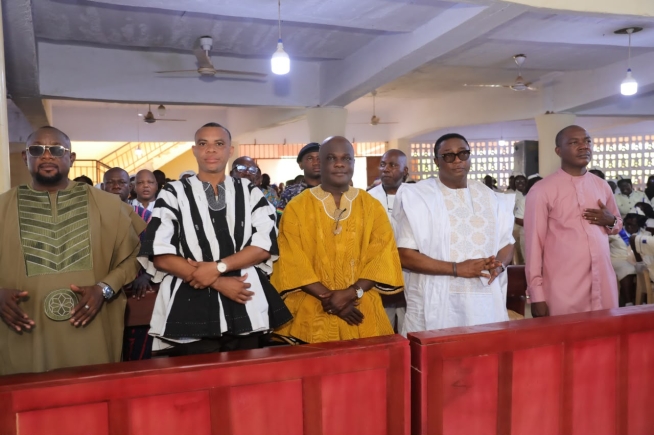
  • President Mahama Hails Navrongo–Bolgatanga Catholic Diocese as “Indispensable Partner” in National Development Push

    President Mahama Hails Navrongo–Bolgatanga Catholic Diocese as “Indispensable Partner” in National Development Push

    Bolgatanga, Ghana – President John Dramani Mahama has praised the Navrongo–Bolgatanga Catholic Diocese, describing it as an indispensable partner in Ghana’s development journey, in remarks that have drawn strong attention from both religious and development circles.

    The President, speaking during an engagement in the Upper East Region, commended the Diocese for its long-standing contribution to education, healthcare, social services, and community development, stressing that faith-based organisations continue to play a crucial role in complementing government efforts.

    He noted that the Diocese has consistently demonstrated commitment to improving lives at the grassroots level through the establishment of schools, health facilities, and social intervention programmes that directly benefit vulnerable and underserved communities.

    President Mahama highlighted that partnerships between the state and religious institutions remain vital in addressing developmental challenges, particularly in regions where access to essential services remains limited. He urged continued collaboration to accelerate progress and ensure inclusive development across the country.

    The President also acknowledged the Diocese’s role in promoting peacebuilding, moral guidance, and civic responsibility, describing these contributions as essential to national stability and cohesion.

    Leaders of the Diocese welcomed the recognition, reaffirming their commitment to working closely with government and other stakeholders to expand social services and support community development initiatives.

    The engagement has been widely interpreted as a reaffirmation of the strong relationship between the state and religious institutions, with calls for deeper collaboration to tackle pressing social and economic challenges in the Upper East Region and beyond.

  • WATCH: ROBOT DELIVERS GHANA’S AI STRATEGY DOCUMENT TO PRESIDENT MAHAMA IN HISTORIC SCENE

    WATCH: ROBOT DELIVERS GHANA’S AI STRATEGY DOCUMENT TO PRESIDENT MAHAMA IN HISTORIC SCENE

    A futuristic moment has captured national attention after a robot was seen formally presenting Ghana’s Artificial Intelligence Strategy document directly to President John Dramani Mahama in a symbolic and headline-grabbing ceremony.

    The unusual presentation instantly drew gasps and excitement from observers as technology and governance collided in a striking display of Ghana’s digital ambitions. The event marked the official unveiling of the country’s National AI Strategy, a blueprint aimed at transforming Ghana into a leading artificial intelligence hub in Africa.

    President Mahama, visibly engaged during the presentation, described the strategy as a bold step toward building a digitally driven economy, stressing that Ghana is no longer content with simply consuming technology—but intends to actively shape it.

    “This is a statement of intent,” the President indicated, underscoring Ghana’s goal of becoming a major force in AI development, governance, and innovation.

    The robot-assisted presentation quickly went viral, with many describing it as a symbolic glimpse into the future of governance, where automation and artificial intelligence increasingly intersect with public administration.

    Officials behind the strategy say the document outlines sweeping plans including AI education, innovation funding, ethical governance frameworks, and the creation of dedicated institutions to oversee AI development across sectors.

    The dramatic presentation has since sparked widespread reactions online, with supporters praising Ghana’s forward-thinking approach, while others debate whether the theatrical display reflects real technological readiness or symbolic ambition.

    Either way, the moment has cemented itself as one of the most visually striking highlights of Ghana’s push into the AI era—blending politics, innovation, and futuristic spectacle in a single unforgettable scene.