
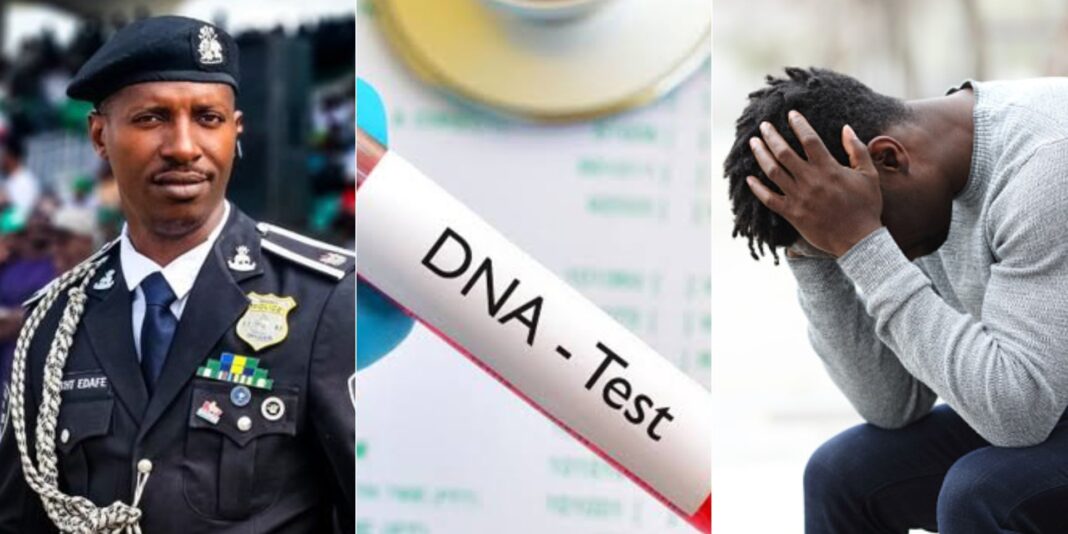
The public discourse in Nigeria has taken a sharp turn after Bright Edafe, the Police Public Relations Officer for the Delta State Police Command, ignited intense online debate by questioning whether DNA testing should be made compulsory for all newborns at birth. His comments have stirred reactions from citizens, legal experts, and social media users alike.
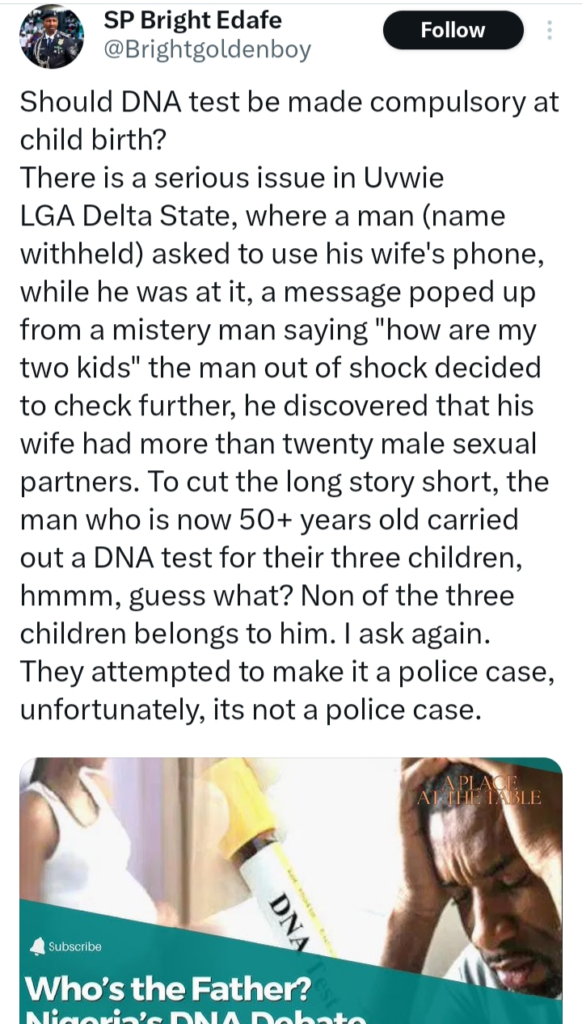
Edafe’s remarks came in the context of a troubling paternity case in Uvwie Local Government Area of Delta State, where a man in his 50s reportedly discovered through DNA testing that none of the three children he had raised as his own were biologically his. This revelation, shared on his X (formerly Twitter) account by Edafe, highlighted the emotional and legal fallout of paternity disputes and has fueled arguments for reforms in how paternity is verified in Nigeria.
In sparking the discussion online, Edafe didn’t just focus on the personal story — he questioned whether mandatory DNA testing at the time of birth could help prevent similar situations from occurring in other families. While he hasn’t proposed specific legislation, the backlash and support his comments have attracted suggest that the idea could be divisive.
Clarity on the Legal Framework
Edafe also clarified that paternity fraud — the act of misleading someone into believing they are the biological parent of a child when they are not — is not a criminal matter under Nigerian law and cannot be handled by the police. Instead, such issues are typically addressed in civil courts. This distinction has prompted experts to weigh in on whether existing laws are adequate or require reform.
Public Reaction: Mixed Views Online
Reactions have been sharply divided:
- Supporters argue that compulsory DNA testing at birth could protect children and alleged fathers, reduce cases of paternity fraud, and bring clarity and peace of mind to families.
- Critics raise concerns about privacy, cost, cultural implications, and potential stigmatization, especially in communities where trust and family structure are deeply valued.
- Some observers believe mandatory testing could create legal and ethical dilemmas, potentially burdening already strained healthcare systems and raising questions about how results would be used and shared.
Broader Context
While the conversation in Nigeria is just gaining prominence, similar debates have occurred elsewhere. In countries like Namibia, for example, lawmakers have proposed criminalizing paternity fraud and even discussed compulsory testing to reduce emotional and financial harm suffered by men.
Medical data shows that a notable percentage of Nigerian DNA tests have revealed men are not the biological fathers of children they believed were theirs — underscoring the scale of the issue for some families and fueling debate over broader testing policies.

The Conversation Continues
As Edafe’s comments continue to circulate, Nigerians are increasingly discussing the potential legal, ethical, medical, and cultural implications of mandatory DNA testing at birth. Whether this debate will lead to policy changes, legal challenges, or further social discourse remains to be seen — but it has already stirred a national conversation around trust, identity, and family rights in the country.