

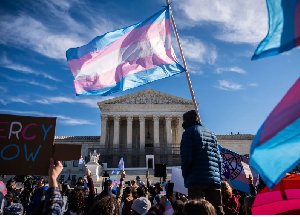
The Supreme Court of the United States has allowed states to enforce bans restricting transgender athletes from competing on girls’ sports teams, a landmark move that has immediately intensified one of the most contentious cultural and legal debates in the country.
The decision effectively gives individual states the authority to set their own eligibility rules for school sports, particularly in relation to transgender participation in female categories.
Supporters of the ruling say it restores fairness in women’s athletics and allows states to protect competitive balance in school sports. They argue that biological differences in physical development must be considered when designing competitive categories for girls and women.
Opponents, however, have condemned the development as a major setback for transgender rights, warning that it could lead to increased exclusion, discrimination, and legal battles across multiple states. Advocacy groups say the ruling will deepen divisions and create a patchwork of conflicting policies depending on where athletes live.
The decision is expected to have immediate consequences for school sports programs nationwide, with state legislatures now empowered to either implement or expand restrictions on transgender participation in female sports categories.
Legal experts say the ruling could open the door to further challenges in lower courts as states, school districts, and advocacy organizations test the limits of the decision in practice.
Across the political spectrum, reactions have been swift and sharply divided, reflecting the broader national struggle over gender identity, fairness in sports, and civil rights protections.
As the fallout continues, the ruling marks a significant turning point in how sports eligibility rules are defined in the United States, with long-term implications likely to unfold in classrooms, courts, and athletic fields across the country.