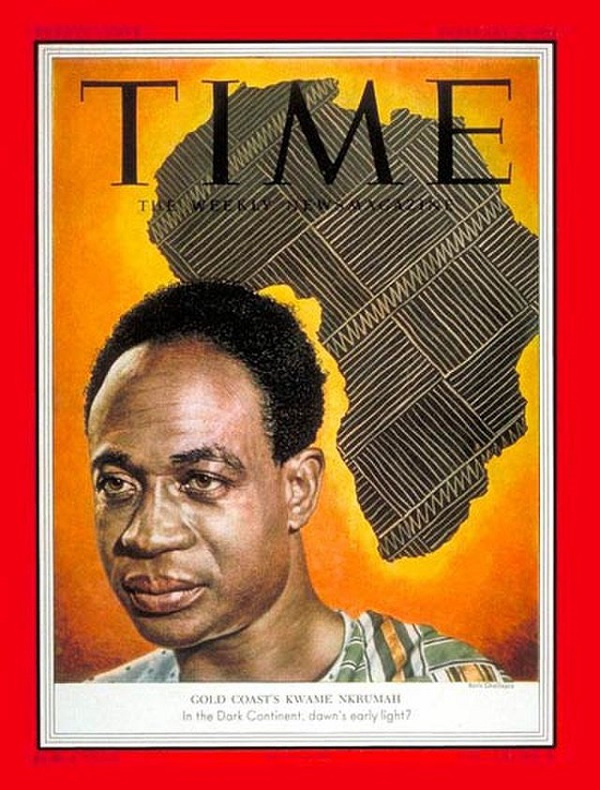

In 1953, a defining moment in global political history unfolded when Kwame Nkrumah appeared on the cover of TIME magazine—a rare and powerful recognition for an African leader during the colonial era.

At the time, the Gold Coast (modern-day Ghana) was still under British rule, and nationalist movements across Africa were gaining momentum. Nkrumah, already a prominent and controversial figure, had emerged as the leading voice for self-governance and independence. His political strategy, marked by mass mobilization and bold rhetoric, had begun to unsettle colonial authorities while inspiring millions across the continent.
TIME’s decision to feature Nkrumah on its cover signaled that his influence extended far beyond West Africa. The publication portrayed him as a dynamic and determined leader whose ideas were reshaping the political landscape. While some Western observers viewed him with caution, even suspicion, others recognized him as a symbol of a new wave of leadership that would soon transform Africa.
The 1953 cover did more than spotlight an individual—it captured a turning point. It reflected a growing acknowledgment that colonial rule was being challenged in unprecedented ways, and that leaders like Nkrumah were at the forefront of this shift.
Just four years later, in 1957, Ghana would achieve independence, becoming the first sub-Saharan African nation to break free from colonial rule. In retrospect, Nkrumah’s appearance on TIME’s cover stands as an early indicator of that historic change.
Today, the cover remains a powerful reminder of the moment when an African leader forced the world to pay attention, marking the rise of a movement that would redefine an entire continent.