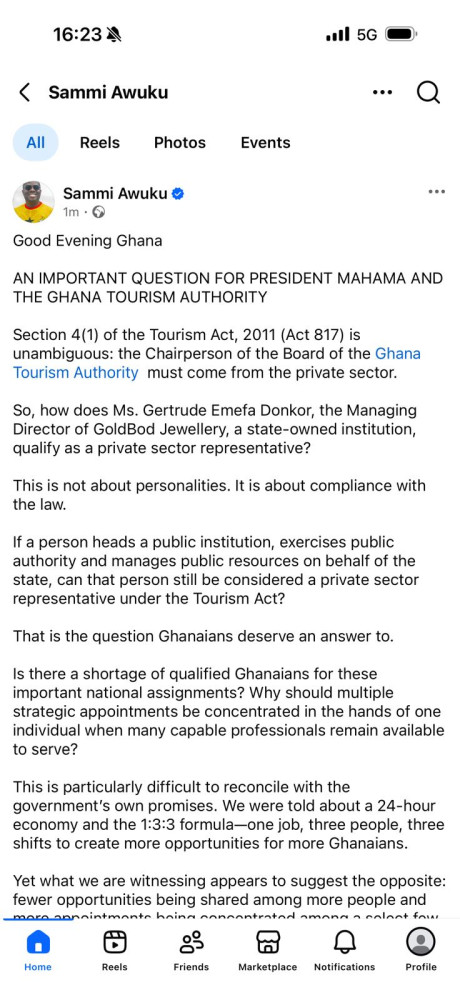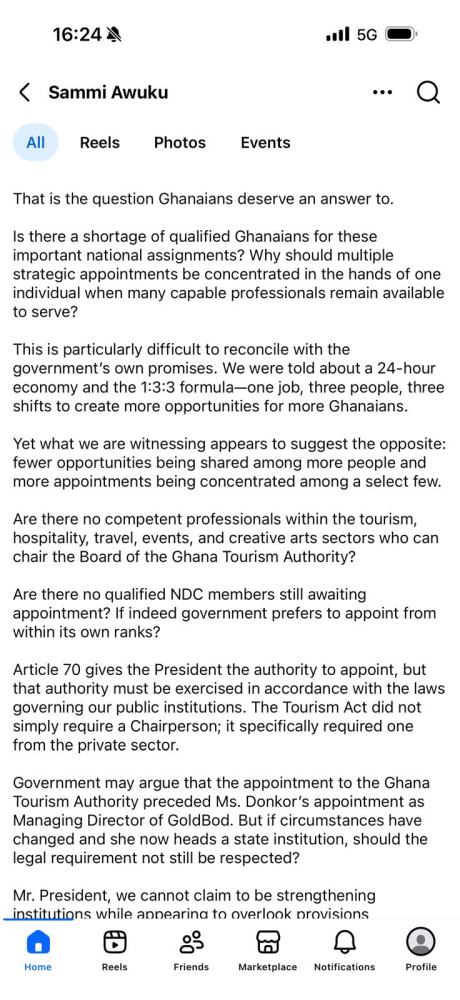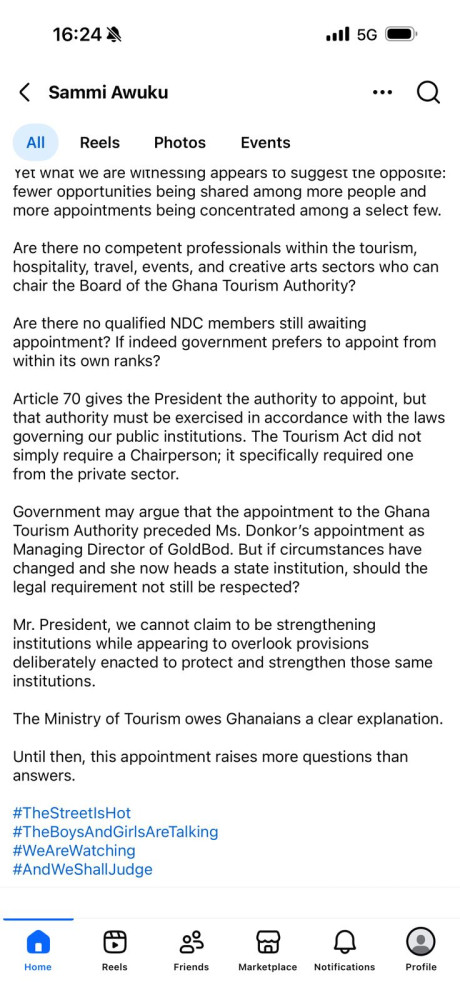


A fresh political debate has been ignited after Sammy Awuku questioned the holding of what he describes as “two powerful” government positions by Emefa Donkor, triggering widespread public discussion over possible conflicts of interest and administrative concentration of power.
The comments have stirred heated reactions across political and governance circles, with many weighing in on whether it is appropriate for one individual to simultaneously occupy multiple influential roles within the state apparatus.
According to Awuku’s concerns, the situation raises fundamental questions about fairness, efficiency, and accountability in public service administration. He suggested that such arrangements, if not properly regulated, could undermine equal opportunity and strain institutional balance.
Emefa Donkor’s dual roles have now become the subject of intense scrutiny, with critics arguing that holding two significant positions could lead to overlapping responsibilities and potential conflicts in decision-making. Supporters, however, insist that her competence and experience justify her appointments and that concerns being raised are politically motivated.
The development has quickly escalated into a broader national conversation about public sector appointments, with citizens and political commentators questioning whether Ghana’s governance system needs stricter rules on dual office holding.
Some governance analysts say the issue reflects a recurring challenge in public administration, where individuals are sometimes entrusted with multiple responsibilities due to expertise gaps or institutional convenience. Others argue that such practices must be checked to ensure transparency and prevent over-centralization of power.
Meanwhile, neither Emefa Donkor nor the government has officially responded in detail to the concerns raised, though pressure is mounting for clarification on the scope and legitimacy of her roles.
As the debate continues to trend, many are calling for clear guidelines to govern the appointment of public officials to multiple positions, insisting that accountability and transparency must remain at the center of governance decisions.
For now, the controversy sparked by Awuku’s remarks shows no sign of fading, as the nation watches closely to see whether the issue will lead to policy clarification or further political confrontation.