Category: Featured

Your blog category

  • NAMIBIA STORMS ACCRA WITH CULTURAL DIPLOMACY PUSH, EYES BIGGER TRADE DEALS WITH GHANA

    NAMIBIA STORMS ACCRA WITH CULTURAL DIPLOMACY PUSH, EYES BIGGER TRADE DEALS WITH GHANA

    Accra, Ghana – Namibia has intensified its diplomatic offensive in Ghana, using culture as a powerful bridge to deepen relations while setting its sights on expanding trade and economic cooperation between the two African nations.

    In a bold display of cultural diplomacy in Accra, Namibian officials reaffirmed their commitment to strengthening bilateral ties, highlighting the immense potential for increased investment, business partnerships, and cross-border trade.

    The initiative showcased Namibia’s rich cultural heritage, drawing attention to the role of arts, tradition, and people-to-people connections in fostering stronger diplomatic relations. But beyond the colorful displays and cultural exchanges lies a strategic ambition: unlocking new economic opportunities and boosting trade flows between the two countries.

    Officials stressed that Africa’s future prosperity depends on stronger collaboration among its nations, with Ghana and Namibia well-positioned to leverage shared opportunities in commerce, tourism, agriculture, and industrial development.

    The visit has sparked renewed optimism about a new era of cooperation, as both countries seek to translate diplomatic goodwill into tangible economic gains. Stakeholders from the business community were encouraged to explore partnerships that could drive growth, create jobs, and strengthen regional integration.

    Observers say the move signals Namibia’s determination to expand its footprint in West Africa while reinforcing the growing trend of African nations looking inward for economic partnerships and development solutions.

    As discussions continue, attention is now focused on the concrete agreements and trade initiatives that could emerge from the strengthened relationship, potentially opening a fresh chapter in Ghana–Namibia relations.

    With culture leading the charge and trade firmly on the agenda, Namibia’s Accra mission is being viewed as more than a diplomatic visit—it’s a strategic push to build lasting economic and cultural bridges across the continent.


  • “ANTI-LGBTQ+ BILL NOT STRONG ENOUGH!” GPCC WARNS, DEMANDS TOUGHER MEASURES TO DEFEND FAMILY VALUES

    “ANTI-LGBTQ+ BILL NOT STRONG ENOUGH!” GPCC WARNS, DEMANDS TOUGHER MEASURES TO DEFEND FAMILY VALUES

    The Ghana Pentecostal and Charismatic Council (GPCC) has raised fresh concerns over the country’s proposed Anti-LGBTQ+ legislation, insisting that the current form of the bill is not strong enough to fully safeguard what it describes as “traditional family values.”

    The powerful Christian body argues that while the proposed law represents a step in the right direction, it still contains gaps that could weaken its effectiveness in addressing issues related to LGBTQ+ activities in the country.

    According to the Council, Ghana’s moral and cultural fabric must be firmly protected through stricter provisions that leave no room for ambiguity or legal loopholes. The GPCC maintains that anything short of a robust and comprehensive legal framework could undermine the intent of the legislation.

    The Council’s position adds to ongoing national debate surrounding the controversial bill, which has sparked widespread discussion among religious groups, civil society organizations, legal experts, and international observers.

    Supporters of the bill, including the GPCC, argue that stronger enforcement measures are necessary to preserve societal norms, protect children, and uphold what they describe as Ghana’s long-standing cultural and religious values.

    However, critics of the legislation continue to warn that overly stringent provisions could raise human rights concerns and potentially attract international backlash.

    The GPCC’s latest comments are expected to intensify pressure on lawmakers as parliamentary discussions on the bill continue. The Council has urged legislators to revisit and strengthen key sections of the proposed law to ensure it achieves its intended purpose without compromise.

    As the debate deepens, the Anti-LGBTQ+ bill remains one of the most polarizing issues in Ghana’s political and social discourse, with strong opinions emerging from both supporters and opponents.

    For now, the GPCC insists that the fight is not about politics, but about protecting the moral foundation of the nation, calling for urgent action to reinforce what it sees as Ghana’s core family values.

  • Horror on Wiawso Roads: Seven Fighting for Their Lives After Devastating Head-On Collision

    Horror on Wiawso Roads: Seven Fighting for Their Lives After Devastating Head-On Collision

    A routine journey turned into a nightmare in Wiawso, where a violent head-on collision has left seven people in critical condition and a community in shock.

    Eyewitnesses describe a chilling scene of twisted metal, shattered glass, and frantic cries for help after two vehicles collided with terrifying force. The impact was so severe that emergency responders had to race against time to pull victims from the wreckage, many of them clinging to life.

    The injured were rushed to nearby medical facilities, where doctors are battling to stabilize them. Sources say several victims suffered life-threatening injuries, raising fears that the death toll could rise if conditions worsen.

    Residents in the area are reeling, with many calling the stretch of road a “death trap” and demanding urgent action to prevent further tragedies. Questions are already mounting: What caused the crash? Was it speed, negligence, or poor road conditions?

    Authorities have launched an investigation, but for now, the focus remains on the victims—seven individuals locked in a desperate fight for survival.

    As the dust settles on this horrific حادث, one thing is painfully clear: yet another stark reminder of the dangers lurking on Ghana’s roads, and the urgent need for caution before more lives are shattered.

  • LAND ROW ERUPTS! Onasis Drops BOMBSHELL Over Mahama’s Petroleum Hub Directive

    LAND ROW ERUPTS! Onasis Drops BOMBSHELL Over Mahama’s Petroleum Hub Directive

    A fresh controversy has erupted around Ghana’s ambitious energy plans as Onasis has pushed back strongly on claims surrounding former President John Dramani Mahama’s directive on land allocation for the proposed Petroleum Hub project.

    According to Onasis, there has been widespread misunderstanding of the figures involved. He insists that the directive was for 5,000 hectares, not 5,000 acres as has been circulated in some public discussions.

    The clarification has immediately reignited debate over the scale of the project and the accuracy of public reporting, with many questioning how such a critical detail was misinterpreted in the first place.

    The Petroleum Hub initiative—an ambitious national project aimed at positioning Ghana as a key oil and gas processing center in West Africa—has long been a subject of political and public scrutiny, particularly regarding land use, cost, and implementation timelines.

    Onasis’s statement has added a new layer to the conversation, with analysts calling for clearer communication from authorities to avoid confusion and misinformation.

    As the debate continues to gather momentum, the distinction between hectares and acres has now become the center of a heated national discussion—highlighting how technical details can quickly escalate into political flashpoints.

  • “GH¢65 Million Bail Shock!” – Former GIHOC Boss Walks Free, but Financial Hurdle Sparks Frenzy

    A dramatic courtroom development has unfolded after the former head of GIHOC Distilleries Company Limited was granted bail under highly stringent financial conditions that have since stunned the public.

    The accused, whose case has been closely followed due to its scale and implications, was granted bail by the court set at a staggering GH¢65 million. However, reports indicate that efforts by his legal team to meet the condition have so far hit major obstacles, raising questions about whether the bail will be successfully perfected.

    The unusually high bail figure has triggered widespread debate, with legal observers describing it as one of the more significant financial conditions recently imposed in a high-profile economic-related case.

    Inside the courtroom, proceedings were reportedly tense as arguments over bail terms unfolded. While the court ultimately ruled in favour of granting bail, the financial requirements attached have effectively made immediate release a challenge.

    The development has sparked mixed reactions among the public. Some argue that the bail reflects the seriousness of the allegations and the scale of the case, while others question whether such conditions may be excessive or punitive in nature.

    Meanwhile, attention now turns to the defence team, which is reportedly exploring multiple avenues to meet the bail requirement or seek a review of the conditions.

    As the legal battle continues, the case is shaping up to be one of the most closely watched economic trials in recent times—one where freedom appears to hinge on an extraordinary financial threshold.

  • THIS IS THE HARDEST PART! — Barker-Vormawor Breaks Silence on ‘Abu Trica’ Case Struggles

    THIS IS THE HARDEST PART! — Barker-Vormawor Breaks Silence on ‘Abu Trica’ Case Struggles

    Legal activist Oliver Barker-Vormawor has sparked fresh attention after laying bare what he describes as the most difficult and emotionally draining aspect of the ongoing case involving Abu Trica.

    In a candid commentary that is already generating heated debate, Barker-Vormawor pointed to the intense legal pressure, procedural complexities, and human toll surrounding the case as the toughest hurdles so far.

    According to him, while many discussions around the matter have focused on charges and courtroom drama, the real strain lies beneath the surface — in the slow grind of legal processes, the weight of public scrutiny, and the uncertainty hanging over all parties involved.

    Observers say his remarks shine a spotlight on the often unseen challenges that come with high-profile prosecutions, where legal battles extend far beyond the courtroom into public opinion and personal endurance.

    The comments have quickly triggered reactions online, with some agreeing that such cases carry hidden emotional and institutional burdens, while others argue that the focus should remain strictly on legal facts and evidence.

    As the Abu Trica case continues to develop, Barker-Vormawor’s intervention has added a new layer to the national conversation — one that goes beyond guilt or innocence and into the human realities of prolonged legal conflict.

  • DON’T LET HIM TURN YOU INTO A HOUSE GIRL! — Mother-in-Law Goes Viral for Defending Bride

    DON’T LET HIM TURN YOU INTO A HOUSE GIRL! — Mother-in-Law Goes Viral for Defending Bride

    A powerful viral moment has captured the internet’s attention as a mother-in-law boldly steps in to protect her new daughter-in-law from potential mistreatment.

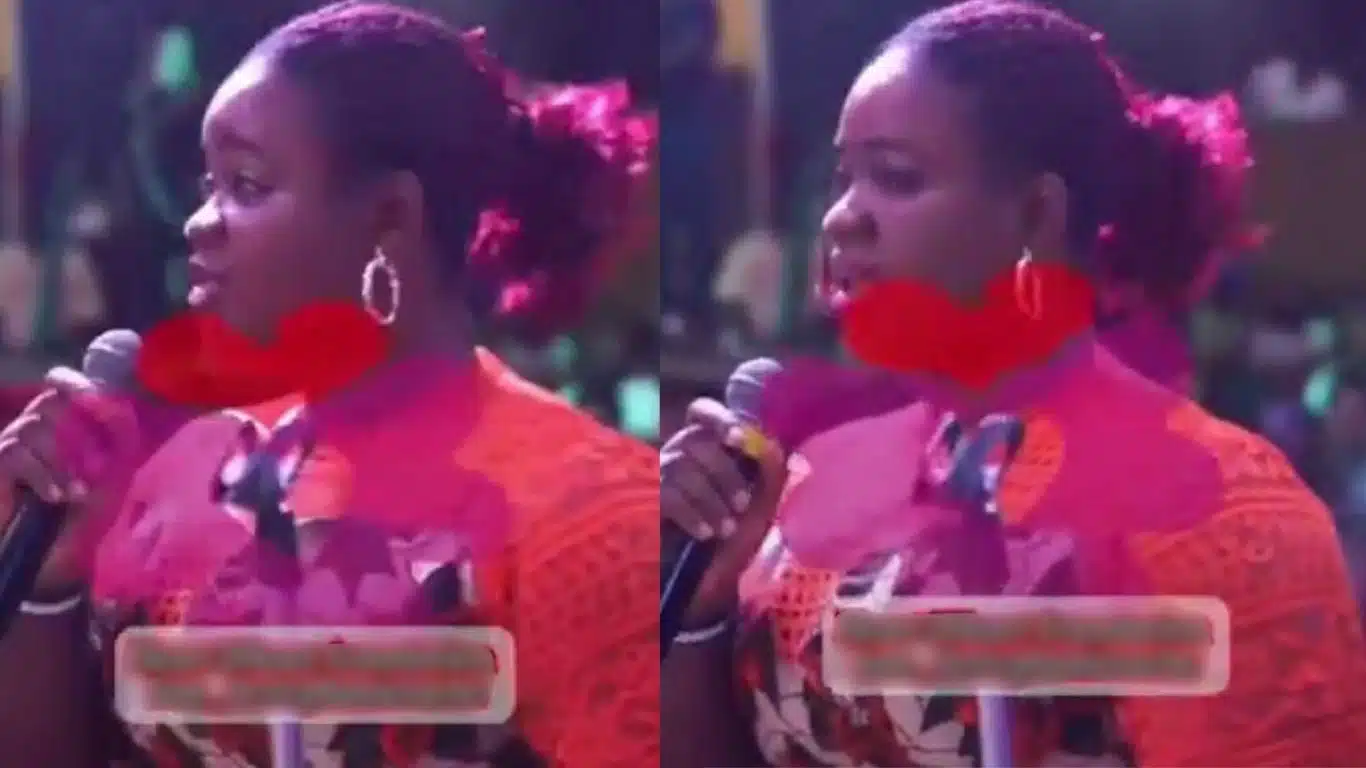
    In a now widely shared story, the mother-in-law was caught advising the bride with firm words of caution: “Don’t let him turn you into a house girl.” The statement, which quickly became a rallying cry online, underscores her commitment to ensuring the bride’s dignity and respect within the marriage.

    Social media users have praised the mother-in-law’s courage, noting that her intervention challenges traditional expectations where in-laws are often silent on domestic power dynamics. Many commentators celebrated her as a role model for advocating for women’s rights and fairness in marriages.

    The story has ignited discussions about marital equality, respect, and the importance of having allies in the family to support a spouse’s wellbeing.

    As the video circulates, the mother-in-law’s words continue to resonate, sending a bold message: a healthy marriage requires respect, and no bride should be reduced to servitude in her own home.

  • NO OVERPRICING, NO SCANDAL! – Governs Kwame Agbodza FIRES BACK OVER ‘BIG PUSH’ ROAD CONTRACT CLAIMS

    NO OVERPRICING, NO SCANDAL! – Governs Kwame Agbodza FIRES BACK OVER ‘BIG PUSH’ ROAD CONTRACT CLAIMS

    A political storm is brewing as Governs Kwame Agbodza comes out swinging, forcefully rejecting explosive allegations of a staggering GH¢120 million overpricing tied to the Dodo Pepesu–Nkwanta road project.

    In a fiery defense of the government’s ambitious “Big Push” infrastructure agenda, Agbodza dismissed the claims as misleading and baseless, insisting that every pesewa attached to the project is justified. According to him, critics are twisting figures and peddling misinformation to score political points.

    “This is not just inaccurate—it’s deliberately deceptive,” he stressed, pushing back against what he describes as a calculated attempt to tarnish a critical development initiative.

    The Dodo Pepesu–Nkwanta road, a key artery expected to boost connectivity and economic activity in the region, has suddenly become the center of a heated national debate. Allegations of inflated costs have triggered public concern, with many demanding answers and accountability.

    But Agbodza is standing firm. He argues that the pricing reflects current market realities, project scope, and logistical challenges—not corruption or mismanagement. He further emphasized that due processes were followed and that the project aligns with broader efforts to accelerate infrastructure development under the “Big Push” policy.

    Supporters of the initiative say the backlash is politically motivated, while critics insist the figures must be independently scrutinized.

    The battle over the Dodo Pepesu–Nkwanta road project is no longer just about asphalt and contracts—it’s about trust, transparency, and the true cost of development.

    Big Push road project

    A Big Push road project underway.

  • Data or Disaster! — Alexander Afenyo-Markin Ahiafor Declares Credible Data the Backbone of National Progress

    Data or Disaster! — Alexander Afenyo-Markin Ahiafor Declares Credible Data the Backbone of National Progress

    In a powerful call that’s turning heads across governance circles, Alexander Afenyo-Markin Ahiafor has sounded the alarm: without credible data, public policy risks collapse—and national development could pay the price.

    Speaking with urgency and conviction, Ahiafor stressed that reliable, accurate data is no longer a luxury but a necessity in shaping effective policies and driving good governance. According to him, decisions made without solid data foundations are nothing more than guesswork—costly, risky, and often disastrous.

    “Policy must be driven by facts, not assumptions,” he emphasized, underscoring the growing need for institutions to invest in strong data collection and analysis systems. From healthcare and education to infrastructure and economic planning, Ahiafor noted that every sector depends on trustworthy information to deliver real results.

    His remarks come at a time when questions around data integrity, transparency, and accountability are gaining prominence in national discourse. Analysts say the push for data-driven governance could redefine how leaders prioritize resources and measure success.

    Supporters have applauded the statement as timely and necessary, arguing that credible data is the key to eliminating waste, improving service delivery, and restoring public trust. Critics, however, are challenging policymakers to match words with action—calling for tangible reforms in how data is gathered and used.

  • SCANDAL AND SHOCK: WOMAN CONFRONTS FATHER OVER RETURN AFTER YEARS OF REJECTION FOR BEING GIRL CHILD

    SCANDAL AND SHOCK: WOMAN CONFRONTS FATHER OVER RETURN AFTER YEARS OF REJECTION FOR BEING GIRL CHILD

    A heartbreaking and controversial family drama has captured national attention as a woman openly questions her father’s intentions after he suddenly seeks to reconnect—despite having rejected her for being a girl child years ago.

    In an emotional revelation, the woman shared that her father turned away from her at birth, citing gender bias, only to now express a desire for involvement in her life. Her blunt words—“Now he wants me for…”—have ignited widespread discussion about parental responsibility, gender discrimination, and family reconciliation.

    Social media users are divided, with some supporting her demand for accountability and self-respect, while others urge forgiveness and the healing of family ties. Experts weigh in, noting that cases like this highlight deep-seated societal issues around gender preference and parental roles.

    This personal story has resonated far beyond her household, sparking debates about how families confront past injustices and the meaning of parental love in a modern context.

    The question remains: will reconciliation be possible, or is some damage too deep to repair? The nation watches as this emotional saga unfolds.