Author: Daniel Sasu

  • Power Surge Ahead! — ECG Rolls Out Transformer Replacements to Boost Accra’s Electricity Supply

    Power Surge Ahead! — ECG Rolls Out Transformer Replacements to Boost Accra’s Electricity Supply

    The Electricity Company of Ghana (ECG) has announced a major initiative to replace aging transformers across key parts of Accra, promising to deliver more reliable and stable electricity to homes and businesses.

    According to ECG, the project targets neighborhoods that have been grappling with frequent outages and voltage fluctuations, aiming to modernize the power distribution network and prevent service disruptions. “This upgrade is part of our commitment to improving electricity reliability and meeting the growing demands of the capital,” a company spokesperson said.

    The move is expected to benefit both residential and commercial customers, reducing downtime and ensuring smoother operations for businesses heavily reliant on consistent power supply. Engineers will prioritize high-demand areas, and the phased rollout will minimize inconvenience during installation.

    Electricity experts have welcomed the initiative, noting that aging infrastructure has long been a bottleneck in Accra’s energy delivery. By replacing transformers with modern, higher-capacity units, ECG hopes to strengthen the resilience of the city’s electricity network and pave the way for future expansions.

    For residents, the upgrade signals a brighter, uninterrupted future—literally—though careful monitoring and maintenance will be key to sustaining the improvements.

  • Big Push Controversy Explodes! — Alhassan Suhuyini Defends Government Procurement Practices

    Big Push Controversy Explodes! — Alhassan Suhuyini Defends Government Procurement Practices

    In a statement that is sending shockwaves through political and business circles, Alhassan Suhuyini has pushed back against claims that all “Big Push” projects were handed out via sole sourcing, insisting that transparency and competitive bidding played a central role in the initiative.

    Addressing concerns over procurement integrity, Suhuyini emphasized that while some projects may have required expedited processes, the majority underwent rigorous evaluation and adhered to standard procedures. “It is misleading to suggest that the government bypassed due process entirely. The Big Push was designed to accelerate development while maintaining accountability,” he asserted.

    Political analysts note that the clarification comes amid heightened scrutiny over government spending and project implementation. Critics have accused officials of favoritism and lack of transparency, but Suhuyini’s remarks appear aimed at restoring confidence and defending the administration’s track record.

    Supporters of the policy hailed the explanation, pointing out that the initiative has led to visible improvements in infrastructure, education, and local industry, reinforcing the notion that Ghana’s development agenda can proceed efficiently without compromising fairness.

    As debates continue, one thing is clear: the Big Push remains both a symbol of ambition and a lightning rod for controversy, with procurement practices under the microscope like never before.

  • Crackdown in Donkor-Nkwanta! — NACOC Bono-East Command Nabs 6 in ‘Operation Clean Street’

    Crackdown in Donkor-Nkwanta! — NACOC Bono-East Command Nabs 6 in ‘Operation Clean Street’

    In a bold move against crime and corruption, the NACOC Bono-East Command swooped on Donkor-Nkwanta, arresting six individuals during its high-profile “Operation Clean Street.”

    Authorities say the operation targeted illegal activities and aimed to restore law and order, sending a clear message: the streets will no longer be a safe haven for wrongdoing.

    The streets of Donkor-Nkwanta saw a major shake-up as NACOC Bono-East Command arrested six suspects in a crackdown dubbed ‘Operation Clean Street.’

    The arrests are part of a sweeping campaign to rid communities of corruption and criminal activities, proving that NACOC means business.

    A major anti-corruption sweep in Donkor-Nkwanta has resulted in six arrests, as the NACOC Bono-East Command launched its crackdown, ‘Operation Clean Street.’

    Officials say the move targets corrupt practices and illegal street activities, sending shockwaves through the community. Citizens are calling it a long-overdue clean-up.

    NACOC Bono-East Command Targets Street-Level Corruption: Six Arrests in Donkor-Nkwanta

    In a major anti-corruption drive, the NACOC Bono-East Command has apprehended six suspects in Donkor-Nkwanta under the initiative ‘Operation Clean Street.’

    The operation aims to improve local governance, enhance community safety, and demonstrate the government’s commitment to tackling corruption at all levels.


  • SCANDAL FROM DAY ONE! — Kofi Bentil Exposes Sole-Sourcing Irregularities in Government’s First Month

    SCANDAL FROM DAY ONE! — Kofi Bentil Exposes Sole-Sourcing Irregularities in Government’s First Month

    A shocking allegation has rocked the corridors of power as Kofi Bentil claims that irregularities in sole-sourcing contracts began in this government’s very first month in office. According to Bentil, what many assumed was a minor bureaucratic lapse is actually part of a pattern of questionable procurement practices that could have far-reaching consequences.

    Speaking with unmistakable urgency, Bentil said the issue goes beyond paperwork: it reflects systemic weaknesses in transparency and accountability. “From the outset, we’ve seen contracts awarded without proper competitive processes,” he warned. “This is not just a procedural oversight; it is a serious breach that undermines public trust and misappropriates taxpayer resources.”

    Experts say sole-sourcing—where contracts are awarded without competitive bidding—can be legal under specific circumstances, but unchecked, it opens the door to favoritism, corruption, and misuse of public funds. Bentil’s revelation has sparked heated debate among legislators, anti-corruption advocates, and civil society groups, all demanding swift investigation and accountability.

    The opposition has pounced on the claims, labeling them as evidence of deep-seated governance failures, while government officials have pledged to review procurement procedures to restore confidence. Meanwhile, citizens are left questioning whether these early missteps are isolated incidents or indicators of a larger trend.

    As scrutiny intensifies, the nation watches closely: will the authorities clamp down on the alleged irregularities, or will the controversy escalate into a full-blown procurement crisis? The unfolding drama signals that transparency battles may define this administration’s legacy from day one.

  • Golden Betrayal! — Majority Blocks GoldBod Probe, Sparks Political Firestorm

    Golden Betrayal! — Majority Blocks GoldBod Probe, Sparks Political Firestorm

    In a dramatic showdown in Ghana’s Parliament, the ruling majority has successfully blocked a high-profile investigation into GoldBod, prompting the Minority to cry foul in what they are calling a “Golden Betrayal.”

    The proposed probe, aimed at scrutinizing alleged irregularities and financial mismanagement within GoldBod, was seen by the Minority as a crucial step toward accountability and transparency. But in a tense parliamentary vote, the majority used its numbers to halt the investigation, leaving critics accusing them of protecting vested interests.

    “This is not just a political maneuver—it’s a betrayal of public trust,” thundered the Minority Leader, lambasting the majority for putting party loyalty above national interest. The controversy has ignited fierce debates on social media, with citizens demanding answers and calling for immediate transparency.

    Political analysts warn that this decision could have far-reaching implications, fueling perceptions of corruption and eroding confidence in parliamentary oversight mechanisms. Meanwhile, the Majority insists the probe was unnecessary and framed as politically motivated, heightening tensions in an already polarized legislature.

    As the dust settles, one thing is clear: the GoldBod saga has become a flashpoint in Ghanaian politics, exposing deep divides and setting the stage for a heated pre-election battle where accountability, trust, and political survival hang in the balance.

  • Hard Lessons, Tough Truths! — John Dramani Mahama Reflects on the Trials of Opposition Years

    Hard Lessons, Tough Truths! — John Dramani Mahama Reflects on the Trials of Opposition Years

    In a candid reflection that’s sparking debate across political circles, John Dramani Mahama has shared the invaluable lessons learned during his party’s years in opposition, describing them as a period of resilience, strategy, and self-discovery.

    Speaking to a packed audience, Mahama painted a vivid picture of the challenges faced when wielding influence without direct power. “Being in opposition tests your patience, sharpens your vision, and forces you to listen more than you speak,” he noted, emphasizing that setbacks can be a teacher in themselves.

    He recounted moments of negotiation, compromise, and the constant need to hold the ruling government accountable—experiences that, according to him, strengthened the party’s resolve and clarified its priorities for future governance.

    Observers say Mahama’s reflections serve as both a political roadmap and a cautionary tale for emerging leaders: opposition is not merely a waiting game but a critical phase to refine policies, build credibility, and connect with the electorate.

    Supporters hailed the speech as inspiring, noting that the lessons from the opposition years could define how the party approaches governance, accountability, and national development in the coming decade. Critics, however, urge a translation of lessons into tangible action, arguing that reflections are only as valuable as the reforms they inspire.

    Whether viewed as a masterclass in political endurance or a rallying cry for renewed strategy, Mahama’s words underscore a timeless truth: true leadership is forged as much in opposition as in power.

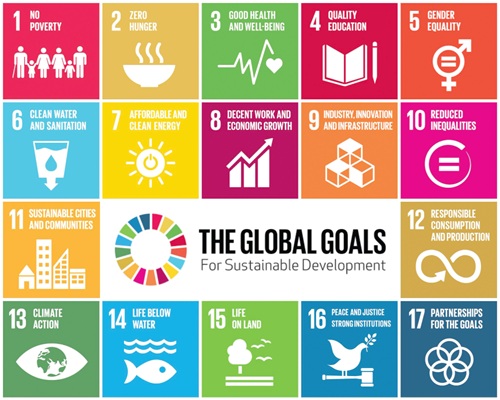
  • SDGs 2030: Mission Impossible? — Experts Warn of Looming Crisis in Global Development Race

    SDGs 2030: Mission Impossible? — Experts Warn of Looming Crisis in Global Development Race

    With just a few years left until 2030, the world faces a daunting question: can we realistically achieve the Sustainable Development Goals (SDGs)? Experts and policymakers are sounding the alarm, warning that without urgent, coordinated action, the global ambitions to end poverty, protect the planet, and ensure prosperity for all could remain just that—ambitions.

    Despite significant progress in areas like education and healthcare, key indicators suggest many targets are lagging dangerously behind schedule. Climate change, economic inequality, political instability, and the lingering effects of the pandemic are cited as major obstacles threatening the SDG timeline. Analysts describe the current trajectory as “highly precarious,” noting that several goals may require dramatic course corrections to be met on time.

    Some development specialists argue that the SDGs are not just lofty ideals but a moral imperative, calling for unprecedented cooperation between governments, private sectors, and civil society. “We are at a crossroads,” one UN advisor warned. “Failing to accelerate progress now could lock in decades of lost opportunity for the most vulnerable populations.”

    On the other hand, innovative solutions—ranging from digital technologies and green energy investments to targeted social programs—offer a glimmer of hope. Advocates say the key lies in scaling solutions quickly and inclusively, ensuring no community is left behind.

    As the 2030 deadline looms, debate intensifies: is achieving the SDGs still within reach, or have global leaders set a timeline that may prove impossible to meet? One thing is certain—the clock is ticking, and the stakes could not be higher.

  • NPP Must Crush Opposition in 2028! — Minority Leader Issues Stark Warning on Parliamentary Stakes

    NPP Must Crush Opposition in 2028! — Minority Leader Issues Stark Warning on Parliamentary Stakes

    In a statement that has set political tongues wagging, Ghana’s Minority Leader has delivered a blunt message to the ruling party: the New Patriotic Party (NPP) must secure a decisive parliamentary majority in the 2028 elections—or risk losing critical influence over the nation’s legislative agenda.

    Highlighting the high-stakes nature of Ghana’s political landscape, the Minority Leader warned that a fragmented parliament could stall key reforms, deepen partisan gridlock, and leave the country vulnerable to policy instability. “Winning the presidency is not enough,” the Leader emphasized. “The NPP must dominate parliament to ensure their vision is fully realized.”

    Political analysts interpret the remarks as both a rallying cry for NPP supporters and a strategic signal to opposition parties, underlining the intense battles expected in constituencies nationwide. The Minority Leader’s statement also comes amid ongoing debates over economic recovery, infrastructure development, and governance reforms—issues that are likely to dominate campaign narratives leading up to 2028.

    With voter sentiment increasingly volatile, both major parties now face mounting pressure to consolidate their bases, craft compelling policy platforms, and deliver tangible results. The countdown to Ghana’s next parliamentary showdown has officially begun, and the message from the Minority Leader is unmistakable: the NPP cannot afford complacency.

  • Promises in Motion! — National Democratic Congress (NDC) Vows Action on Campaign Pledges During Thank You Tour

    Promises in Motion! — National Democratic Congress (NDC) Vows Action on Campaign Pledges During Thank You Tour

    In a rousing message to supporters, Cassiel Ato Forson Asiedu Nketiah declared that the National Democratic Congress (NDC) remains steadfast in delivering on every campaign promise, as the party embarks on its much-anticipated “Thank You” tour across the nation.

    Addressing jubilant crowds, Asiedu Nketiah emphasized that the tour is more than a celebration—it’s a commitment to transparency, accountability, and action. “We are here to assure Ghanaians that the promises made during the campaign are not empty words. We intend to honor them with concrete policies and programs that improve lives,” he asserted.

    Supporters erupted in cheers as he highlighted key areas of focus, including economic revitalization, youth empowerment, and infrastructure development. The tour, designed to engage citizens directly, is seen as a strategic move to reinforce trust between the party and the electorate.

    Political analysts note that the NDC’s proactive approach could solidify its connection with grassroots supporters, ensuring that public expectations are met while keeping the momentum of its political agenda alive. Critics, however, caution that pledges must translate into measurable action, not just rhetoric.

    With the “Thank You” tour in full swing, one thing is clear: the NDC is signaling that fulfilling promises isn’t just a slogan—it’s a mission.

  • Networking Holds the Key to a Stronger Parliament! — Joe Osei-Owusu Urges Lawmakers

    Networking Holds the Key to a Stronger Parliament! — Joe Osei-Owusu Urges Lawmakers

    In a clarion call to Ghana’s legislators, First Deputy Speaker Joe Osei-Owusu emphasized that building strong networks is critical to boosting parliamentary effectiveness.

    According to him, collaborative relationships, both within and beyond the legislative chambers, are the secret weapon for advancing laws, improving governance, and delivering real results to citizens.

    “Connections aren’t just social—they are strategic,” he declared, urging MPs to harness the power of networking for national progress.

    “Parliament’s Power Secret? Networking!” — Joe Osei-Owusu Reveals Game-Changer

    The First Deputy Speaker has dropped a bombshell insight: the key to a more effective Parliament isn’t just debate—it’s who you know.

    Joe Osei-Owusu says MPs must actively network and forge alliances to strengthen lawmaking, boost collaboration, and achieve results for Ghanaians.

    “Build your bridges, and Parliament builds the nation,” he warned.

    Networking as Governance Tool: Joe Osei-Owusu Highlights Its Role in Parliamentary Strength

    First Deputy Speaker Joe Osei-Owusu has urged Ghana’s legislators to prioritize networking as a strategic tool for governance.

    He argued that connections—both within the legislative body and with external stakeholders—can significantly enhance policy-making, oversight, and legislative outcomes.

    Experts say his remarks underscore a growing recognition that relationship-building is as crucial to parliamentary success as legislative knowledge.

    “Networking: Parliament’s Untapped Superpower!” — Joe Osei-Owusu Issues Stark Warning to MPs

    Could simple networking be the game-changer for Ghana’s Parliament? First Deputy Speaker Joe Osei-Owusu thinks so.

    He insists MPs must go beyond committees and debates, building strategic alliances that can transform the legislature into a powerhouse of policy and progress.

    “Parliamentary strength isn’t just about numbers—it’s about networks,” he warned, putting lawmakers on notice.