

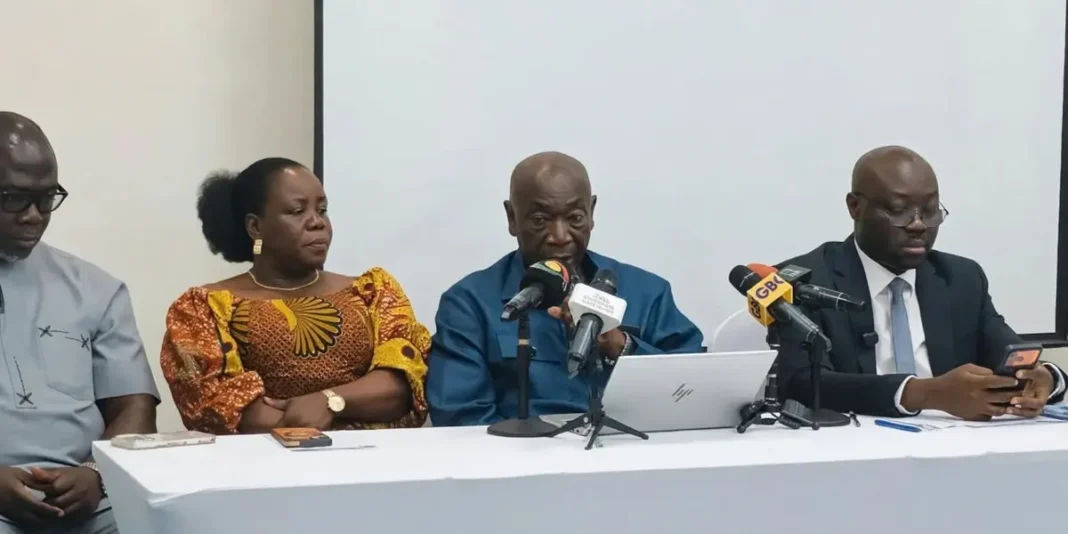
The caucus says the 2027 remuneration adjustment does not reflect rising living costs and is demanding an immediate review of the two-year agreement signed by government and Organised Labour.
The Minority Caucus on Employment, Labour Relations and Pensions in Parliament has criticised the newly signed public sector remuneration agreement, describing the 9% total salary increase for 2027 as “nothing short of an insult” to Ghanaian workers.
In a statement issued on October 30, 2026, and signed by the Ranking Member of the Committee, Mavis Nkansah Boadu, the caucus said it received the details of the Multi-Year Public Service Remuneration Agreement for 2027 and 2028 with shock and dismay.
The agreement, finalised on October 28, provides for a 9% total remuneration increase in 2027, comprising an 8% increase in base pay and a 1% adjustment for conditions of service. Workers are also expected to receive a 10% increase in 2028.
Minority cites rising cost of living
The caucus argued that the proposed increases are inadequate in view of the rising cost of living and increases in utility tariffs over the past two years.
It said public sector workers were being asked to accept what it described as sub-inflationary wage adjustments while households continued to face higher costs for electricity, water, transport, rent, cooking gas and other essential goods.
According to the statement, electricity tariffs are about 29% higher than they were at the beginning of 2025, while water tariffs have increased by approximately 18% over the same period.
The Minority described the situation as unfair, arguing that wage negotiations should take account of the cumulative effect of increases in household expenses.
Calls for renegotiation
The caucus is demanding an immediate reconvening of the Public Services Joint Standing Negotiating Committee (PSJSNC) to review the remuneration framework and establish what it considers a living wage that reflects prevailing economic conditions.
It also called for a more coordinated approach to wage negotiations and utility tariff adjustments, insisting that salary increases should not be considered separately from the cost of essential services.
The Minority further urged the leadership of Organised Labour to publish the proposals it presented during negotiations and explain to its members why it accepted a two-year agreement beginning with a 9% increase.
Agreement signed by government and labour
The two-year deal covers January 1, 2027, to December 31, 2028. Government has defended the agreement on the grounds that it recognises workers’ contribution while ensuring that public sector pay commitments remain consistent with fiscal sustainability.
The Minority, however, maintains that the arrangement does not adequately protect workers’ purchasing power and says it will continue to advocate for improved conditions of service.