

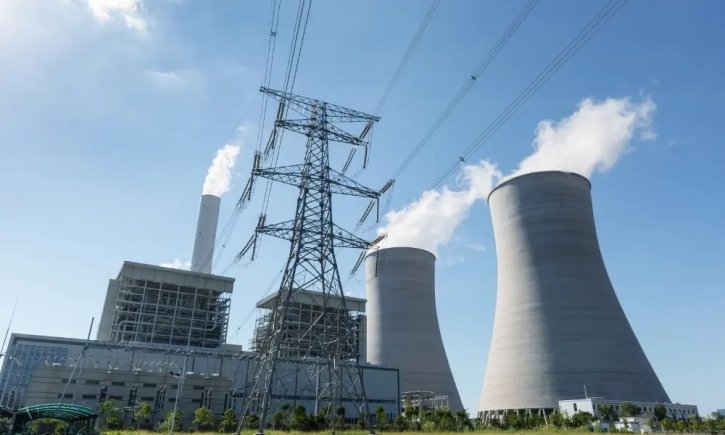
President John Dramani Mahama has announced plans for Ghana to sign an agreement for the development of a massive 1,200-megawatt thermal power plant before the end of 2026.
Ghana could be on the verge of a major expansion of its electricity generation capacity, with President John Dramani Mahama revealing that his government expects to conclude an agreement for a new 1,200MW thermal power plant before the end of the year.
The proposed project is expected to significantly increase Ghana’s power-generation capacity and form part of broader efforts to strengthen the country’s electricity supply and address growing demand.
Mahama disclosed the plan while outlining his administration’s interventions in the energy sector, describing the proposed facility as a major addition to Ghana’s power infrastructure.
A major boost to Ghana’s power supply
The planned 1,200MW facility would represent a substantial addition to the national generation mix if completed and operated at its intended capacity.
The announcement comes as Ghana continues to grapple with the need to expand and modernise its power infrastructure amid rising electricity demand.
Recent reporting has likewise described the government’s plan as a 1,200MW power project, with construction expected to commence following the necessary arrangements.
Agreement expected before year-end
According to Mahama, the immediate target is to get the agreement for the project signed before the end of 2026, setting the stage for the next steps towards developing the plant.
The proposed project would add to Ghana’s existing mix of hydro, thermal and renewable generation facilities, while potentially providing additional dependable generation capacity to support households, businesses and industry.
What the project could mean for Ghana
A 1,200MW addition would be significant for Ghana’s electricity system, but the ultimate impact would depend on factors including the plant’s construction timeline, fuel availability, financing, transmission infrastructure and operational reliability.
For now, the government’s focus is on getting the agreement concluded and moving the proposed project from announcement to implementation.
If the agreement is signed as announced, the 1,200MW plant could become one of Ghana’s most significant planned additions to its power-generation infrastructure in recent years.