

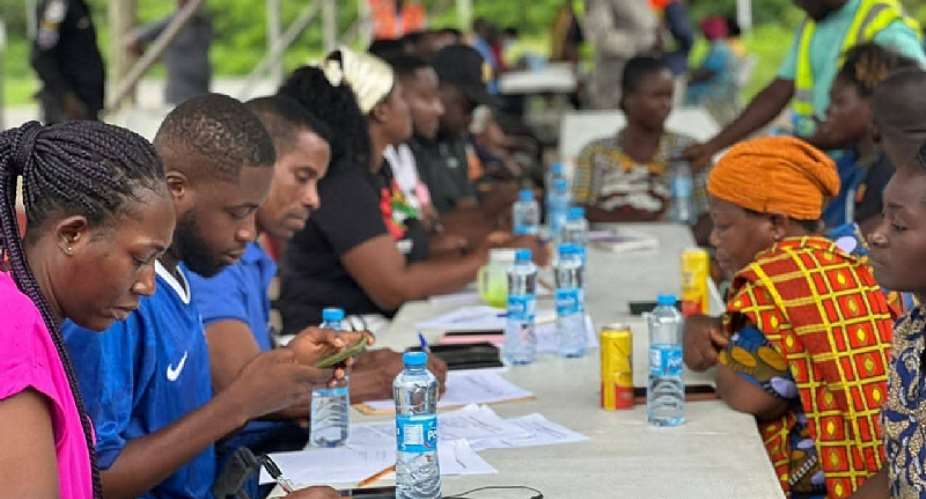
The Central Region has been thrown into a state of concern and heightened attention following the arrival of 223 Ghanaian nationals who were returned from Côte d’Ivoire after what authorities describe as mass eviction operations.
The returnees, made up of men, women, and in some cases entire families, were reportedly affected by a sweeping crackdown on undocumented or displaced foreign nationals in Côte d’Ivoire, leading to their forced repatriation to Ghana.
The sudden influx has sparked urgency among local authorities, who are now working to assess the conditions of the returnees and determine the appropriate support systems needed to reintegrate them into their communities.
Officials say the group arrived under strained circumstances, with many reportedly arriving without personal belongings, shelter arrangements, or immediate means of livelihood.
The situation has raised concerns among social welfare agencies and local leaders, who fear potential pressure on already limited resources, particularly in communities where reintegration services are still developing.
Humanitarian actors are expected to step in to provide initial relief, including temporary accommodation, food support, and medical screening for some of the returnees.
Authorities are also engaging in discussions on long-term solutions, including employment assistance, skills support, and possible relocation support for affected individuals.
Security and immigration officials are meanwhile coordinating to verify identities and document the returnees as part of ongoing national records management.
The incident has highlighted broader regional migration challenges, as West African countries continue to grapple with cross-border movement, documentation issues, and periodic enforcement actions affecting migrant communities.
As the returnees begin the process of reintegration, attention is now focused on how government agencies and local institutions will manage the social and economic impact of their sudden arrival in the Central Region.