

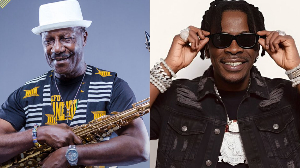
Legendary highlife icon Gyedu-Blay Ambolley has ignited a fierce cultural debate, boldly challenging the long-held “Dancehall King” title of controversial hitmaker Shatta Wale — and his words are sending shockwaves across the music industry.

In a fiery critique that is already dividing fans, Ambolley didn’t mince words: how can someone claim kingship over a genre they didn’t create?
The outspoken veteran questioned the very foundation of Shatta Wale’s dominance in Dancehall, a sound deeply rooted in Jamaican culture and pioneered by Caribbean legends. To Ambolley, the issue isn’t talent — it’s authenticity and ownership.
“You can’t be king of something that isn’t yours,” he reportedly argued, raising eyebrows and sparking heated conversations on radio, social media, and beyond.
His comments strike at the heart of a long-standing tension in African music: should artists be crowned rulers of imported genres, or should they focus on elevating indigenous sounds?
Supporters of Shatta Wale are pushing back hard, insisting that influence, impact, and popularity — not origin — define a king. They point to his massive fan base, international reach, and chart-topping hits as proof that he has earned the title through dominance, not birthright.
But Ambolley’s stance is gaining traction among purists, who believe African artists should champion homegrown genres rather than adopt and claim supremacy in foreign ones.
The clash is more than just a personal jab — it’s a cultural showdown.
Is kingship about where the music comes from… or who commands it best?
As the controversy intensifies, one thing is certain: Ambolley has once again stirred the pot, forcing the industry to confront uncomfortable questions about identity, originality, and what it truly means to be a “king” in music.