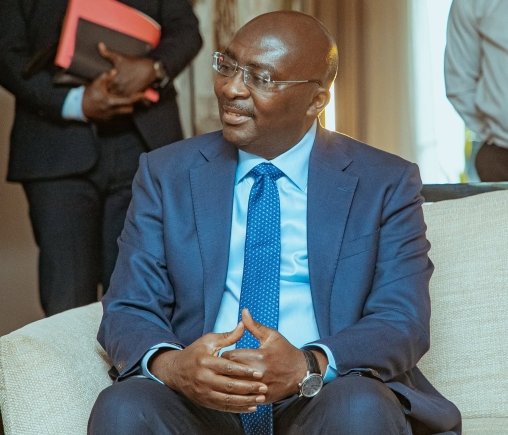
Tag: Bawumia

  • MAJOR POLITICAL SHAKE-UP: Kyei-Mensah-Bonsu Takes Charge as Chief of Staff in Bawumia’s Restructured Office

    MAJOR POLITICAL SHAKE-UP: Kyei-Mensah-Bonsu Takes Charge as Chief of Staff in Bawumia’s Restructured Office

    In a significant move that is already generating discussion across Ghana’s political landscape, former Majority Leader Osei Kyei-Mensah-Bonsu has been appointed Chief of Staff in the restructured office of former Vice President Mahamudu Bawumia.

    The appointment is being viewed as a strategic step aimed at strengthening the organizational and operational structure around Bawumia as he positions himself for future political engagements. Kyei-Mensah-Bonsu, a veteran politician with decades of parliamentary and governance experience, is expected to play a central role in coordinating activities, managing strategy, and overseeing key aspects of the office’s operations.

    Political observers see the move as a signal of Bawumia’s intention to build a more robust and experienced team capable of navigating the evolving political environment ahead of the 2028 general elections.

    Known for his extensive legislative experience and influence within the New Patriotic Party (NPP), Kyei-Mensah-Bonsu brings a wealth of institutional knowledge and political expertise to the role. Supporters believe his appointment will enhance coordination and strengthen strategic decision-making within Bawumia’s camp.

    The restructuring is also seen as part of broader efforts to consolidate support, improve engagement with stakeholders, and prepare for future political challenges. Analysts suggest that assembling experienced figures around Bawumia could prove crucial as internal party dynamics and national political competition continue to evolve.

    The development has already attracted attention from party members and political commentators, many of whom are interpreting the appointment as one of the clearest indications yet that preparations for the next phase of Ghana’s political contest are gradually taking shape.

    As the newly restructured office begins its work, all eyes will be on how Kyei-Mensah-Bonsu leverages his experience to help shape strategy, build alliances, and strengthen Bawumia’s political machinery in the years ahead.

    For many observers, the appointment is more than a personnel change—it is a calculated move that could influence the direction of Ghanaian politics as the road to 2028 slowly unfolds.
  • Bawumia Holds High-Level Talks with British High Commissioner to Ghana, Christian Rogg

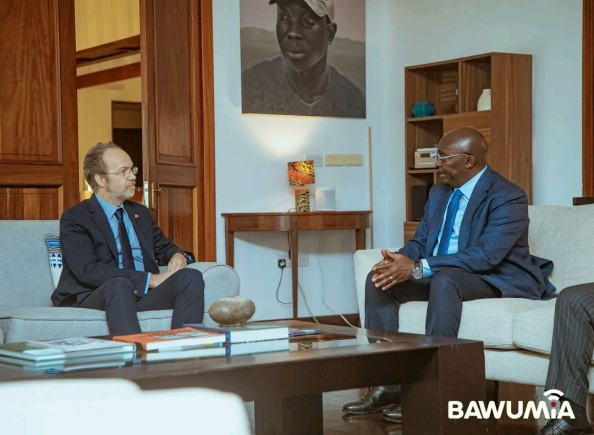
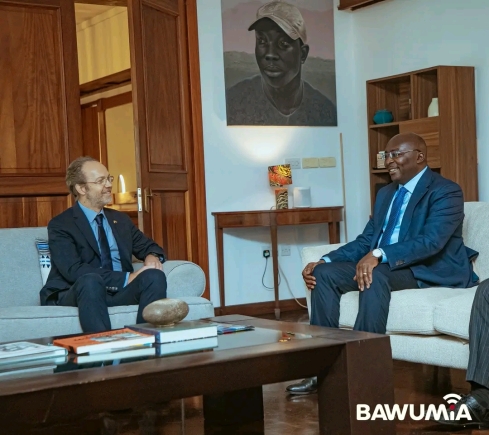
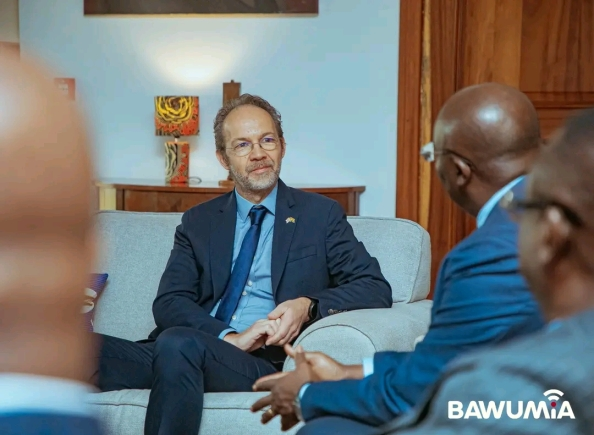
    Bawumia Holds High-Level Talks with British High Commissioner to Ghana, Christian Rogg

    Diplomatic Meeting Sparks Discussions on Ghana-UK Relations and Future Cooperation

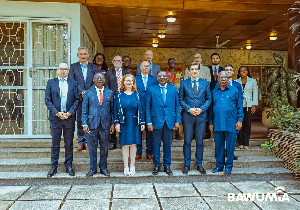
    Former Vice President Mahamudu Bawumia has held a significant meeting with Christian Rogg, the British High Commissioner to Ghana, in a move that has drawn attention from political observers and diplomatic circles.

    The high-profile engagement focused on matters of mutual interest between Ghana and the United Kingdom, with discussions reportedly touching on economic development, governance, investment opportunities, and areas of continued cooperation between the two nations.

    The meeting underscores the long-standing relationship between Ghana and the United Kingdom, a partnership that has played a crucial role in trade, education, security, and development initiatives over the years. Both sides are believed to have exchanged views on current challenges and opportunities facing Ghana, as well as the importance of strengthening bilateral ties.

    Bawumia reaffirmed his commitment to policies that promote economic growth, innovation, and international partnerships capable of creating opportunities for Ghanaians. He also emphasized the importance of maintaining strong relationships with development partners to support the country’s progress.

    For his part, High Commissioner Christian Rogg highlighted the enduring friendship between the United Kingdom and Ghana, expressing optimism about future collaboration in key sectors that contribute to national development.

    The meeting comes at a time when diplomatic engagements and international partnerships continue to play a vital role in shaping Ghana’s economic and political landscape. Analysts say such interactions are important for fostering cooperation, attracting investment, and promoting shared development goals.

    As Ghana navigates an evolving global environment, engagements between influential political figures and international partners are expected to remain central to discussions on the country’s future growth and development agenda.

  • “Bawumia Earns High Praise from AME Zion Presiding Prelate During Key Meeting with Christian Council”

    “Bawumia Earns High Praise from AME Zion Presiding Prelate During Key Meeting with Christian Council”

    Religious Leader’s Remark Sparks Fresh Conversation About Bawumia’s Leadership and National Vision

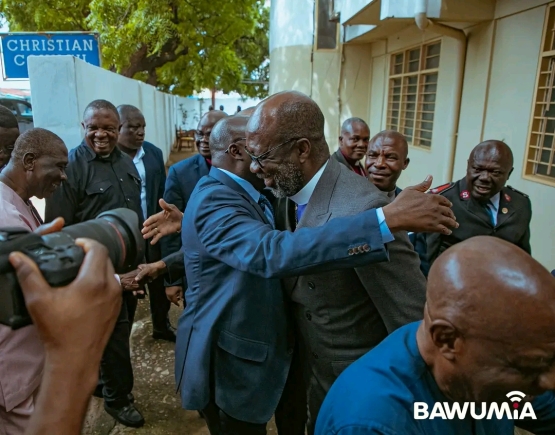
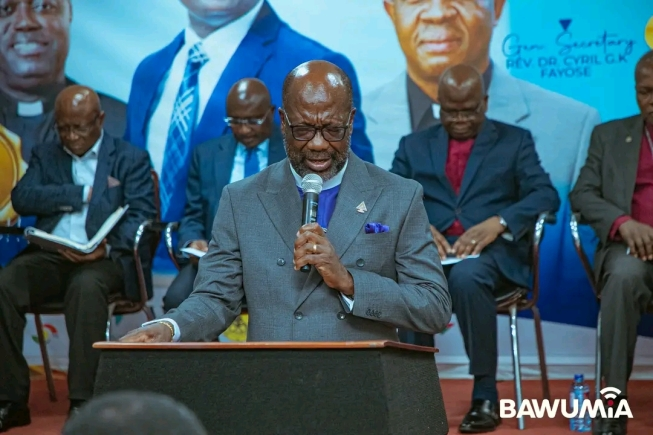
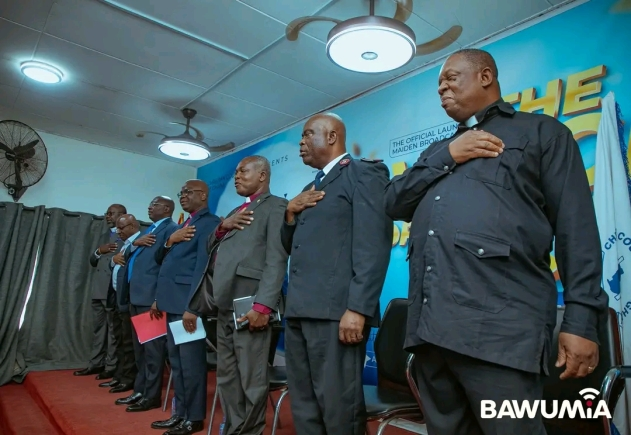
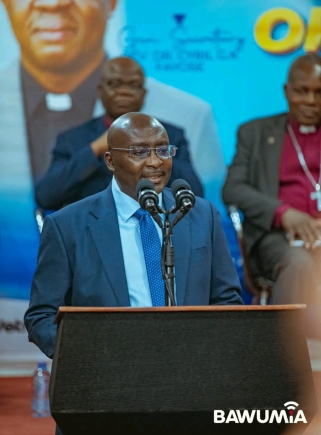
    A meeting between former Vice President Mahamudu Bawumia and members of the Christian Council has generated widespread attention after the Presiding Prelate of the African Methodist Episcopal (AME) Zion Church delivered glowing remarks about the seasoned politician.

    Speaking during the high-profile engagement, the AME Zion Presiding Prelate commended Dr. Bawumia’s commitment to national development, highlighting his role in advancing policies aimed at improving the lives of Ghanaians. The respected church leader praised Bawumia’s dedication to public service and his willingness to engage religious leaders on issues affecting the country.

    According to the Presiding Prelate, leadership requires vision, humility, and a genuine desire to serve the people—qualities he noted have been evident in Bawumia’s public life. His comments drew the attention of many observers, with some interpreting the remarks as a strong vote of confidence in the former Vice President’s contributions to Ghana’s progress.

    The meeting provided an opportunity for discussions on national unity, economic development, peace, and the role of faith-based organizations in strengthening Ghana’s democratic institutions. Church leaders emphasized the importance of collaboration between political leaders and religious bodies in addressing the nation’s challenges.

    Bawumia, in his remarks, reaffirmed his commitment to inclusive governance and national development, stressing the need for continued dialogue with religious organizations and other key stakeholders. He expressed appreciation for the Christian Council’s contributions to education, healthcare, and moral guidance across the country.

    Political analysts say the positive comments from the AME Zion Presiding Prelate could further boost public discussions about Bawumia’s leadership credentials, especially as conversations about Ghana’s political future continue to dominate national discourse.

    The meeting ended on a cordial note, with both sides emphasizing the need for unity, peace, and collective efforts to build a stronger and more prosperous Ghana.

  • We Are Committed to Democracy and Economic Transformation – Bawumia Reaffirms Bold National Vision

    We Are Committed to Democracy and Economic Transformation – Bawumia Reaffirms Bold National Vision

    Vice President Dr Mahamudu Bawumia has once again reinforced his commitment to strengthening democratic governance and driving Ghana’s economic transformation, in remarks that are drawing widespread political attention.

    Speaking with renewed confidence, Dr Mahamudu Bawumia emphasized that democracy remains the backbone of Ghana’s stability and development, stressing that every policy direction must ultimately serve the interest of citizens and national progress.

    He also doubled down on his long-standing message of economic modernization, pointing to reforms and digital initiatives as key tools for reshaping Ghana’s financial and governance systems.

    According to him, the country’s future depends on sustained discipline, innovation, and inclusive growth strategies that empower both businesses and ordinary citizens.

    The remarks come at a time of heightened political and economic debate, with citizens closely watching government efforts to stabilize the economy, create jobs, and improve public services.

    Bawumia’s renewed stance is being interpreted by observers as both a reassurance and a political signal—reaffirming continuity in governance priorities while pushing a narrative of transformation through technology and reform.

    As discussions intensify across political and economic circles, his statement adds fresh momentum to ongoing conversations about Ghana’s democratic strength and its path toward long-term economic renewal.

  • BAWUMIA HOLDS HIGH-LEVEL TALKS WITH EU AMBASSADORS IN ACCRA — DIPLOMATIC FOCUS INTENSIFIES

    BAWUMIA HOLDS HIGH-LEVEL TALKS WITH EU AMBASSADORS IN ACCRA — DIPLOMATIC FOCUS INTENSIFIES

    In a significant diplomatic engagement in Accra, Ghana’s Vice President Dr. Mahamudu Bawumia has held discussions with European Union Ambassadors, in a meeting that underscores strengthening ties between Ghana and the EU bloc.

    The high-profile confab brought together top European envoys accredited to Ghana, with talks reportedly centered on economic cooperation, digital transformation, governance support, and trade expansion opportunities.

    Dr. Bawumia, who has been a leading voice on Ghana’s digitalisation agenda, is said to have highlighted ongoing reforms and development priorities, positioning Ghana as a key strategic partner in West Africa.

    The EU delegation, representing the broader interests of the European Union, is believed to have reaffirmed its commitment to continued collaboration with Ghana across multiple sectors, including infrastructure development, energy transition, and investment facilitation.

    While full details of the closed-door discussions remain limited, diplomatic observers describe the meeting as “constructive and forward-looking,” with both sides signalling mutual interest in deepening cooperation.

    The engagement adds to a growing list of international consultations involving Dr. Bawumia as Ghana continues to court global partnerships amid shifting economic and geopolitical dynamics.

    As Accra remains a focal point for diplomatic activity, attention now turns to possible follow-up agreements and policy directions emerging from the meeting.

  • “This Is Unacceptable!” — Bawumia Reacts to Deadly Accra New Town Building Collapse

    “This Is Unacceptable!” — Bawumia Reacts to Deadly Accra New Town Building Collapse

    Vice President Bawumia has spoken out in the wake of the tragic Accra New Town building collapse, describing the disaster as shocking, unacceptable, and a stark reminder of the urgent need for stricter building regulations.

    In a statement that has sent ripples across the nation, Bawumia expressed deep sympathy for the families of the victims and called for immediate action to prevent similar tragedies in the future.

    Condolences and Urgency

    “Our thoughts and prayers are with those affected. We must ensure this never happens again,” he stated, emphasizing both the human cost of the collapse and the responsibility of authorities to enforce building safety standards.

    The Vice President also highlighted the need for thorough investigations to identify the causes of the collapse and hold accountable any parties responsible for negligence.

    Calls for Reform

    Officials say the tragedy exposes gaps in urban planning, building inspection, and regulatory enforcement, and Bawumia urged institutions to implement stronger oversight.

    “The safety of our citizens must never be compromised for shortcuts or negligence,” he warned, underscoring that lives are at stake.

    National Mourning and Accountability

    As rescue operations continue and families mourn, Bawumia’s response adds momentum to calls for stricter regulations, more rigorous inspections, and greater accountability for developers and contractors across the country.

    The Accra New Town disaster has become a rallying point for public safety reforms, and the Vice President’s words signal that the government intends to act decisively.

    The nation watches closely, demanding answers—and action—before another tragedy strikes.

  • AFRICA’S AI AMBITION: BAWUMIA UNVEILS SIX GAME-CHANGING POLICY PRIORITIES!

    AFRICA’S AI AMBITION: BAWUMIA UNVEILS SIX GAME-CHANGING POLICY PRIORITIES!

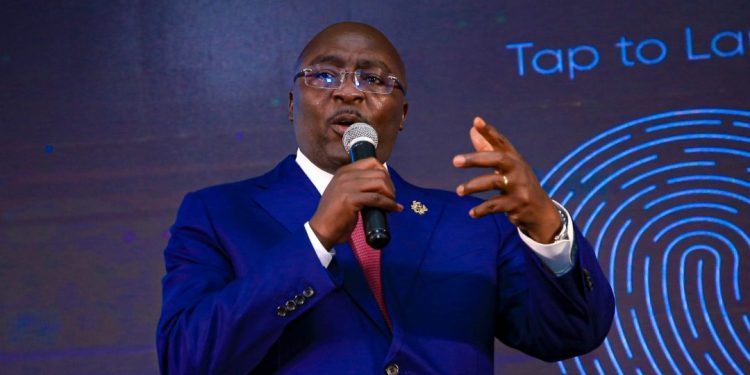
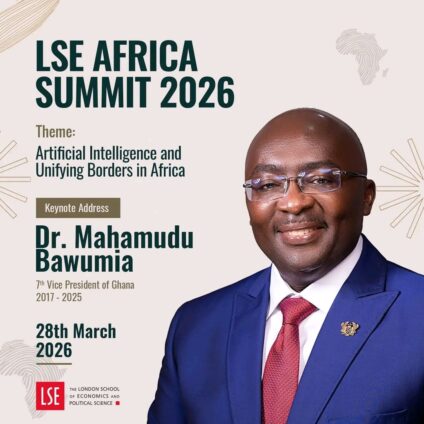
    Vice President Bawumia has laid down a bold roadmap to position Africa as a global powerhouse in artificial intelligence, unveiling six strategic policy priorities aimed at transforming the continent into a hub of innovation, technology, and economic growth.

    Speaking at a landmark tech forum, Bawumia emphasized that Africa stands at a critical crossroads: without decisive action, the continent risks lagging behind in the AI revolution sweeping the globe. His blueprint focuses on infrastructure, digital literacy, innovation ecosystems, regulatory frameworks, investment incentives, and international collaboration—a comprehensive strategy designed to unlock Africa’s AI potential.

    “These priorities are not just policies; they are a call to action for Africa to take its place at the forefront of technological advancement,” Bawumia said. “AI can drive growth, create millions of jobs, and transform our societies—but only if we move decisively and strategically.”

    The six priorities, according to Bawumia, include:

    1. Developing robust digital infrastructure to support AI adoption continent-wide.
    2. Investing in AI education and skills to build a homegrown talent pipeline.
    3. Establishing innovation hubs and research centers for AI-driven solutions.
    4. Creating clear regulatory frameworks to guide responsible AI deployment.
    5. Attracting investment and funding for AI startups and initiatives.
    6. Fostering international collaboration to leverage global AI expertise.

    Tech analysts hailed the initiative as ambitious but necessary, noting that Africa could leapfrog traditional development stages by embracing AI-driven solutions in healthcare, agriculture, finance, and governance. Critics, however, caution that success will require strong implementation, coordination, and political will across borders.

    Bawumia’s message is unmistakable: Africa cannot afford to wait. With the right policies and strategic investments, the continent could not only participate in the AI revolution but lead it on the global stage.


  • AFRICA ON THE BRINK OF MISSING THE AI BOAT! — Bawumia Warns of Urgent Need for AI Adoption

    AFRICA ON THE BRINK OF MISSING THE AI BOAT! — Bawumia Warns of Urgent Need for AI Adoption

    In a stark warning that has sent shockwaves through the continent, Vice President Bawumia has cautioned that Africa risks missing out on the next global tech revolution unless governments, businesses, and innovators act quickly to embrace artificial intelligence (AI).

    Speaking at a high-profile technology forum, Bawumia painted a vivid picture of a continent at a crossroads. “The AI revolution is not coming tomorrow—it is here today,” he declared. “If we delay, we risk being left behind while other regions reap the benefits of innovation, efficiency, and economic growth.”

    The Vice President emphasized that AI adoption is no longer optional. From agriculture and healthcare to finance and education, he noted that countries integrating AI technologies are accelerating productivity, creating jobs, and driving development at unprecedented rates. Africa, he warned, could lag unless it invests in infrastructure, skills development, and regulatory frameworks tailored for AI.

    Tech experts agree, highlighting that AI has the potential to transform industries, close gaps in service delivery, and empower young entrepreneurs. Yet, adoption across Africa remains uneven, with many nations struggling with limited access to data, technology, and expertise.

    Bawumia’s urgent message was clear: the time to act is now. Without immediate strategies to harness AI, Africa risks not only economic setbacks but also further widening the global digital divide.

    As policymakers digest the warning, the continent faces a critical decision: will it rise to meet the AI challenge or watch another transformative revolution pass it by?

  • Be Civil!– Titus Glover Slams Victoria Duncan-Williams Over Bawumia Remark

    Be Civil!– Titus Glover Slams Victoria Duncan-Williams Over Bawumia Remark

    Politics just got fiery as Titus Glover publicly blasted Victoria Duncan-Williams for her recent comment about Vice President Mahamudu Bawumia, warning that decorum must be maintained even in heated debates.

    In a statement that has set social media alight, Glover called on politicians and public figures to exercise restraint, saying the comment crossed a line and risked inflaming tensions unnecessarily. “We must be civil,” he asserted, sending a clear warning to critics and allies alike.

    The spat has quickly become a trending topic, with supporters of both sides taking to Twitter to debate whether the comment was a bold critique or an unacceptable insult. Political analysts are calling it a “test of maturity” in Ghanaian politics, highlighting how even minor remarks can spark nationwide controversy.

    With the debate showing no signs of cooling, citizens are left watching closely, wondering if this clash is just a momentary flare-up—or the start of a broader political showdown.

  • By the Numbers! Inside Bawumia’s Crushing, Decisive Victory in the Party Primaries

    By the Numbers! Inside Bawumia’s Crushing, Decisive Victory in the Party Primaries

    Dr. Mahamudu Bawumia’s dominance in the party primaries was not just political—it was statistical, overwhelming rivals and sealing his victory in emphatic fashion, according to official results.

    A breakdown of the figures shows Bawumia sweeping a commanding majority of votes across key regions, leaving little doubt about the depth of his support within the party’s grassroots and leadership base. The numbers reveal a race that was effectively decided early, as his margins continued to widen with each round of tallied results.

    Analysts say the data underscores a clear consolidation of power, reflecting strong endorsements, effective campaigning, and broad appeal among delegates. In several strongholds, Bawumia recorded landslide performances that turned the contest into a one-sided affair.

    With the primaries now concluded, the statistics are fueling narratives of momentum and inevitability, positioning Bawumia as the undisputed frontrunner heading into the next phase of the political battle.

    One thing is clear from the numbers alone: this was no close contest—this was a decisive statement.