Ghanaian singer Itz Tiffany has made a bold declaration about her personal values, insisting that she will not lower her standards for any man.
Speaking in a candid statement, the music star emphasized that she knows her worth and is unwilling to settle for less than what she believes she deserves in a relationship.
Her comments highlight a growing conversation around self-worth, boundaries, and expectations in modern relationships, especially among public figures.
Itz Tiffany stressed that maintaining personal standards is important for emotional well-being and long-term happiness, adding that compromise should not come at the expense of self-respect.
The statement has sparked mixed reactions on social media, with many applauding her confidence while others debated the balance between standards and flexibility in relationships.
Her remarks continue to circulate online, reinforcing her reputation for speaking openly about personal empowerment and independence.
Accra — It was an electrifying night of worship and spiritual celebration as gospel music lovers gathered for Joe Mettle’s Praise Reloaded concert, turning the atmosphere into what many described as a “river of praises.”
The event, headlined by award-winning gospel artiste Joe Mettle, drew hundreds of worshippers who filled the venue with songs, dance, and intense moments of praise.
From high-energy worship sessions to soulful ministrations, the concert delivered a powerful spiritual experience that left many attendees deeply moved and inspired.
Fans and worshippers described the night as more than just a musical event, but a spiritual encounter marked by unity, gratitude, and renewed faith.
Joe Mettle, known for his impactful gospel ministry, led the audience through a series of his popular worship songs, creating an atmosphere of deep reflection and celebration.
The event also featured guest performances and collaborations that further elevated the night, reinforcing its theme of praise and thanksgiving.
Organizers say Praise Reloaded is designed to bring people together through worship while promoting gospel music and inspiring spiritual growth among attendees.
As the night came to a close, the overwhelming consensus among participants was clear — the “river of praises” had left a lasting spiritual imprint on everyone present.
Global — A man has sparked widespread concern online after claiming he is left with just “1% vision” following what he describes as a botched hair transplant procedure.
In a viral account circulating on social media, the unidentified man shared distressing details of his condition, showing what he says are the aftermath effects of the procedure and its impact on his eyesight and overall well-being.
He alleges that complications began shortly after undergoing the hair transplant, eventually leading to severe health issues that have now reportedly left him with almost complete visual impairment.
The claims have triggered intense reactions online, with users expressing shock, sympathy, and concern over the safety standards of cosmetic and aesthetic procedures in unregulated or poorly supervised settings.
Medical professionals have long warned that while hair transplant procedures are generally considered safe when performed by qualified specialists, complications can arise if proper hygiene, technique, or post-operative care is not followed.
The incident has reignited discussions about medical tourism, cosmetic surgery risks, and the importance of seeking treatment from certified practitioners in approved medical facilities.
Authorities have not yet verified the man’s claims, but the story continues to trend widely as users debate the risks associated with cosmetic enhancement procedures.
Man claims post-hair transplant complications left his eyes swollen shut as he makes light of the aftermath pic.twitter.com/dc7GxIajxf
A US-based Nigerian man has sparked conversation online after sharing what he describes as the “unfiltered reality” of living abroad, revealing that life in the diaspora is often far more financially difficult than many people back home imagine.
According to his account, the belief that people living in countries like the United States are automatically wealthy is misleading, stressing that many immigrants struggle with bills, debt, and high living costs.
He explained that even basic financial support among friends is not guaranteed, adding that in some cases, “nobody will even lend you $50,” highlighting the financial pressures and individualistic culture he says many migrants experience.
His comments have triggered widespread reactions online, with some agreeing that life abroad is often misunderstood, while others argue that opportunities still exist but require hard work and financial discipline.
The discussion has reopened debates about migration expectations versus reality, especially among young people who aspire to travel abroad in search of better economic prospects.
As the post continues to circulate, it has become another viral example of the contrasting perceptions of life in the diaspora compared to lived experiences on the ground.
“Things are really tough in the USA,a bad house cost around $1500-1800 per month and that’s a house in the Ghetto.They live from hand to mouth. To buy a bag of groceries (bread and butter) it cost me about $80 but when you tell Nigerians not to move abroad,they’ll argue with you” pic.twitter.com/yGmy0pecQG
Popular Nigerian actor Deyemi Okanlawon has stirred controversy after boldly stating that “noise” is increasingly being rewarded more than quality in Nollywood, igniting fresh debate about standards in the film industry.
The award-winning actor made the remark while reflecting on the evolving nature of Nigeria’s film scene, suggesting that attention and visibility are now often driven more by hype, publicity, and social media buzz than by genuine talent and craft.
According to him, many deserving projects and performers are being overlooked, while louder, more aggressively promoted content tends to dominate conversations and gain wider recognition.
His comments have quickly gained traction online, with fans and industry stakeholders divided over whether Nollywood is truly prioritizing popularity over artistic excellence or simply adapting to changing audience dynamics.
Some supporters of his view argue that the industry is facing a shift where marketing and online visibility increasingly influence success, sometimes at the expense of storytelling depth and production quality.
Others, however, contend that Nollywood remains one of the fastest-growing film industries in the world and that both quality and visibility are necessary for commercial survival in a highly competitive entertainment market.
Despite the debate, Deyemi Okanlawon’s statement has reignited broader conversations about the balance between art and commerce in African cinema, and what it truly takes for quality productions to stand out.
As reactions continue to pour in, his critique has added fuel to ongoing discussions about how Nollywood can better support creative excellence while still embracing modern promotional realities.
Calls are growing louder within Ghana’s creative industry over alleged unpaid or underpaid royalties from telecommunications companies, with musicians and stakeholders arguing that artists deserve fair compensation for the use of their works.
According to concerns circulating within the entertainment space, telecom operators—who benefit from the distribution of music through caller tunes, mobile streaming services, and digital downloads—are being urged to fully account for and remit royalties owed to musicians whose content drives significant consumer engagement.
Industry voices say the issue is not new, but it has become increasingly urgent as digital music consumption continues to expand. Many artists rely on royalties as a key source of income, especially in a streaming-driven era where physical sales have sharply declined.
Some musicians and industry advocates argue that while telcos profit from music-related services, payments to rights holders remain inconsistent or insufficient, leaving many creatives struggling to benefit from their own intellectual property.
The debate has also reignited broader discussions about copyright enforcement in Ghana’s music industry, with calls for stronger regulatory oversight, transparent reporting systems, and timely disbursement of royalties to ensure fairness across the value chain.
Others, however, caution that the issue may be more complex, pointing to the need for clearer agreements, improved tracking systems, and better collaboration between telecom firms, collecting agencies, and rights holders to avoid disputes and delays.
As the conversation continues, stakeholders are increasingly framing the matter as a critical test of Ghana’s commitment to protecting creative work in the digital economy.
For many musicians, the message is simple: if their music helps drive telecom revenue, then proper payment is not optional—it is overdue.
As Ghana’s Ghana national football team push through the high-pressure stages of the 2026 World Cup, attention has shifted beyond the pitch — to the glamorous, loyal, and fiercely supportive women standing behind the players.
From emotional stadium celebrations to stylish matchday appearances, the wives and partners of the Black Stars have become an unexpected but powerful part of Ghana’s tournament story.
JORDOEN BUCKLEY STEALS THE SHOW BEHIND SEMENYO’S HEROICS
At the centre of the spotlight is Jordeen Buckley, partner of Ghana forward Antoine Semenyo, whose matchday presence has turned heads across North America.
Often seen celebrating passionately from the stands, she has blended fashion, loyalty, and national pride — becoming one of the most recognisable faces among the Black Stars’ travelling support.
Her appearances have added a touch of glamour to Ghana’s campaign, especially as Semenyo continues to grow into a key attacking figure.
TANJA OPOKU: FAMILY, FOOTBALL AND FIERCE SUPPORT
Defender Jerome Opoku has also enjoyed strong emotional backing from his wife, Tanja, who has been spotted at key matches alongside their children.
Her presence reflects the quieter but equally powerful side of football support — stability at home translating into confidence on the pitch.
VICENTIA MENSAH AND THE DEFENSIVE HEARTBEAT
Left-back Gideon Mensah draws strength from his wife, Vicentia Mensah, who has been part of his journey through both club and international football.
Her support has been described as a grounding force as Ghana navigates high-intensity World Cup fixtures.
JANINE MACKSON AND THE GLOBAL LIFESTYLE STORY
Midfield star Thomas Partey is married to British model and influencer Janine Mackson, who has also drawn attention for her polished presence and public support.
Their relationship adds an international dimension to Ghana’s squad profile, reflecting the global nature of modern football families.
MORE THAN JUST MATCHDAY GLAMOUR
Beyond the headlines and social media attention, these women represent something deeper — emotional stability, family sacrifice, and constant encouragement behind elite performance.
From hotel room conversations to stadium celebrations, their influence extends far beyond the cameras.
THE UNSUNG SUPPORT SYSTEM OF THE BLACK STARS
Other partners — including those of senior figures like Jordan Ayew and several squad members — also continue to provide behind-the-scenes motivation that players often credit for their mental strength.
In a tournament defined by pressure, travel, and expectation, this support network has quietly become part of Ghana’s competitive edge.
A DIFFERENT KIND OF TEAM BEHIND THE BLACK STARS
As the World Cup drama unfolds, one thing is clear: Ghana’s story is no longer just about 11 players on the pitch.
It is also about the families, partners, and loved ones who carry the emotional weight of the journey — and in many ways, help fuel the dream itself.
A Nigerian herbal medicine seller has shared a disturbing account of what he describes as intense xenophobic treatment he witnessed while doing business in South Africa, sparking renewed concerns about the safety of foreign traders in the country.
The man, who deals in traditional herbal products, said his experience left him deeply unsettled, describing moments that made him fear for his safety and question the level of acceptance of foreign nationals.
“This xenophobia is terrible,” he lamented, recounting incidents he says he observed and personally encountered during his stay and business activities.
According to him, tensions directed at foreign traders often escalated quickly, creating an atmosphere of fear and uncertainty, particularly among small business owners from other African countries.
He explained that many foreign traders, including Nigerians, rely on informal markets and community networks to survive, but such environments can sometimes become hostile during periods of social or economic tension.
The account has since drawn attention online, with many users expressing concern over recurring reports of xenophobic incidents in parts of South Africa.
Human rights commentators say such experiences highlight the need for stronger protections for migrants and improved efforts to address underlying economic and social grievances that often fuel hostility toward foreigners.
While authorities in South Africa have previously condemned xenophobic violence, affected communities continue to report fear and insecurity in certain areas.
As reactions continue, the herbal seller’s account adds to ongoing discussions about migration, safety, and the lived experiences of African traders operating across borders.
Nigeria — A dramatic testimony shared by a member of the Lord’s Chosen Charismatic Revival Movement has gone viral after she recounted a life-altering experience she says led her to wear the church’s distinctive apron.
The member of the Lord’s Chosen Charismatic Revival Movement claimed she endured a period of severe hardship during which she says she was unable to eat food or drink water for six months, a situation she described as spiritually and physically devastating.
According to her testimony, the experience left her in a vulnerable state until she encountered what she believes was divine intervention through the church, leading to her recovery and eventual commitment to the congregation.
She explained that her decision to wear the church’s apron is a symbol of gratitude, faith, and testimony of what she describes as God’s deliverance from an extreme personal ordeal.
The account has generated widespread reactions online, with supporters describing it as a powerful testimony of faith, while critics have questioned the plausibility and interpretation of the claims.
Religious commentators note that such testimonies are common within Pentecostal movements, where personal experiences are often shared publicly as demonstrations of spiritual transformation.
The story continues to circulate widely on social media, fueling debates about faith, belief systems, and the role of testimony in modern religious practice.
"In Lord's Chosen Church, anybody wearing this apron has a miracle. For me, I had a terrible illness that no doctor could diagnose. I couldn't eat food or drink water for six months. Whenever I drank water, I vomited it immediately. My survival was a mystery. Immediately after… pic.twitter.com/mJbf0bY5bE
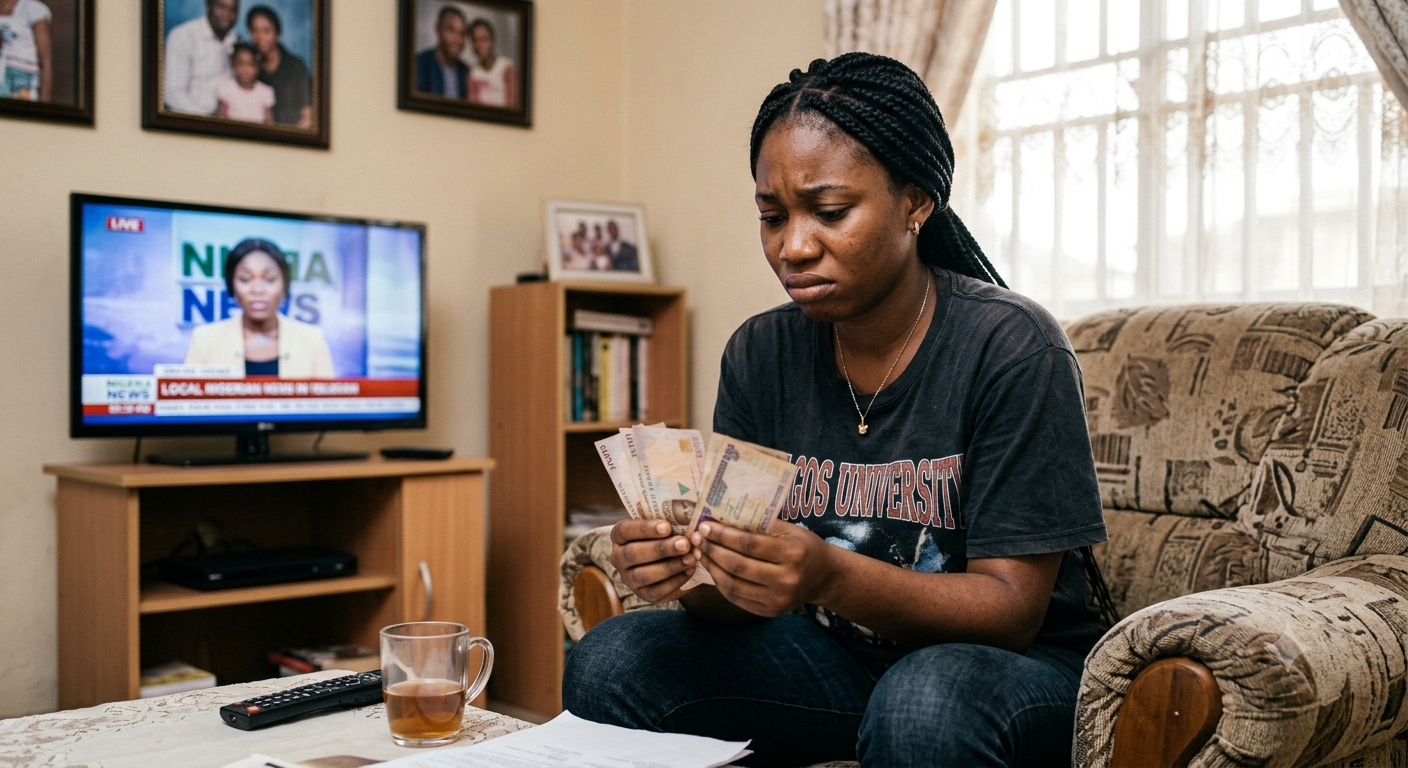
A young woman has sparked reactions online after expressing disappointment over what she describes as a “false big-money promise” from a man based in the United States, who allegedly sent her just ₦15,000 instead of the substantial financial support she was expecting.
According to her account, the man had previously presented himself as someone capable of offering significant assistance, raising her expectations before eventually sending the much smaller amount.
Visibly frustrated, she admitted she was hesitant to speak out publicly, adding that she might face backlash or “get dragged” on social media for sharing her experience.
The story has quickly gained attention, with many users reacting with mixed opinions—some sympathizing with her disappointment, while others criticized the expectations tied to online financial promises and long-distance relationships.
The incident has also reignited discussions about caution in online interactions, especially where financial expectations and promises are involved.
As reactions continue to pour in, the story serves as another viral reminder of how quickly digital relationships can turn from expectation to disappointment.