Author: Daniel Sasu

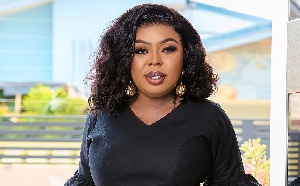
  • Traditional authorities of the Ga-Adangbe have issued a stern warning to media personality Afia Schwarzenegger, sending shockwaves through Ghana’s entertainment and social media landscape.

    Traditional authorities of the Ga-Adangbe have issued a stern warning to media personality Afia Schwarzenegger, sending shockwaves through Ghana’s entertainment and social media landscape.

    The leaders expressed deep concern over recent comments and actions by Afia Schwarzenegger, cautioning her to tread carefully and respect cultural and community sensitivities. Their message is firm: words carry weight, and public figures must be mindful of their influence on society.

    “Respect Tradition or Face Backlash”

    In a strongly worded statement, the Ga-Adangbe chiefs emphasized that certain remarks or social media posts can inflame tensions and offend cultural values. Afia Schwarzenegger, known for her bold and sometimes controversial style, was urged to exercise discretion and uphold respect for the traditions of the Ga-Adangbe people.

    Public Reaction Ignites Debate

    The caution has ignited discussions online, with some applauding the chiefs for defending cultural integrity, while others argue that media personalities should retain the freedom to express themselves—even when it ruffles feathers.

    The Stakes Are High

    With Afia Schwarzenegger’s comments already trending across social media, the warning from Ga-Adangbe leaders signals a potential clash between celebrity influence and traditional authority. Many are now watching closely to see if the outspoken personality responds or adjusts her approach in deference to the chiefs’ call.

    The unfolding drama highlights the delicate balance between freedom of expression and cultural respect in Ghana’s vibrant media landscape.

  • From Ebony’s Historic Triumph to Diana Hamilton’s Glory: Female Power in the TGMA Artiste of the Year Race (2009–2025)

    From Ebony’s Historic Triumph to Diana Hamilton’s Glory: Female Power in the TGMA Artiste of the Year Race (2009–2025)

    For over a decade, the Telecel Ghana Music Awards (TGMA) “Artiste of the Year” crown has been the ultimate prize—but for female artistes, the journey has been anything but easy. Since 2009, the category has largely been dominated by male heavyweights, with only a select few women breaking through the glass ceiling to claim the top honor.

    The Female Breakthrough Moments
    The history books record just two female winners in this fiercely competitive category since 2009:

    • 2018 – Ebony Reigns (the first female to win Artiste of the Year)
    • 2021 – Diana Hamilton (gospel star rewriting the narrative)

    These victories were more than wins—they were cultural moments that shook the industry and proved that women could dominate Ghana’s biggest stage.

    A Male-Dominated Battlefield
    From 2009 to 2025, the award has mostly gone to male acts such as Sarkodie, Shatta Wale, Stonebwoy, KiDi, Black Sherif, and King Promise. Even in years when female artistes were making waves, breaking into the final Artiste of the Year nominations remained a rare feat—highlighting the uphill battle women continue to face in the industry.

    Where Are the Female Nominees?
    Unlike categories such as “Best Female Vocal Performance,” the Artiste of the Year list has consistently featured very few women. In many recent editions—including 2024 and 2025—the nominee lists were entirely male, despite strong performances from female artistes across genres. This has sparked ongoing debates among fans and industry watchers about representation, recognition, and fairness.

    The Bigger Conversation
    The scarcity of female nominees—and even fewer winners—has fueled calls for change. Critics argue that the system may overlook the impact of female artistes, while supporters insist the awards reflect measurable success and industry metrics. Still, the success stories of Ebony Reigns and Diana Hamilton stand tall as proof that when the moment aligns, female artistes can—and do—rise to the very top.

    The Verdict
    From 2009 to today, the TGMA Artiste of the Year race tells a dramatic story: dozens of male winners, only two female champions, and a growing call for balance. As the Ghanaian music industry evolves, one question continues to echo louder than ever: Who will be the next woman to conquer the TGMA throne?

  • 2026 TGMAs EXPLODE: Top Nominees Revealed as One Artiste Dominates the Pack!

    2026 TGMAs EXPLODE: Top Nominees Revealed as One Artiste Dominates the Pack!

    The 2026 Telecel Ghana Music Awards (TGMAs) nominations are out — and they’ve already sent shockwaves across the music industry!

    This year’s list is nothing short of explosive, with a fierce race unfolding at the top. While several big names secured multiple nods, one standout artiste has risen above the rest, earning the highest number of nominations and cementing their dominance over the past year.

    The announcement has ignited intense conversations among fans and insiders, as the leading nominee’s strong presence cuts across major categories — including Artiste of the Year, Best Album, and multiple genre awards. It’s a clear sign of an artiste who didn’t just participate in the year under review, but owned it.

    Close behind are other industry heavyweights who are also making a strong case, setting up what could be one of the most competitive TGMA showdowns in recent history.

    Music lovers are already taking sides, debating who truly deserves the top honors. With chart-topping hits, viral moments, and undeniable influence all in play, the stakes couldn’t be higher.

    As anticipation builds toward the awards night, one thing is certain:
    this year’s TGMAs will be less about participation — and all about supremacy.

    The countdown to Ghana’s biggest music night has officially begun.

  • We’re Still Here for a Reason! – Keche Speaks on Longevity at 2026 TGMAs Unveiling

    We’re Still Here for a Reason! – Keche Speaks on Longevity at 2026 TGMAs Unveiling

    At the much-anticipated unveiling of nominees for the 2026 Telecel Ghana Music Awards, music duo Keche didn’t just make an appearance—they made a statement.

    Standing confidently before industry players and fans, the veteran group opened up about their enduring presence in Ghana’s music scene, stressing that their longevity is no coincidence. According to them, it is the result of years of hard work, consistency, and a strong sense of purpose.

    “We’re not here by chance,” they declared, underscoring their belief that staying relevant in a constantly evolving industry requires dedication and intentional effort.

    Having survived changing trends, stiff competition, and the emergence of new talents, Keche explained that their journey has been guided by more than just the desire to make hit songs. They emphasized that their music is driven by purpose—something that continues to fuel their passion and connection with fans.

    More Than Just Hits
    The duo highlighted that longevity in the industry goes beyond chart-topping singles. For them, it’s about growth, reinvention, and staying true to their mission as artists.

    Their comments come at a time when conversations about relevance and recognition in the Ghanaian music industry are gaining momentum, especially in light of ongoing debates surrounding award nominations.

    A Subtle Message?
    While they avoided directly addressing any controversy, many believe their remarks indirectly speak to critics who question the staying power of long-standing acts.

    As anticipation builds toward the awards night, Keche’s message is clear: longevity is earned, not given—and they’re not going anywhere anytime soon.

  • Gospel musician Papa Shee has stirred emotions and anticipation with a powerful symbolic gesture ahead of the highly anticipated ‘Celebration of Life’ event for highlife legend Daddy Lumba.

    Gospel musician Papa Shee has stirred emotions and anticipation with a powerful symbolic gesture ahead of the highly anticipated ‘Celebration of Life’ event for highlife legend Daddy Lumba.

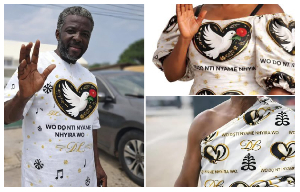
    In a moment that has captured the attention of fans and industry watchers, Papa Shee officially unveiled a specially designed commemorative cloth in honor of Daddy Lumba—setting the tone for what is expected to be an emotional and historic tribute.

    A Cloth That Speaks Volumes

    The custom cloth, rich in cultural symbolism and artistic detail, is more than just fabric—it represents legacy, respect, and the enduring impact of Daddy Lumba’s music on generations of Ghanaians. The design reportedly incorporates elements that reflect the icon’s illustrious career and timeless influence.

    Fans React with Emotion

    The unveiling has sparked a wave of reactions across social media, with many praising Papa Shee for the thoughtful tribute. Fans of Daddy Lumba say the gesture perfectly captures the magnitude of the legend’s contribution to Ghanaian music.

    Building Momentum for a Historic Night

    As preparations intensify for the ‘Celebration of Life’ event, this latest development has only heightened excitement. The event is expected to draw top musicians, celebrities, and dignitaries—all gathering to celebrate the life and legacy of one of Ghana’s greatest musical icons.

    With Papa Shee’s tribute setting the emotional pace, one thing is clear: this won’t just be an event—it will be a powerful farewell filled with music, memories, and deep national pride.

  • We See Everything! — Robert Klah Defends TGMA Selections Amid Growing Controversy

    We See Everything! — Robert Klah Defends TGMA Selections Amid Growing Controversy

    In the wake of heated debates and rising public scrutiny, a bold defense has emerged from the Telecel Ghana Music Awards (TGMA) camp. Robert Klah has stepped forward with a striking declaration: the decisions behind the awards are not narrow or biased—but driven by a global perspective.

    As critics question the credibility and fairness of this year’s nominations and winners, Klah insists that the TGMA board operates with a far-reaching lens, drawing from a wide pool of data, trends, and international standards. According to him, the process goes far beyond local popularity or social media noise.

    “We are not limited in scope,” Klah emphasized. “Our decisions are based on a global view of information—what’s happening across borders, industry benchmarks, and deeper analytics.”

    This statement comes at a time when fans and industry insiders alike are demanding more transparency. Some argue that certain deserving artists were overlooked, while others claim the awards are becoming predictable or disconnected from grassroots support.

    But Klah’s remarks suggest otherwise. He paints a picture of a sophisticated system—one that quietly evaluates impact, reach, and artistic merit on a scale that many may not immediately see.

    Still, the question remains: will this explanation be enough to silence critics, or will it fuel even more debate?

    As tensions simmer and opinions clash, one thing is clear—the TGMA conversation is far from over, and all eyes are now fixed on what comes next.

  • I Had to Break Free! – Sefa Likens Record Label Exit to Escaping Her Parents’ House

    I Had to Break Free! – Sefa Likens Record Label Exit to Escaping Her Parents’ House

    Ghanaian songstress Sefa has set tongues wagging after making a bold and deeply relatable statement about her departure from her former record label — comparing it to finally moving out of her parents’ home.

    In what many are calling a brutally honest and eye-opening revelation, the singer described the experience as both daunting and liberating, shedding light on the emotional and professional challenges artists face behind the scenes.

    According to Sefa, leaving a record label isn’t just a business decision — it’s a life-altering transition. “It’s like moving out of your parents’ house,” she revealed, painting a vivid picture of stepping away from comfort, structure, and security into the unknown.

    Her analogy has struck a chord with fans and industry watchers alike. Just like leaving home, Sefa explained, being under a label often comes with guidance, protection, and support — but also limitations. Breaking away, she implied, is where true independence begins, even if it comes with uncertainty and risk.

    The singer’s comments have sparked conversations about artist freedom, control, and growth in the music industry. Many see her move as a powerful declaration of self-discovery and artistic ownership.

    While she didn’t shy away from acknowledging the benefits of being signed, Sefa made it clear that her journey now is about carving her own path, making her own decisions, and fully embracing her identity as an independent artist.

    Fans are now eagerly watching to see what this new chapter brings — and if her bold leap into independence will redefine her sound and career.

    One thing is certain: Sefa isn’t just leaving a label — she’s stepping into her power.

  • Ghana Music Awards Turn ‘Gob3’! – Kwaw Kese Explodes Over Controversial Nominations

    Ghana Music Awards Turn ‘Gob3’! – Kwaw Kese Explodes Over Controversial Nominations

    The Ghanaian music scene is on fire after outspoken rapper Kwaw Kese unleashed a blistering attack on the Ghana Music Awards nomination process, branding it a complete “gob3” — a chaotic mess that’s left fans and industry players stunned.

    In a no-holds-barred reaction, the “Abodam” hitmaker didn’t mince words, accusing the scheme of being riddled with inconsistencies and questionable choices. According to him, the nominations fail to reflect the true impact and hard work of deserving artists, sparking fresh debate about credibility and transparency in one of Ghana’s biggest music events.

    “This doesn’t make sense!” — that’s the tone Kwaw Kese brought as he publicly vented his frustration, echoing sentiments many insiders have whispered for years but rarely dared to say out loud.

    The controversy has quickly snowballed, with fans taking to social media to either back the rapper’s claims or defend the awards board. Some argue the system has long favored certain artists, while others insist the process remains fair and data-driven.

    Industry Shake-Up?
    Kwaw Kese’s explosive comments could reignite calls for reforms in how nominations are decided — from voting structures to selection criteria. With tensions rising, all eyes are now on the organizers to respond and possibly salvage their reputation.

    As the noise grows louder, one thing is clear: this year’s Ghana Music Awards just went from celebration to full-blown controversy.

    Will this spark real change — or fade like past criticisms? The spotlight is firmly on the awards board now.

  • Dancehall superstar Shatta Wale is once again at the center of controversy—this time over explosive claims about music royalties and the state of Ghana’s royalty collection body.

    Dancehall superstar Shatta Wale is once again at the center of controversy—this time over explosive claims about music royalties and the state of Ghana’s royalty collection body.

    In a dramatic twist, a lecturer from the University of Education, Winneba (UEW) has fired back at the artist, revealing that Shatta Wale allegedly received a whopping GH¢50,000 in royalties—despite publicly insisting that Ghana Music Rights Organisation is inactive and ineffective.

    The revelation has sent shockwaves through the entertainment industry, raising eyebrows and sparking heated debates among fans and insiders alike.

    “Inactive? Then Where Did the Money Come From?”

    The UEW lecturer didn’t hold back, questioning the contradiction in Shatta Wale’s claims. According to him, it simply doesn’t add up: how can an artist receive substantial royalties from an organization he claims is not functioning?

    This bombshell has put GHAMRO back under the spotlight, with many now demanding transparency—not just from the institution, but also from artists who publicly criticize it while allegedly benefiting behind the scenes.

    Industry Reactions Explode

    Social media is ablaze, with fans divided. Some are calling out Shatta Wale for what they see as hypocrisy, while loyal supporters argue that receiving royalties doesn’t necessarily mean the system is working efficiently.

    Others believe this could expose deeper issues within GHAMRO—suggesting that payments may be inconsistent, selective, or poorly managed.

    A Bigger Conversation Begins

    This controversy is quickly evolving into a larger conversation about accountability in Ghana’s music industry. Questions are now being asked:

    • Are royalty systems truly serving all artists fairly?
    • Is GHAMRO transparent in its operations?
    • And why are top artists speaking out while still receiving payouts?

    One thing is certain—this saga is far from over. With tensions rising and more voices joining the debate, the clash between Shatta Wale, GHAMRO, and industry stakeholders could reshape the future of music royalties in Ghana.

    @asempa_fm

    Shatta Wale was paid 50,000 cedis by GHAMRO in 2016 yet he said the institution is not active – Dr. Oduro Arhin, Lecturer UEW asempashowbizreview AsempaFM

    ♬ original sound – ASEMPA FM – ASEMPA FM
  • Shockwaves in Ghana Politics: NPP’s Freddie Blay Arrested Over Land Dispute

    Shockwaves in Ghana Politics: NPP’s Freddie Blay Arrested Over Land Dispute

    Ghana’s political scene has been rocked after former National Patriotic Party (NPP) chairman Freddie Blay was reportedly arrested by police in connection with a controversial land dispute that has been simmering for over a year.

    The veteran lawyer and politician was taken into custody on Monday, March 16, 2026, following the execution of a long-standing arrest warrant issued by the Akropong Circuit Court. The warrant had reportedly remained active after Blay allegedly failed to respond to police invitations and did not appear in court for earlier proceedings.

    The arrest centers on allegations that Blay ordered the demolition of a building under construction on a parcel of land at Kitase in the Eastern Region. The landowner involved filed a complaint claiming his property was destroyed. Investigations reportedly revealed that some workers carried out the demolition under instructions linked to Blay.

    Following his arrest, Blay was taken before the Akropong Circuit Court, where the judge denied him bail and ordered that he be remanded in custody. The case has now been adjourned to April 9, 2026, for further proceedings.

    Blay’s camp strongly disputes the allegations, insisting he never ordered any demolition and that he only instructed workers to clear an empty plot to prevent the area from becoming hazardous. They also claim he was unaware of the arrest warrant until police executed it, arguing that the dispute is part of a long-running land litigation dating back decades.

    The arrest has sent shockwaves through political circles and social media, with supporters calling it a misunderstanding while critics insist the law must take its course. With court proceedings resuming in April, the case is set to remain a major talking point in Ghana’s political and legal landscape.