Author: Daniel Sasu

  • Heated Showdown! — Otchere-Darko Clashes with UK Minister Kemi Badenoch Over Slavery Reparations

    Heated Showdown! — Otchere-Darko Clashes with UK Minister Kemi Badenoch Over Slavery Reparations

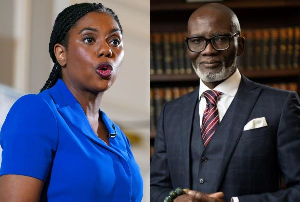
    A fiery exchange has erupted on the international stage as Ghanaian political heavyweight Otchere-Darko went head-to-head with UK Minister Kemi Badenoch in a tense debate over slavery reparations.

    The confrontation, which quickly grabbed global headlines, saw Otchere-Darko passionately defending calls for reparations, arguing that the historical injustices of the transatlantic slave trade demand acknowledgment and compensation. He pressed the point that affected nations deserve tangible restitution to address centuries of economic and social disadvantage.

    Badenoch, representing the UK government, pushed back firmly, questioning both the feasibility and the legal grounds for such reparations. She emphasized the complexities of modern diplomacy and historical accountability, insisting that while the past should not be ignored, reparations are not straightforward.

    The clash sparked heated discussions across social media, with users around the world weighing in. Some hailed Otchere-Darko as a fearless advocate for justice, while others sided with Badenoch, citing the challenges of implementing reparations in today’s political and economic climate.

    Experts note that this confrontation reflects a larger, ongoing debate about historical responsibility, moral accountability, and the lingering effects of slavery on present-day societies.

    As the discussion continues, the world is watching closely—will this spark serious negotiations on reparations, or will it remain another high-profile political showdown? Either way, Otchere-Darko vs. Badenoch has ignited a debate that refuses to be ignored.
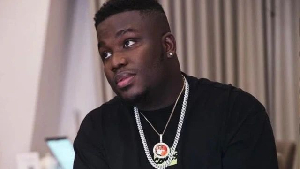
  • Why Court of Appeal dismissed Kusi Boateng’s case against Ablakwa

    Why Court of Appeal dismissed Kusi Boateng’s case against Ablakwa

    The Court of Appeal dismissed Rev. Victor Kusi Boateng’s case against Samuel Okudzeto Ablakwa for several reasons:

    The court could not conclusively establish the appellant’s identity because different identities were presented during the proceedings. This inconsistency was seen as a fundamental flaw that invalidated the appeal.

    Even if the identity issue had not arisen, the court noted that the appeal would likely fail on its legal merits. Ablakwa’s statements were found to be factual and related to matters of public interest, particularly concerning concerns about alleged financial irregularities in the National Cathedral project.

    The court recognized that Ablakwa’s comments were made in the public interest, which further weakened Kusi Boateng’s defamation claim.

    The court awarded GH¢40,000 in costs against Kusi Boateng, highlighting that the appeal was fundamentally flawed.


  • Abu Trica’s Days in Ghana Are Numbered! — Court Approves Extradition to the US

    Abu Trica’s Days in Ghana Are Numbered! — Court Approves Extradition to the US

    In a dramatic legal development, the courts have cleared the way for Abu Trica to be extradited to the United States, where he faces serious criminal charges.

    The ruling marks a pivotal moment in a long-running legal battle, with judges affirming that the extradition request meets all procedural and legal requirements. This decision effectively ends Abu Trica’s attempts to contest the move in Ghanaian courts.

    Authorities in the US allege that Abu Trica is involved in large-scale financial crimes, and his extradition is seen as a crucial step in ensuring he faces justice under American law. Local and international observers note that the case has drawn significant attention due to its cross-border implications.

    While Abu Trica’s legal team has the option to appeal the ruling, sources indicate that the process is likely to move quickly, with preparations underway for his transfer.

    The decision has sparked intense public debate in Ghana, with some applauding the government’s cooperation with international law enforcement, while others question the fairness of extraditing nationals for prosecution abroad.

    For Abu Trica, the next chapter is set — one that will take him far from Ghana and into the heart of a high-stakes criminal investigation in the US.

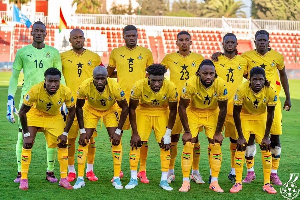
  • LIVESTREAM: Austria Takes on Ghana in Thrilling International Friendly Clash

    LIVESTREAM: Austria Takes on Ghana in Thrilling International Friendly Clash

    Football fans are gearing up for an exciting international friendly as Austria faces Ghana in a highly anticipated match. Both teams are using the game to test tactics, blood new talents, and fine-tune strategies ahead of upcoming competitions.

    Ghana, known for its speed and flair, is expected to showcase a mix of experienced internationals and rising stars, while Austria looks to leverage home advantage and solidify their attacking play. The clash promises intense action, skillful plays, and moments that could thrill supporters worldwide.

    Fans can watch the match live via official streaming platforms and follow real-time updates on social media for scores, highlights, and post-match reactions.

    Analysts say this friendly is more than just a warm-up—it’s a chance for both teams to send a statement about their readiness and ambition for future tournaments. Expect goals, drama, and plenty of talking points when the final whistle blows.

  • Did He Just Bow? — Ashanti Regional Minister Sparks Buzz After ‘Saluting’ Akufo-Addo’s Portrait

    Did He Just Bow? — Ashanti Regional Minister Sparks Buzz After ‘Saluting’ Akufo-Addo’s Portrait

    A moment caught on camera has set social media ablaze after the Ashanti Regional Minister was seen appearing to “bow” before a portrait of President Nana Akufo-Addo—triggering a whirlwind of reactions and interpretations.

    In the now-viral clip, the minister is captured entering a room where the president’s portrait is displayed. What followed has since become the center of heated debate: a brief gesture that many viewers are interpreting as a bow or sign of reverence toward the image.

    The footage has sparked intense discussion online, with critics questioning whether the act was appropriate for a public official. Some have described it as excessive loyalty, while others see it as symbolic of a broader culture of political devotion.

    Supporters, however, are pushing back, insisting the gesture has been blown out of proportion. According to them, it may have simply been a respectful nod or routine acknowledgment, not the dramatic “bow” many are claiming.

    As the clip continues to circulate, Ghanaians are divided—was it a harmless gesture taken out of context, or a revealing moment that speaks volumes?

    In the age of viral videos, even the smallest action can ignite a national conversation—and this moment is no exception.

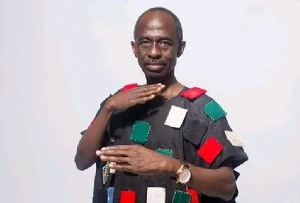
  • Ashanti Is No Longer Safe! — Asiedu Nketiah Drops Political Bombshell, Declares End of NPP Stronghold

    Ashanti Is No Longer Safe! — Asiedu Nketiah Drops Political Bombshell, Declares End of NPP Stronghold

    In a stunning political twist that could reshape Ghana’s electoral landscape, Johnson Asiedu Nketiah has boldly declared that the once rock-solid Ashanti Region is no longer a guaranteed stronghold for the New Patriotic Party (NPP).

    The outspoken National Chairman of the National Democratic Congress (NDC) made the explosive claim with confidence, signaling what he describes as a dramatic shift in voter sentiment within the region long considered the political fortress of the New Patriotic Party.

    “Ashanti is no longer an NPP stronghold,” Asiedu Nketiah asserted, sending shockwaves through Ghana’s political circles.

    For decades, the Ashanti Region has been the electoral backbone of the NPP, delivering massive vote margins in successive elections. But according to Asiedu Nketiah, that dominance is now under serious threat, as dissatisfaction grows and political loyalties begin to shift.

    He hinted at increasing grassroots support for the NDC, claiming that the party has made significant inroads in communities that were previously considered no-go zones. Though he did not release detailed figures, his confidence suggests the NDC is gearing up for a fierce battle in the region.

    Political analysts say such a declaration is both strategic and symbolic—aimed at energizing supporters while planting doubt within the NPP’s traditional base.

    However, loyalists of the NPP are unlikely to take this claim lightly. Many insist that the Ashanti Region remains firmly in their corner and will once again prove decisive in upcoming elections.

    Still, Asiedu Nketiah’s remarks have added fresh intensity to Ghana’s already heated political climate, raising a critical question:

    Is the NPP’s grip on Ashanti truly slipping—or is this high-stakes political messaging ahead of a major electoral showdown?


  • Ato Forson Surges Ahead! — Poll Shows NDC Heavyweight Taking Commanding Lead to Replace Mahama

    Ato Forson Surges Ahead! — Poll Shows NDC Heavyweight Taking Commanding Lead to Replace Mahama

    A fresh political twist is shaking up Ghana’s opposition landscape as Cassiel Ato Forson emerges as the clear frontrunner in the race to succeed John Dramani Mahama, according to a new poll.

    The survey results place Ato Forson significantly ahead of other contenders, signaling a possible shift in power dynamics within the National Democratic Congress (NDC) as the party begins to look beyond its longtime flagbearer.

    Known for his strong presence on economic issues and his role as a key figure in Parliament, Ato Forson’s growing popularity is being attributed to his policy-driven approach and increasing influence among party loyalists. Analysts say his lead reflects a desire within sections of the party for fresh leadership combined with experience.

    The poll has already stirred conversations among party insiders and supporters, with some hailing it as a sign of generational transition, while others caution that internal party races are far from predictable.

    Meanwhile, questions are beginning to surface: can Ato Forson maintain this momentum, and how will other potential contenders respond as the succession race heats up?

    The battle to replace Mahama is no longer speculative. It has begun in earnest, and Ato Forson is, for now, firmly in the driver’s seat.

  • Enough of the Rumours! — Zanetor Agyeman-Rawlings Breaks Silence on Defence Minister Speculation

    Enough of the Rumours! — Zanetor Agyeman-Rawlings Breaks Silence on Defence Minister Speculation

    Ghana’s political scene is buzzing, but Zanetor Agyeman-Rawlings has finally stepped forward to address the growing rumours linking her to a potential appointment as Defence Minister—and her response is turning heads.

    Amid intense speculation and social media chatter, the Member of Parliament made it clear that the claims are unfounded, urging the public to disregard what she described as baseless reports.

    In a calm but firm reaction, she dismissed the rumours, stressing that no such appointment has been communicated to her. The statement comes as conversations around cabinet reshuffles and strategic appointments continue to dominate the national discourse.

    Sources say her name had been circulating widely due to her background, leadership profile, and connection to Ghana’s political legacy. However, she appears keen to shut down the narrative before it gains further traction.

    Observers note that the speculation highlights her rising influence in Ghanaian politics, even as she maintains focus on her parliamentary duties.

    For now, Zanetor’s message is clear: don’t believe everything you hear. But in a political landscape where surprises are never far away, many are still watching closely to see what unfolds next.

  • Ghanaians Are Happier Again! — Mussa Dankwah Claims Improving Living Conditions Spark Nationwide Optimism

    Ghanaians Are Happier Again! — Mussa Dankwah Claims Improving Living Conditions Spark Nationwide Optimism

    A wave of cautious optimism is sweeping across the country as Mussa Dankwah boldly declares that Ghanaians are becoming happier, pointing to improving living conditions as a major turning point.

    In a statement that’s quickly gaining traction, Dankwah suggested that despite recent economic hardships, there are clear signs that things are beginning to look up. According to him, shifts in key indicators and public sentiment suggest that many citizens are regaining hope and confidence in their daily lives.

    The claim has sparked mixed reactions. Supporters say they are beginning to feel some relief, citing gradual stability in prices and slight improvements in economic activity. For them, the statement reflects a reality that is slowly emerging after a challenging period.

    However, critics are not convinced. Many argue that while there may be marginal improvements, the average Ghanaian is still grappling with high living costs, unemployment concerns, and financial pressure. Some have questioned the data behind the claim, demanding clarity on how this “happiness” is being measured.

    Social media has since lit up with debate, as citizens weigh in with personal experiences—some echoing renewed optimism, others insisting that the situation on the ground remains tough.

    As the conversation unfolds, one thing is clear: the question of whether Ghanaians are truly happier is far from settled. But Dankwah’s statement has reignited a national discussion about progress, perception, and the real state of living conditions in the country.

  • “Untouchables in Ghana?” Dr. Okoe Boye Drops Bombshell Claim, Names Ibrahim Mahama in Explosive Allegations

    “Untouchables in Ghana?” Dr. Okoe Boye Drops Bombshell Claim, Names Ibrahim Mahama in Explosive Allegations

    Tensions are rising as Dr. Bernard Okoe Boye has ignited a firestorm of controversy with shocking claims that some powerful figures in Ghana have effectively become “untouchable” under the current system.

    In a bold and attention-grabbing statement, the former government official singled out Ibrahim Mahama—a prominent businessman and brother of former President John Dramani Mahama—as part of a group he believes operates above scrutiny.

    According to Okoe Boye, the concept of equality before the law is being undermined, with certain influential individuals allegedly shielded from accountability. His remarks suggest a troubling divide where power and connections determine who faces justice—and who does not.

    “Some people are simply untouchable,” he implied, raising concerns about fairness and transparency within national institutions. Though he stopped short of detailing specific incidents, his comments have fueled widespread speculation and debate across political circles.

    The mention of Ibrahim Mahama, known for his vast business interests and political connections, has only intensified public interest. Critics argue that such statements demand evidence, while supporters say they reflect long-standing frustrations about perceived favoritism and elite privilege.

    Observers say this development could further inflame partisan tensions, as both sides dig in over issues of governance, accountability, and the rule of law.

    Is this a genuine call for reform—or a calculated political strike? As reactions pour in, one thing is certain: Dr. Okoe Boye’s claims have struck a nerve, reopening a national conversation about power, influence, and justice in Ghana.