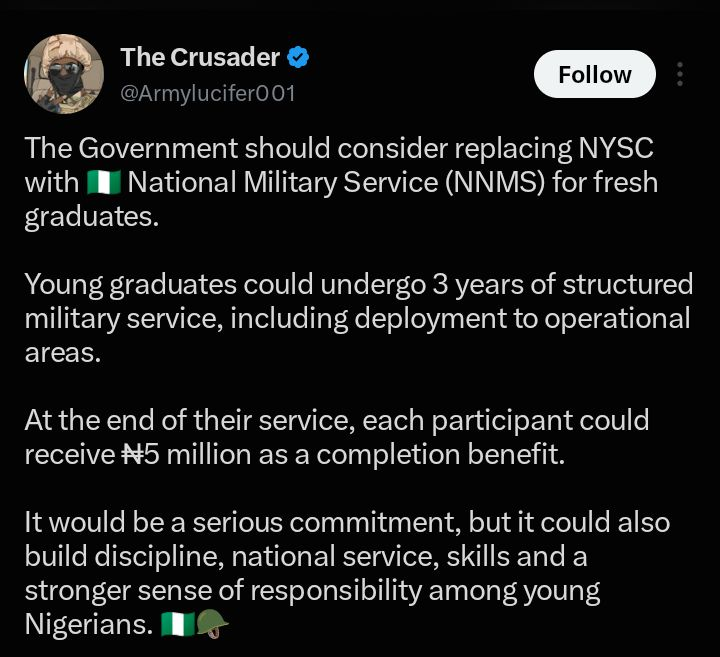

A fresh proposal to replace Nigeria’s National Youth Service Corps (NYSC) with compulsory military service has sparked debate, with the proponent suggesting that each participant could receive as much as ₦5 million.
A controversial proposal to replace Nigeria’s National Youth Service Corps (NYSC) scheme with a military service programme has stirred conversations about youth development, national security and the financial benefits young Nigerians could receive.
The proposal, which suggests that eligible Nigerian graduates could undergo military service instead of the existing one-year NYSC programme, has drawn attention to the possibility of giving young people more structured training while strengthening the country’s security system.
According to the proposal, each participant could receive ₦5 million, a financial incentive that could make the suggested programme particularly attractive to graduates facing unemployment, rising living costs and limited economic opportunities.
The idea presents military service as a possible alternative to the current NYSC framework, which was established to promote national unity, integration and youth development through service assignments across the country.
Supporters of such a proposal could argue that military training would equip young Nigerians with discipline, leadership skills, physical fitness and practical experience while potentially contributing to national security efforts.
The proposed ₦5 million payment could also provide participants with financial support as they transition from university into the workforce. However, questions remain about how such a programme would be funded, whether participation would be compulsory and what responsibilities graduates would be expected to undertake.
There are also important questions about military training requirements, the duration of service, the welfare of participants and whether the proposed scheme would be suitable for graduates from different academic and professional backgrounds.
Could military service become the future of Nigeria’s graduate service programme?
For now, the proposal represents an alternative vision for national youth service rather than an established government policy. Any move to replace NYSC would require further consideration, including details of implementation, funding and the legal framework governing the existing scheme.
Nevertheless, the suggestion has put a major question on the table: should Nigeria retain its current NYSC structure, or should the country consider a military-based programme that combines national service, skills development and substantial financial incentives?
With the prospect of ₦5 million per participant attracting attention, the debate over the future of youth service in Nigeria could become even more intense.