

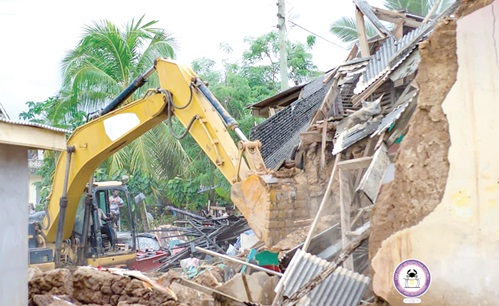
Authorities Move in as Devastation Exposes Dangerous Buildings and Poor Urban Planning
A wave of urgent demolition actions is expected in parts of the Central Region after devastating floods left authorities with no choice but to mark as many as 155 structures as unsafe and unfit for habitation.
The decision follows intense flooding that swept through several communities, exposing weak infrastructure, poorly sited buildings, and long-standing drainage challenges that have now turned into a full-blown safety crisis.
Officials say the affected structures have been declared structurally compromised and pose a serious risk to human life if left standing. Many of the buildings, according to preliminary assessments, were either built on waterways, lacked proper foundations, or failed to meet basic construction standards.
Residents in the affected areas have been left in shock as demolition notices are being served, with many facing the grim reality of losing homes and businesses in the aftermath of the floods.
Emergency response teams, alongside urban planning and disaster management authorities, are reportedly working to ensure that evacuations are carried out safely before demolition exercises begin.
The flooding, which has once again highlighted the vulnerability of communities in the region, has sparked renewed debate over urban planning enforcement, environmental management, and the rising impact of extreme weather events.
Authorities Sound Alarm on Human Settlement Risks
Officials warn that the situation could have been far worse, stressing that the identification of unsafe structures is a preventive measure to avoid future tragedies such as building collapses or loss of life during heavy rains.
They are also urging residents to comply with evacuation directives while government agencies develop longer-term plans to resettle displaced families and improve drainage systems.
Floods Expose Deep Infrastructure Gaps
The disaster has reignited concerns over poor drainage networks, rapid urbanisation, and weak enforcement of building regulations—issues that continue to worsen flooding impacts across the region.
As demolition looms, affected communities are bracing for disruption, uncertainty, and the difficult task of rebuilding their lives from the ground up.
For many residents, the floods have become more than just a natural disaster—they are a stark reminder of the urgent need for stronger planning systems and climate-resilient infrastructure.
The coming days are expected to be critical as authorities move to enforce safety measures while balancing humanitarian concerns for displaced families.