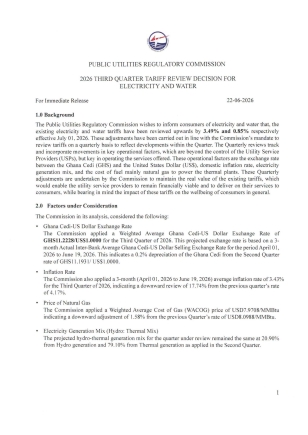

Accra, Ghana — Households and businesses across Ghana are bracing for yet another hit to their cost of living after the Public Utilities Regulatory Commission (Public Utilities Regulatory Commission) announced fresh increases in utility tariffs, set to take effect on July 1.
In a decision that is already stirring public debate, electricity tariffs will rise by 3.49%, while water tariffs will increase by 0.85%, adjustments the regulator says are necessary to maintain service delivery and ensure sustainability in the utility sector.
A SMALL PERCENTAGE, A BIG IMPACT
While the percentage increases may appear modest on paper, the real-world impact is expected to be felt across every corner of the economy—from household budgets already stretched by inflation to small businesses struggling with rising operating costs.
Electricity users, in particular, are likely to experience higher monthly bills, especially in urban areas where consumption is higher. Water consumers will also see slight but steady upward adjustments in their bills beginning with the next billing cycle.
WHY THE INCREASE?
According to the regulator, the adjustment reflects a combination of economic factors, including exchange rate pressures, inflationary trends, and the need to keep utility providers financially viable.
The commission has repeatedly argued that periodic tariff reviews are essential to prevent service disruptions and ensure continued investment in infrastructure. However, critics often question whether such increases adequately consider the burden on ordinary citizens.
PUBLIC REACTION EXPECTED TO BE MIXED
As with previous tariff adjustments, the announcement is expected to spark debate among consumer groups, civil society organizations, and businesses.
Some analysts argue that consistent small increases, while less disruptive than large jumps, gradually erode disposable income over time. Others maintain that without periodic adjustments, utility companies risk underperformance and declining service quality.
HOUSEHOLDS AND BUSINESSES ON ALERT
From Accra to Kumasi and beyond, households are now calculating what the new tariffs will mean for their monthly budgets. For many small business owners—particularly those in food services, retail, and manufacturing—even minor increases in utility costs can significantly affect profit margins.
A FAMILIAR PATTERN IN GHANA’S UTILITY SECTOR
The latest adjustment continues a long-standing pattern of periodic tariff reviews in Ghana’s utility sector, often announced after regulatory consultations and economic assessments.
As July 1 approaches, consumers are left with a familiar reality: adjusting once again to the rising cost of essential services.
For now, the message from the regulator is clear—utilities will cost more, and the new rates are here to stay.