
Diplomatic Tension Emerges as Star Midfielder Ruled Out of Crucial Match
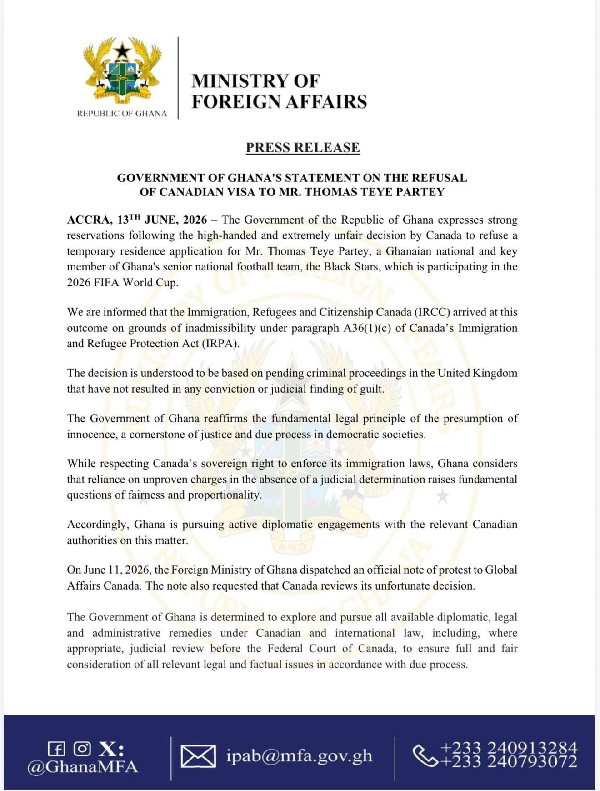
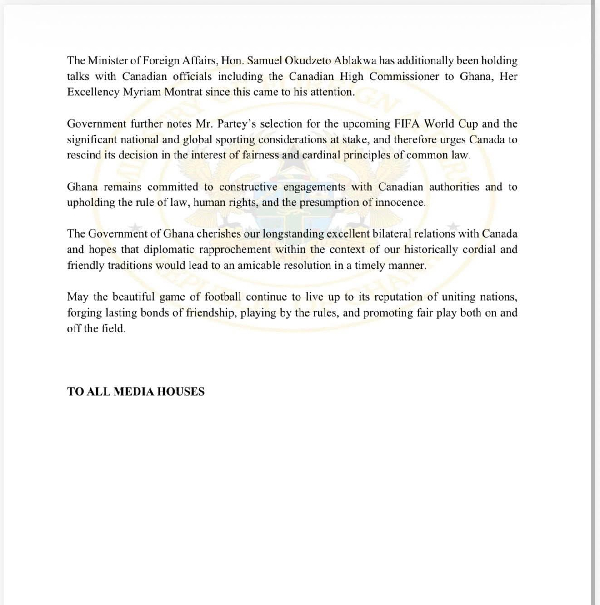
The Government of Ghana has formally protested Canada’s decision to deny a visa to national team midfielder Thomas Partey, a move that has ruled him out of the Black Stars’ opening match at the ongoing World Cup and triggered diplomatic concern between the two countries.
According to official reports, the visa refusal means Partey will be unable to travel from Ghana’s team base in the United States to Canada for the Group L opener against Panama in Toronto, a fixture Ghana had heavily relied on his experience to navigate.
The Ghanaian authorities described the decision as “high-handed and extremely unfair,” arguing that it undermines sporting fairness and disrupts team preparations at a critical stage of the tournament.
The issue stems from Canada’s immigration ruling, which is understood to be linked to ongoing legal proceedings involving the player in the United Kingdom. Canadian authorities maintain that all visa applications are assessed individually under national law, even in the context of major international sporting events.
World football’s governing body FIFA has clarified that it has no authority over immigration decisions taken by host nations, emphasizing that visa approval remains solely within the jurisdiction of each country.
Despite the setback, Partey is expected to remain with the squad in North America and could still feature in Ghana’s remaining group-stage matches held in the United States, where he is not affected by the Canadian entry restriction.
The situation has sparked wider debate in football circles about the intersection of sport, law, and international mobility, with analysts warning that similar cases could become more common in future global tournaments hosted across multiple countries.
For Ghana, however, the immediate concern remains sporting — as the team adjusts its strategy ahead of a key opening fixture without one of its most experienced midfielders.