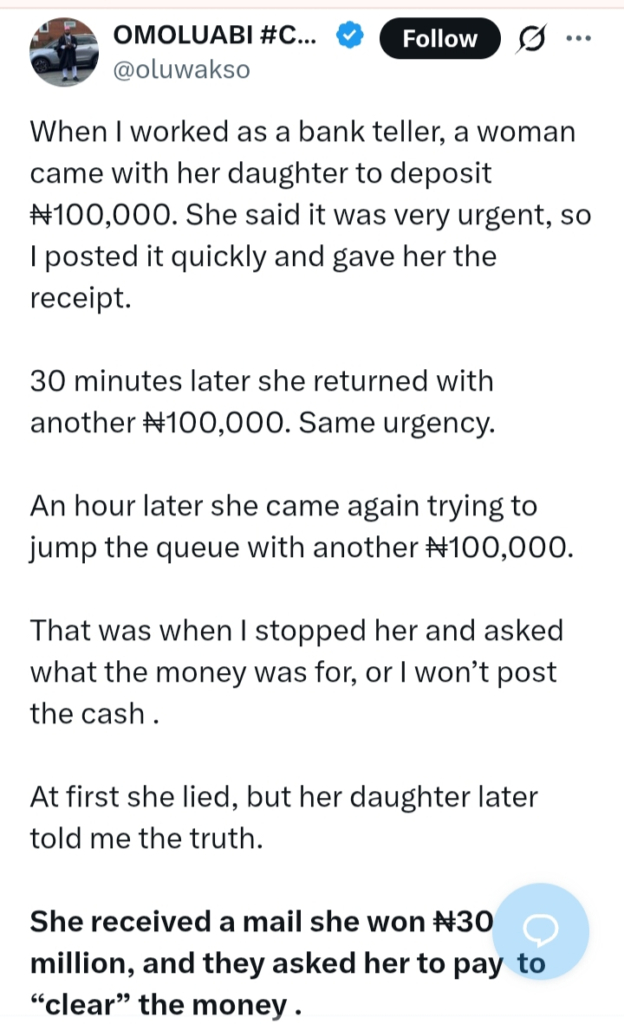

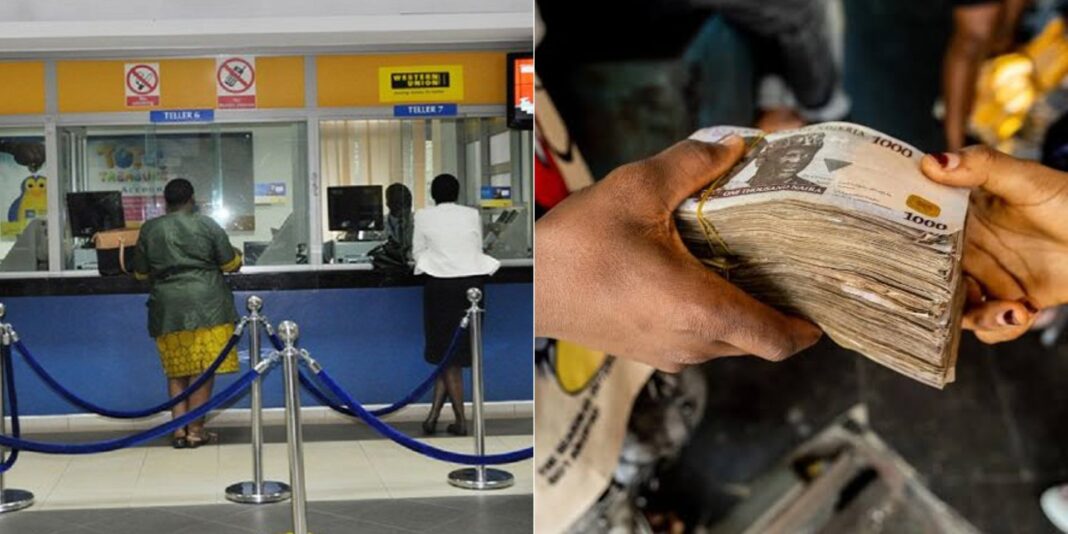
In a jaw-dropping tale of deception and near disaster, an ex-bank teller has shared a shocking account of how she saved a teacher from falling victim to a ₦30 million email scam. The incredible story has left people reeling, as the scam almost led to the loss of an eye-watering sum of money—if not for the quick thinking of the former bank employee.
The former teller took to social media to recount how a seemingly innocent email tricked the teacher into thinking he had received a lucrative business opportunity. “The email looked so official, so well-crafted. It seemed legit,” she explained. “But something didn’t feel right. I had to step in before it was too late.”
A Teacher’s Dream Turned Nightmare
The scam began when the teacher, who had no experience with fraud schemes, received an email claiming he had won a business investment that promised returns worth millions. The message was convincing, complete with fake logos and sophisticated language that made it appear like a legitimate offer.
However, as the teacher was about to wire a massive ₦30 million to the scammers, the ex-bank teller—who had previously worked with the teacher’s account—noticed a glaring red flag. “It just didn’t add up,” she said. “The email was too polished, and the sender’s address was suspiciously similar to a real business, but not quite right.”
In a frantic move, she called the teacher and warned him about the scam, urging him to halt the transaction immediately. Her intervention saved him from a financial nightmare.
“It Was a Close Call”
The ex-teller admits she had no idea how close the teacher was to losing everything. “He was about to send the money. I think he thought this was his big break. Thankfully, I stopped him just in time,” she said, visibly relieved.
Experts are now warning people to be on high alert for this kind of scam, which is becoming more sophisticated and harder to detect. “These scammers have evolved,” said a cybersecurity analyst. “They know how to make their emails look like they come from legitimate sources. It’s up to us to be vigilant and question everything.”
How to Spot a Scam Before It’s Too Late
With scams like this growing in number and sophistication, the ex-teller’s experience serves as a warning to everyone: Always double-check emails, especially those that ask for personal information or money. Here are a few tips to protect yourself:
- Look out for strange email addresses that mimic official sources but aren’t quite right.
- Don’t act impulsively. If you receive an unsolicited business offer, take a step back and verify its legitimacy.
- Reach out to trusted sources—whether that’s a bank, a friend, or a professional—before making any financial commitments.
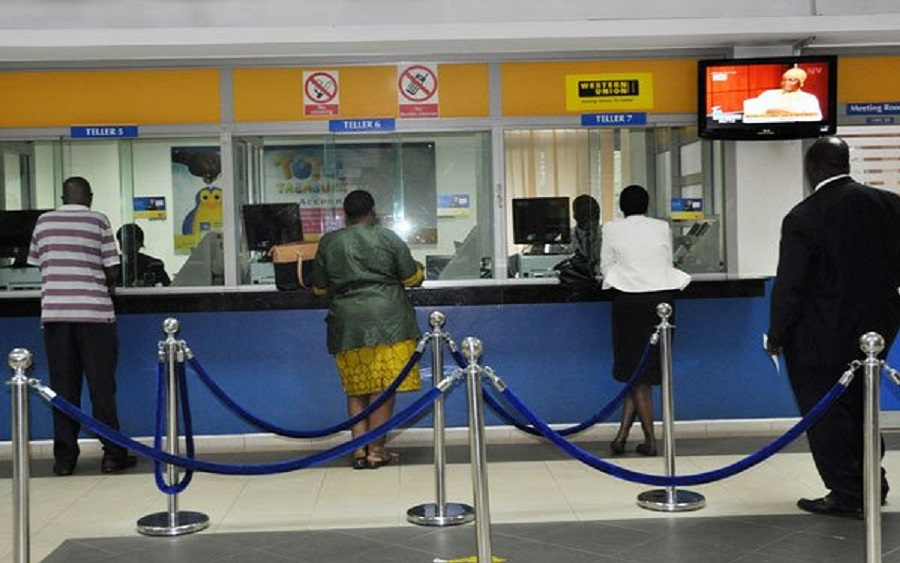
In the end, the teacher’s close call is a reminder of just how careful we all need to be in the age of digital scams. Thanks to one ex-teller’s vigilance, ₦30 million was saved from the clutches of fraud, and a potentially devastating loss was averted.